
No ATM! There are no ATMs in San Francisco or Trigana, so be sure to bring enough cash to cover all your expenses: lodging, meals, activities, and transportation.
In a nutshell
In the heart of the Caribbean department of Chocó, in northwestern Colombia, a quiet place nonetheless tells the story of one of the most pivotal chapters in the continent’s history. The Santa María la Antigua del Darién Archaeological Park stands on the site where, in the early 16th century, the first Spanish city founded on the mainland of the Americas once stood. But long before the arrival of the conquistadors, these lands were already inhabited by indigenous communities with rich cultures, extensive trade networks, and deeply rooted traditions.
The site of Santa María la Antigua del Darién thus embodies a brutal and formative encounter: that between the indigenous societies of the Darién and Spanish colonial expansion. Through the excavated artifacts— pottery, gold objects, urban structures, and traces of churches and dwellings —the museum reveals a complex history marked by coexistence, conflict, and irreversible changes.
More than just an exhibition space, this cultural site is a gateway to the origins of colonial America—a place where Indigenous memory and European heritage intersect, and where the past continues to challenge the present.
Santa María la Antigua del Darién Archaeological Park
- Department: Chocó (Caribbean).
- Opening date: 2019.
- Price: Free.
- Hours: Monday through Friday: 8:00 a.m. – 4:00 p.m.; Saturday and Sunday: 8:00 a.m. – 3:00 p.m.
- Visitor numbers: very low (fewer than 5 people per day).
- Direct access: by car from San Francisco.
Our take: Colombia’s most secret historical site ★★
Before arriving in the village of San Francisco, near Triganá, we knew nothing about this archaeological park or the region’s fascinating history. And what a surprise! It’s surprising to learn that the first city founded by the Spanish in South America was located here, especially when you realize that today there’s almost nothing left of it. The museum offers a true journey through time: visitors can learn a great deal about the pre-Columbian indigenous tribes, the arrival of the Spanish, and the introduction of African slaves—not only in this region but along the entire Caribbean coast. The building itself is relatively new, modest in size, but rich in information. Part of the tour takes place outdoors, along several stops in the forest, which makes for a very enjoyable experience. The guide shares a lot of historical details, but you need to understand Spanish, since there is no English-language service. If you’re passing through the area and you’re a history buff, this museum is definitely not to be missed!
About Santa María la Antigua del Darién
The Darién, on the border between Colombia and Panama, is a region steeped in history and mystery. This is where the traces of ancient indigenous civilizations intersect with the early days of Spanish colonization in South America. The site of Santa María la Antigua del Darién takes us right to the heart of this unique historical encounter.
The Indigenous Peoples of the Darién and the Kunas
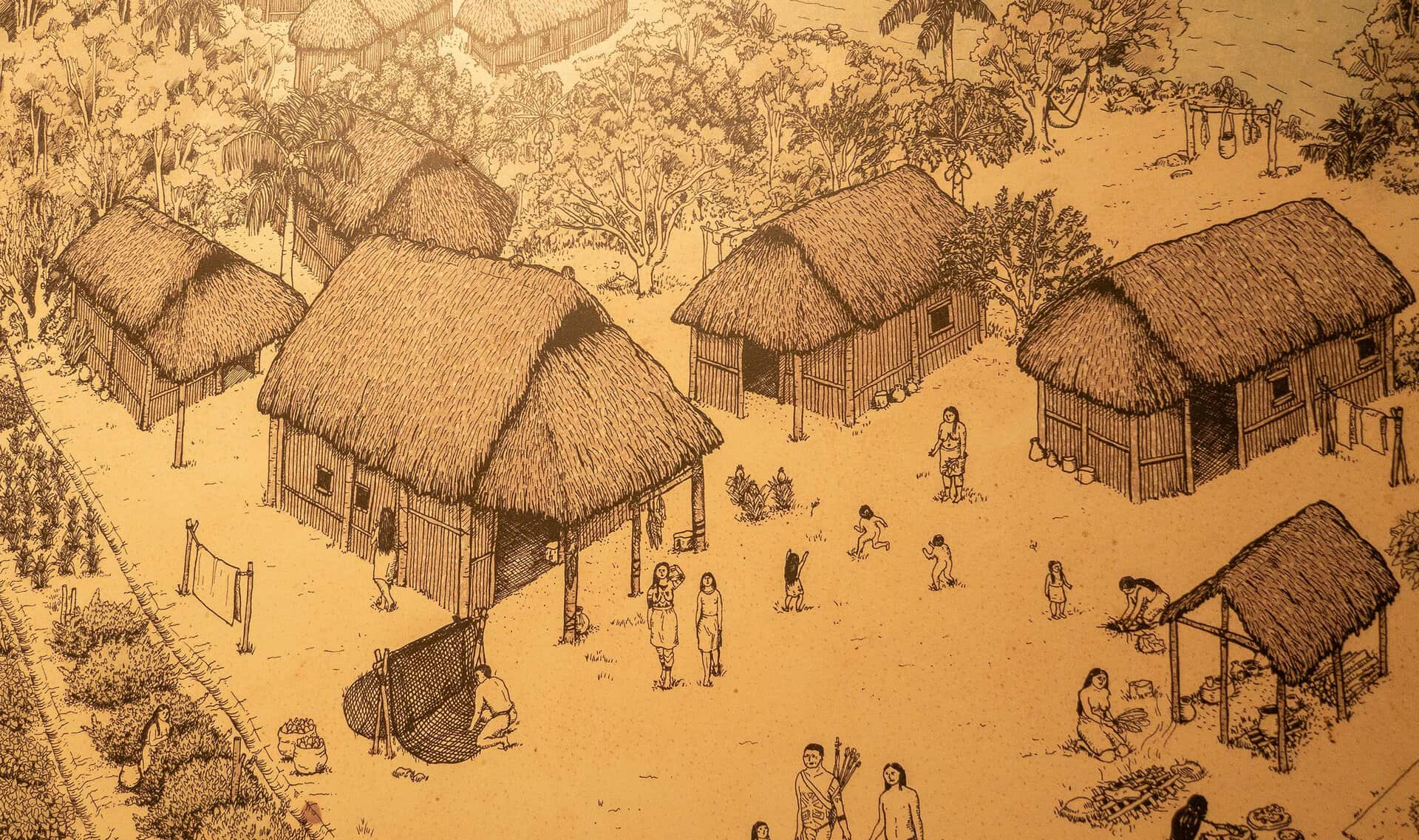
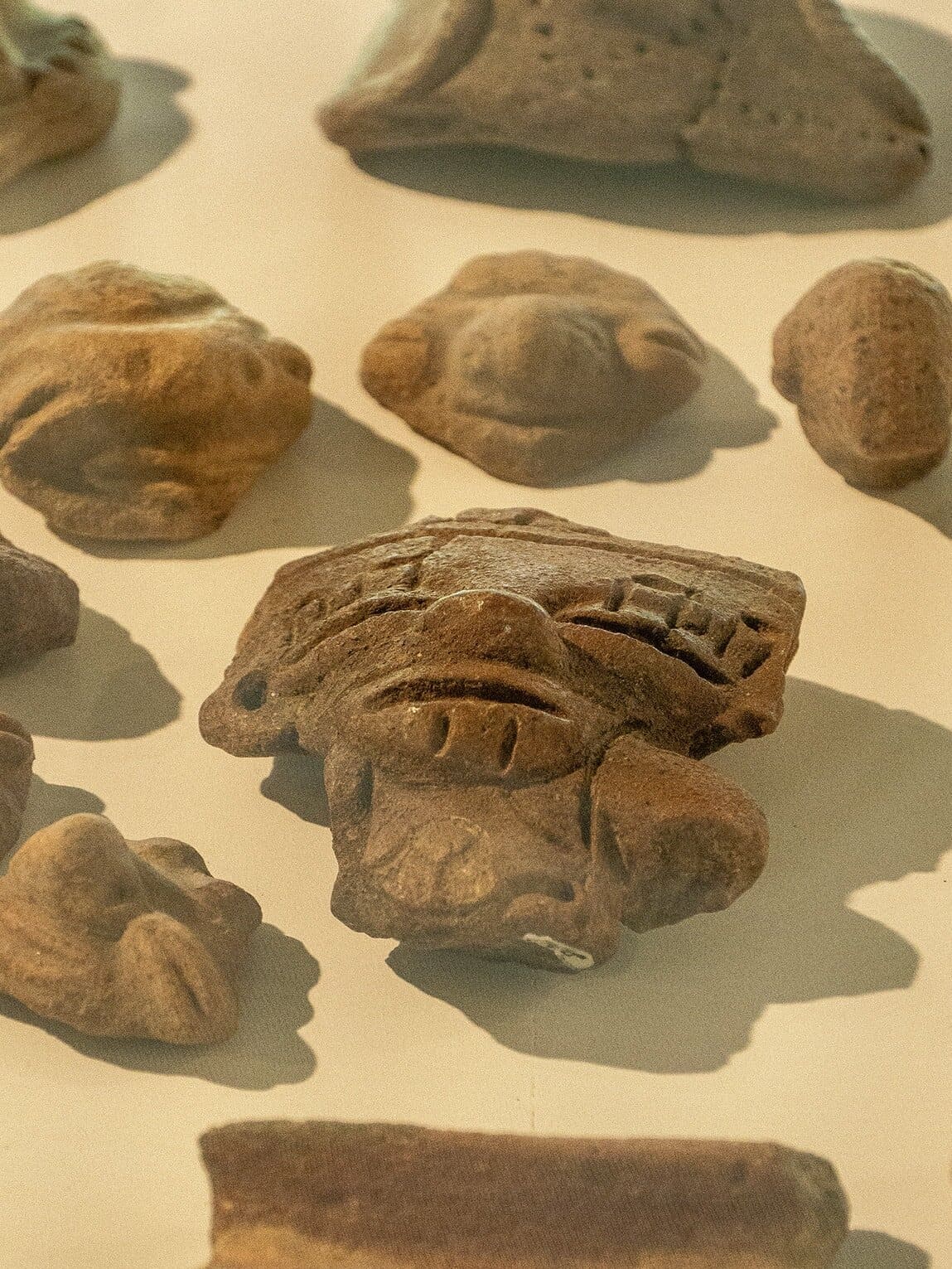
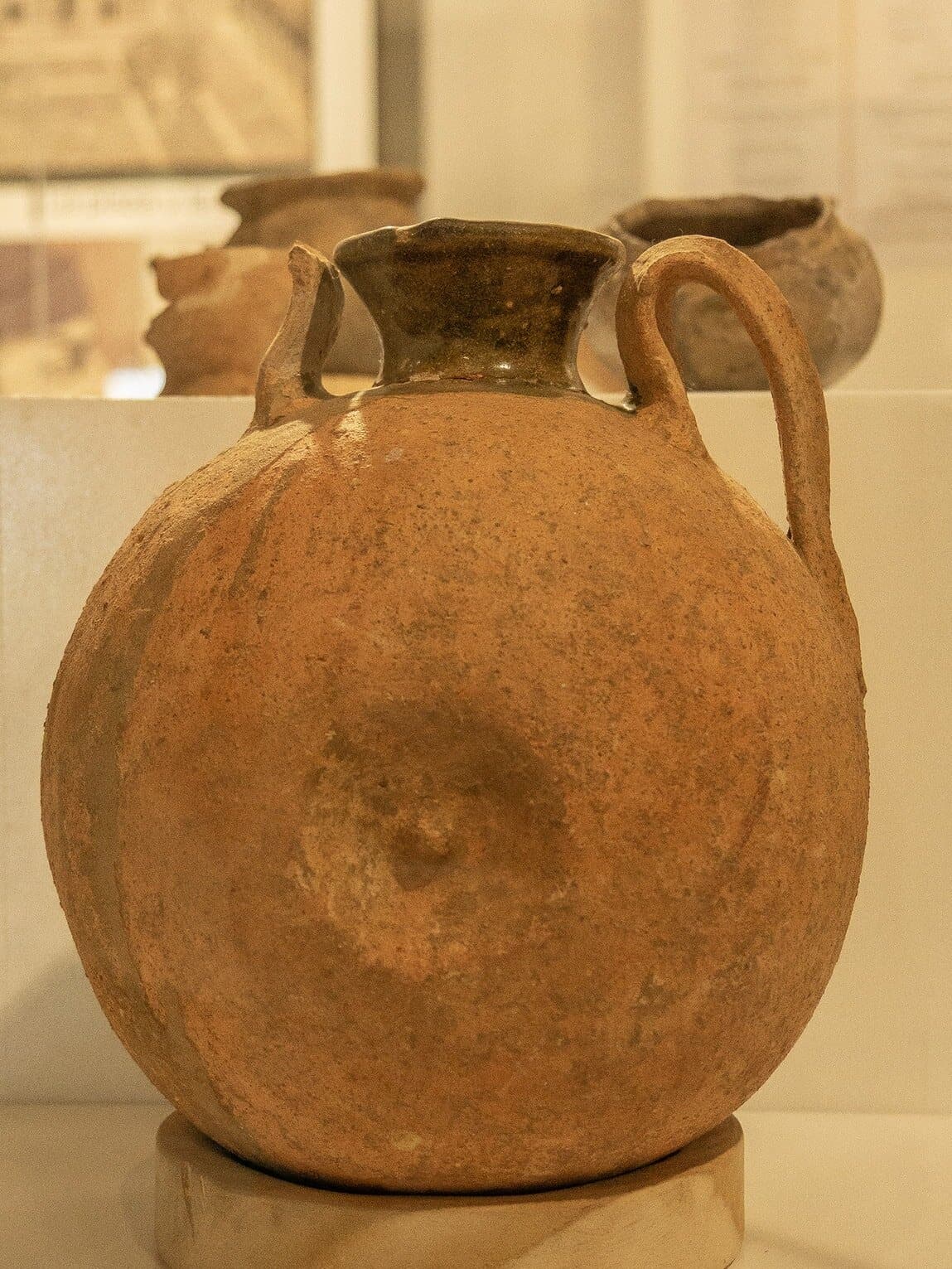
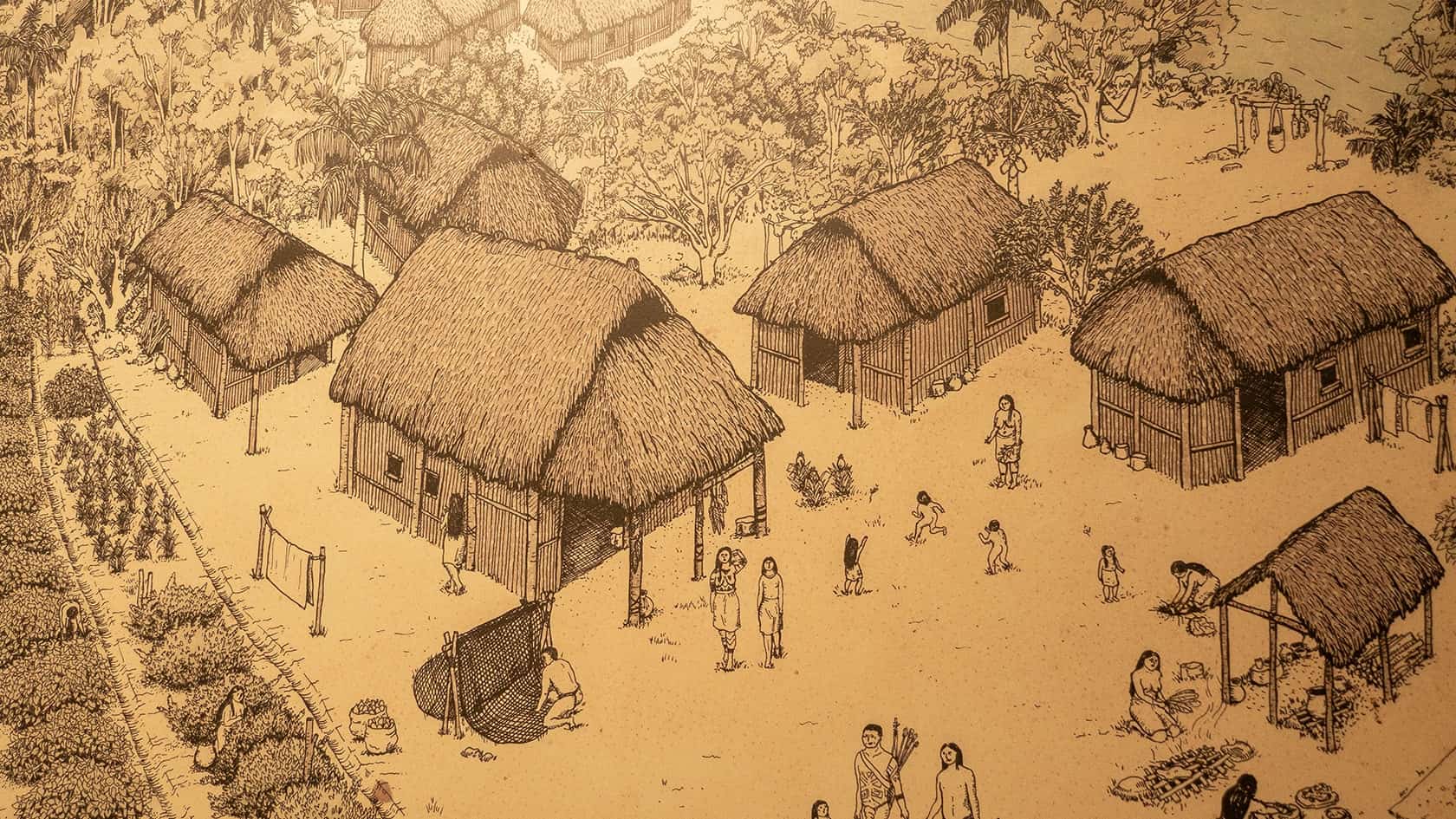
Before the arrival of the Spanish, the Darién was a vibrant and well-organized region, inhabited by indigenous communities such as the Tule, the Cueva, and the Kuna. These societies thrived thanks to agriculture—cassava, corn, sweet potatoes—as well as fishing and intertribal trade. Archaeological excavations have uncovered finely decorated pottery, objects made of gold and shell, and complex domestic structures, all of which attest to a sophisticated culture that was deeply adapted to the rainforest and its resources.
The Kunas, in particular, have left a lasting mark on the region, even though today they are mainly settled on the Panamanian side, where they continue to preserve their traditions and social organization. Long before the arrival of Europeans, these populations had established long-distance trade networks and developed ritual and artisanal practices that would leave a lasting mark on local history.
The Founding and Development of Santa María la Antigua del Darién
Everything changed at the beginning of the 16th century. In 1510, Vasco Núñez de Balboa, with the support of Martín Fernández de Enciso, founded Santa María la Antigua del Darién, the first Spanish city on the South American mainland. It quickly became the capital of Castilla del Oro and a strategic center for the colonial administration.
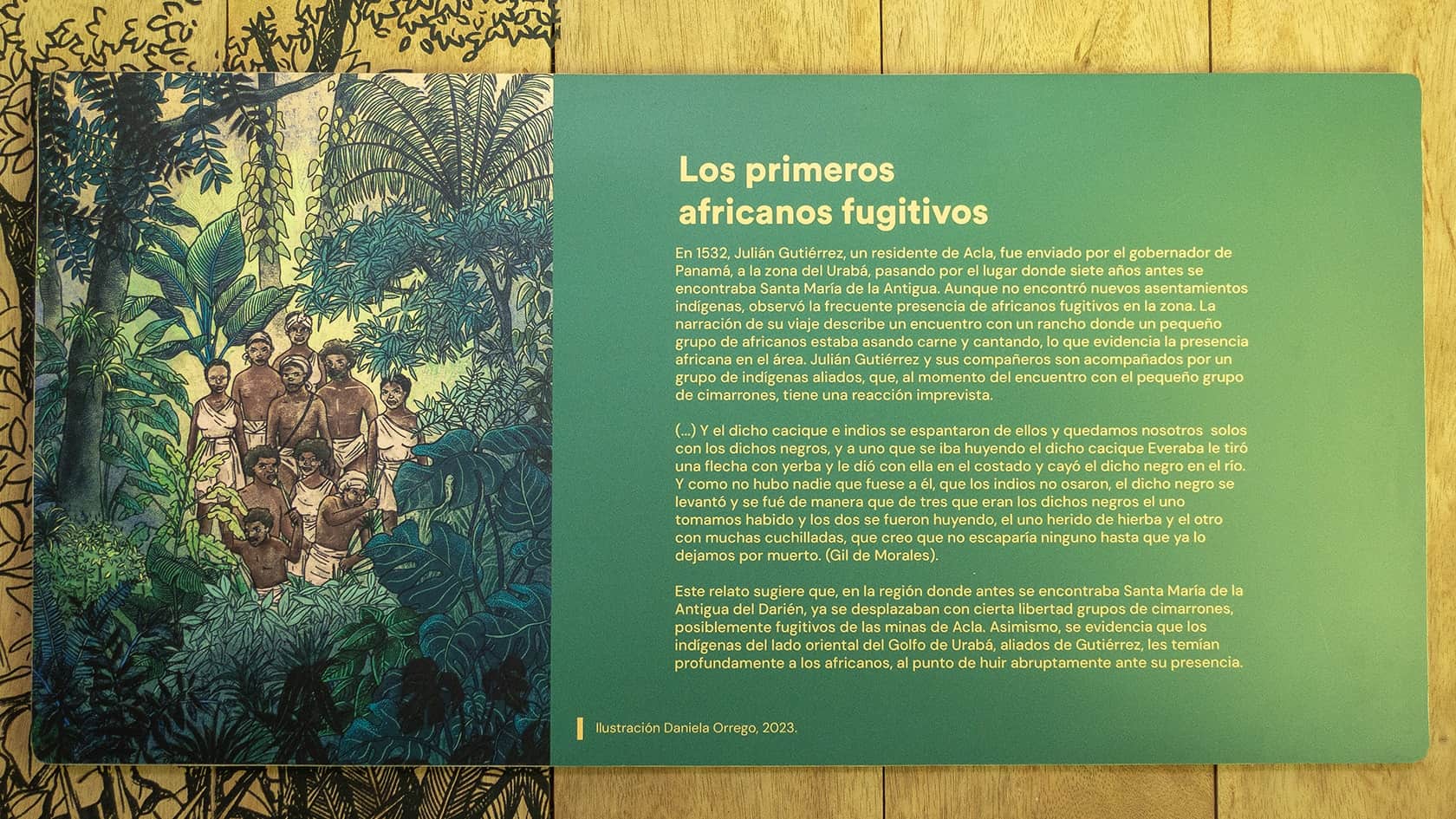
A few years later, in 1514, Pedro Arias Dávila, known as Pedrarias, arrived with a large expedition and laid out the city according to a formal urban plan: a central square, a church, workshops, and homes. The population at that time numbered between 1,500 and 3,000, consisting of a mix of Spanish settlers, local indigenous peoples, and African slaves brought over by the Spanish.
Santa María la Antigua in Darién also became a departure point for expeditions to Panama, Peru, and Quito, involving figures such as Francisco Pizarro, Diego de Almagro, and Sebastián de Belalcázar. The city thus embodies the brutal yet formative encounter between indigenous societies and European conquistadors.
Decline and Legacy
Despite its importance, the city is in rapid decline. Between 1520 and 1524, it was abandoned—a victim of conflicts, diseases introduced by Europeans, and the relocation of the colonial capital to what would become Panama City—and was eventually burned down by the indigenous people. The site fell into obscurity for several centuries, until recent excavations, conducted since the 2000s by researchers such as Alberto Sarcina, in collaboration with the ICANH (Colombian Institute of Anthropology and History).
This work, often carried out as part of community-based archaeology, has led to the discovery of urban remains, pottery, and colonial and pre-Columbian artifacts. Today, the Santa María la Antigua del Darién Archaeological Park offers a living testament to this complex history, allowing visitors to trace the lives of indigenous tribes, the arrival of the Spanish, the arrival of African slaves, and the transformations that have shaped the Darién and, more broadly, South America.
Our Experience
It isn’t really early when we leave San Francisco. And yet, the air still has that morning freshness that makes you feel like setting off on an adventure. Walking beside me is Estefania, our wonderful host at the Cocomar Hostal, who is walking with us to the meeting point with our driver.
In the Chocó region, roads are few and far between. The road leading to our destination—the Santa María la Antigua del Darién Archaeological Park, located south of San Francisco —ends about 1 to 1.5 km from the village. So we walk along the coast. The path winds past a few scattered houses, small, quiet beaches, and the ocean, which appears and disappears among the trees.
After walking for about twenty minutes, an unexpected sight appeared under a tree: an old SUV, probably from the ’80s, parked in the shade like a patient old horse. We barely had time to say goodbye to Estefania before we were already climbing into that strange carriage.
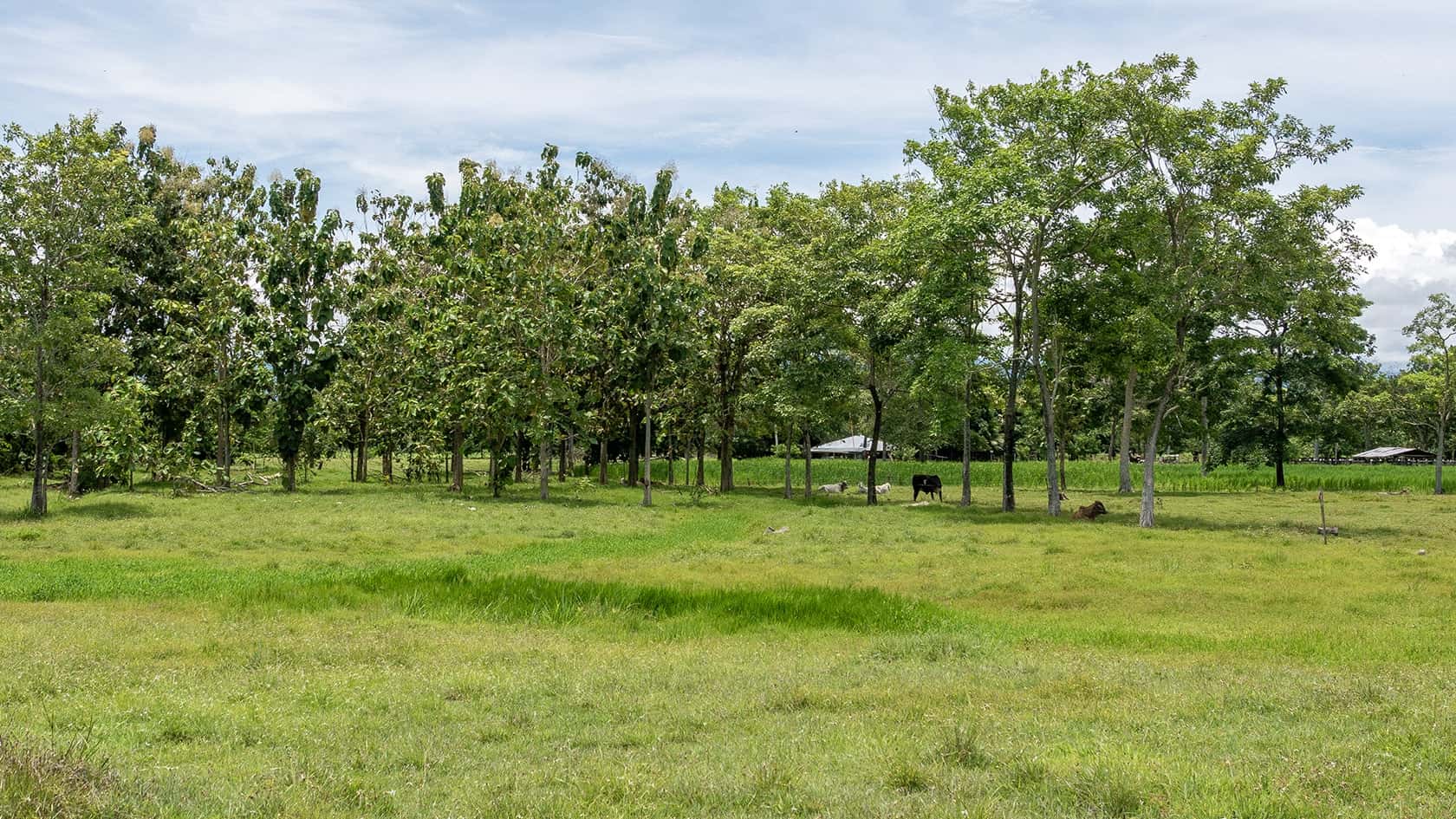
We have a journey of about 1 hour and 45 minutes ahead of us— not on a road, but on a trail. The trip quickly turns into a mini-expedition: crossing rivers, muddy trails, and, along the way, passing through a single village: Titumate. All around us, the landscapes of Chocó roll by: small hills and deforested plains, giving way to small farm plots or pastures. Here, nature still seems to take center stage. Chocó is definitely a wild region.
When what looks like a second village comes into view, we think we’ve arrived. In reality, it’s little more thana small hamlet of just a few houses clustered near the archaeological park. Here we are.
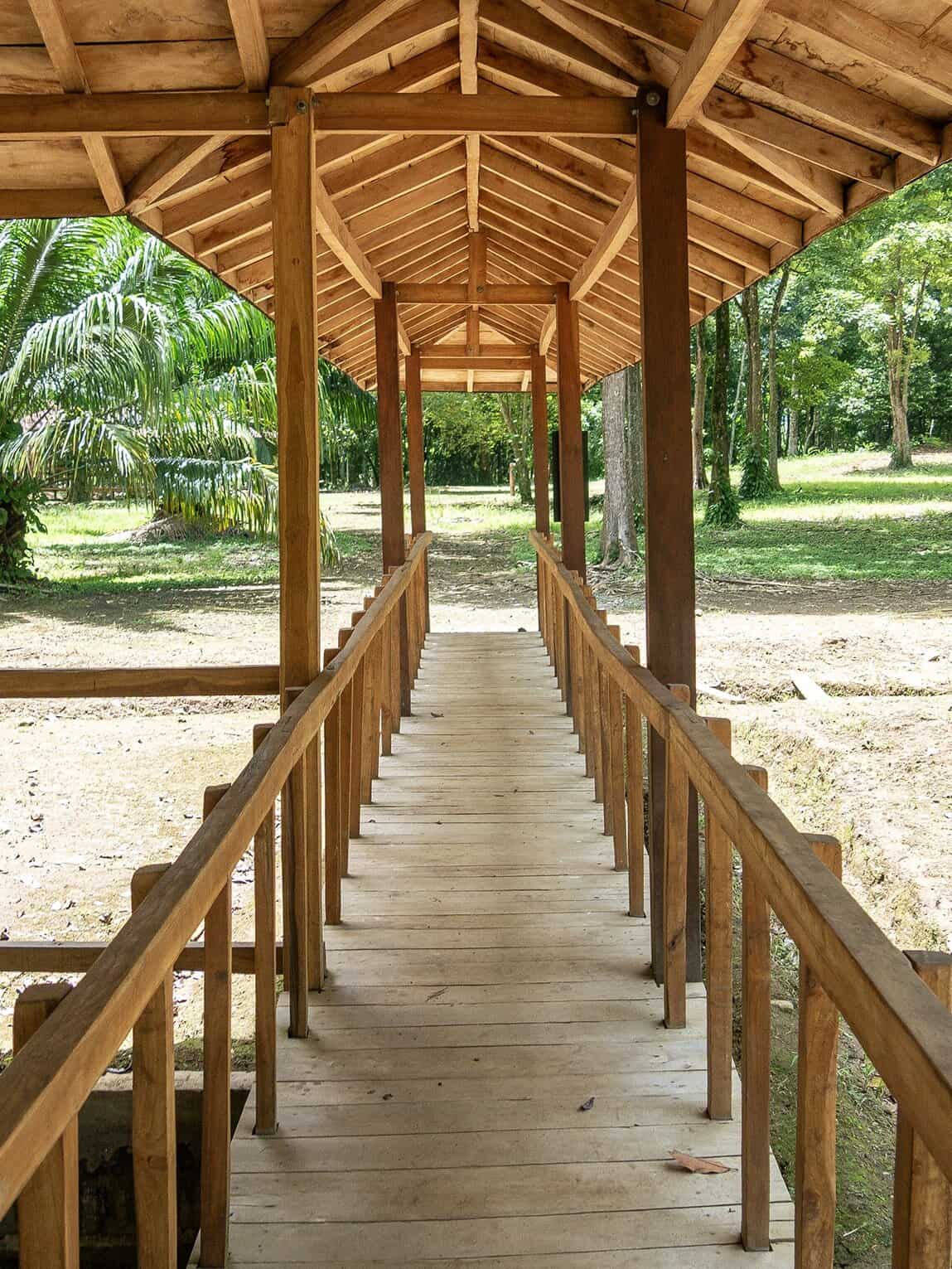
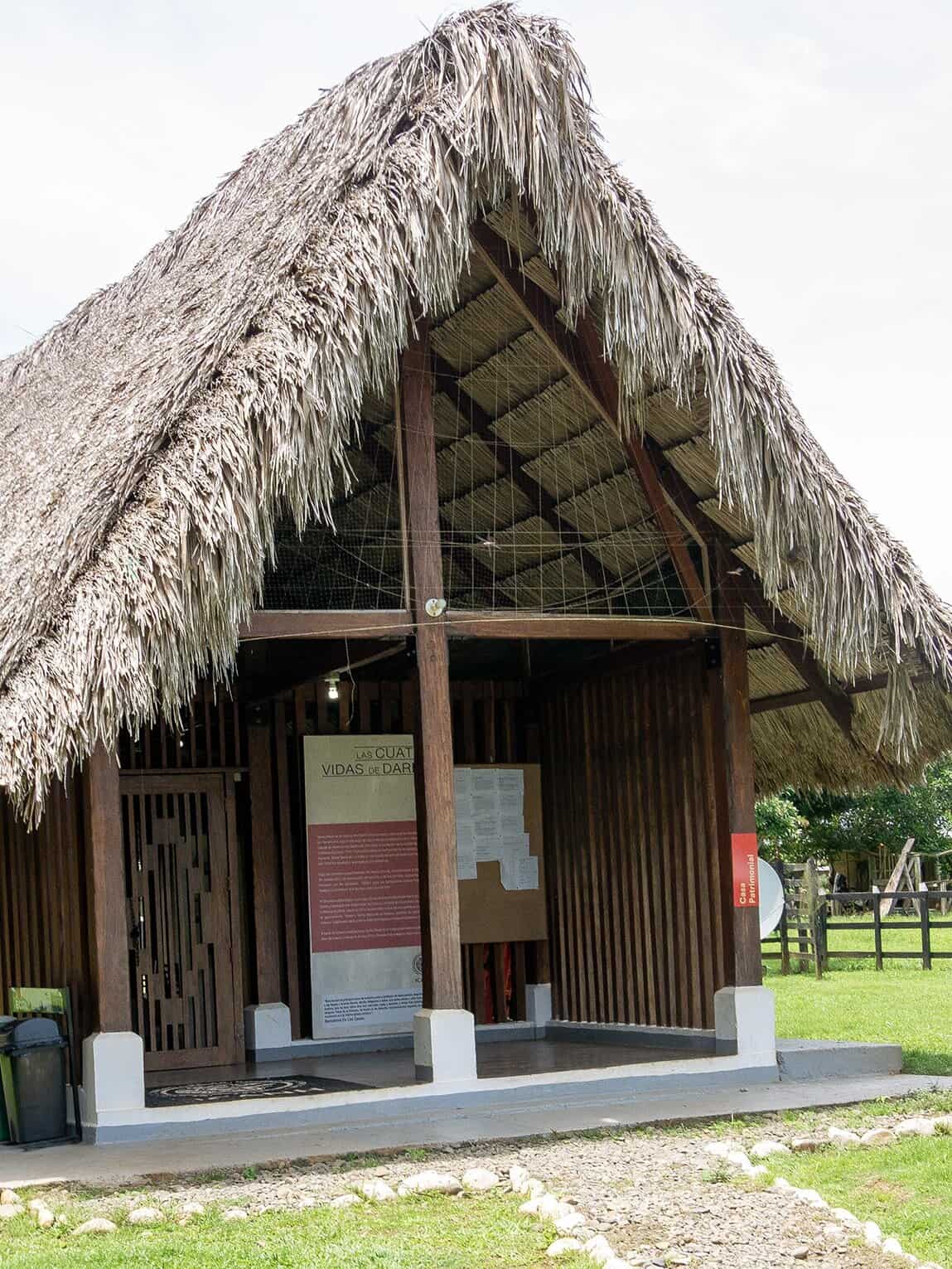
What immediately stands out is the contrast between the hamlet and the site itself. The archaeological park and its museum appear to be relatively new, well-maintained, and thoughtfully designed. In such a remote place, this is completely unexpected.
We say goodbye to our driver for a few hours and head to the museum. The staff are outside, enjoying the sunny day. Clearly, we’re the first visitors… and probably the only ones today.
A woman calls out to us to talk about lunch. She recommends that we eat here: if we wait until we get back to San Francisco, we wouldn’t eat until 4:30–5:00 p.m. It’s also a way to support the local economy. So we’ll have: a fish dish and a vegetarian dish, to enjoy after the tour. The meal— soup, main course, and fruit juice —costs 22,000 COP per person.
Although admission to the park is free, we have to sign the visitor log. The guestbook confirms what we had suspected: very few travelers pass through here— perhaps fewer than 30 people a month.
In addition to free admission to the site, a museum guide also accompanies us at no charge. He’ll provide us with plenty of historical details about what we’re about to discover. There’s just one requirement: you need to speak Spanish, because the staff doesn’t speak English.
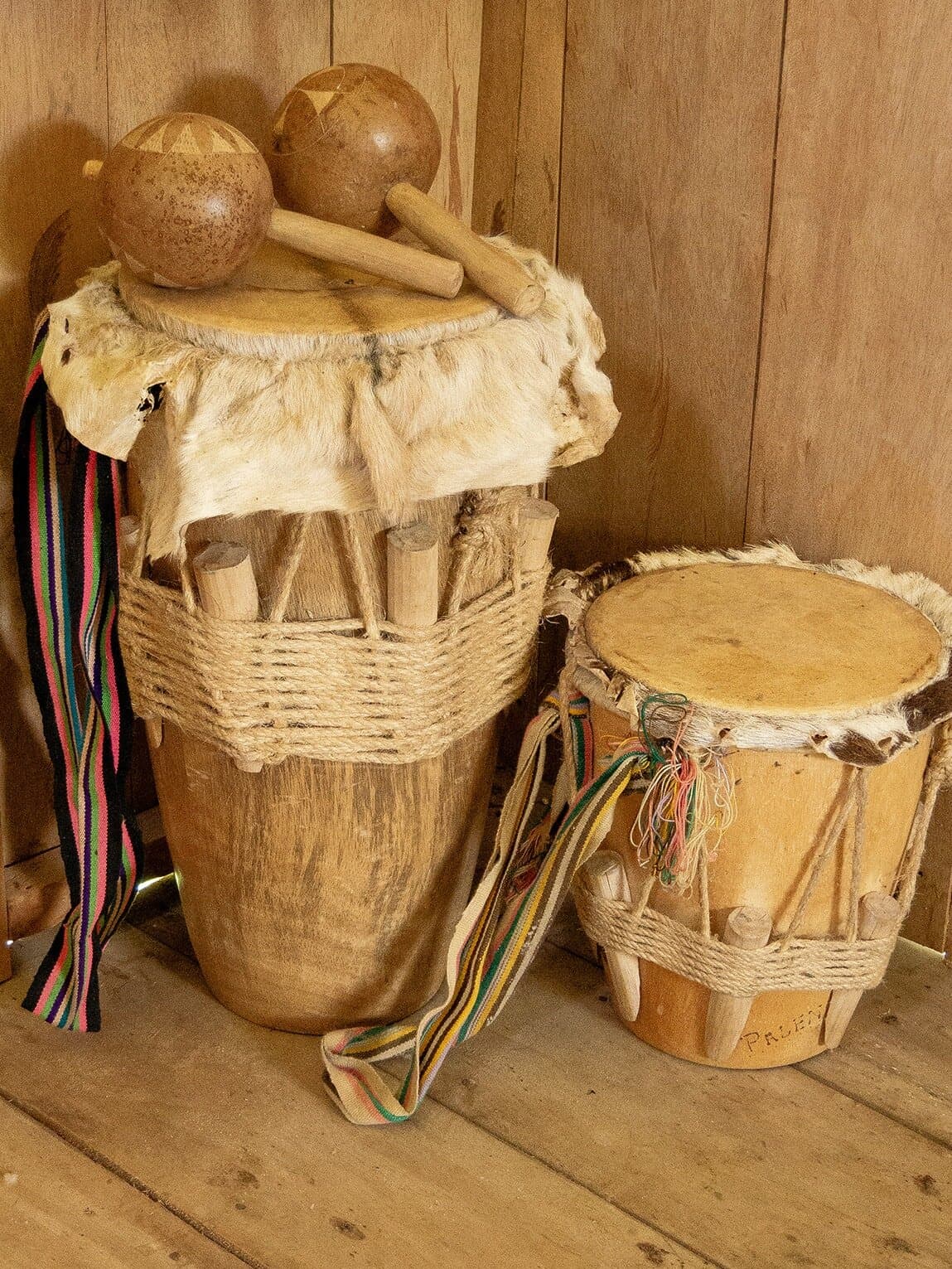
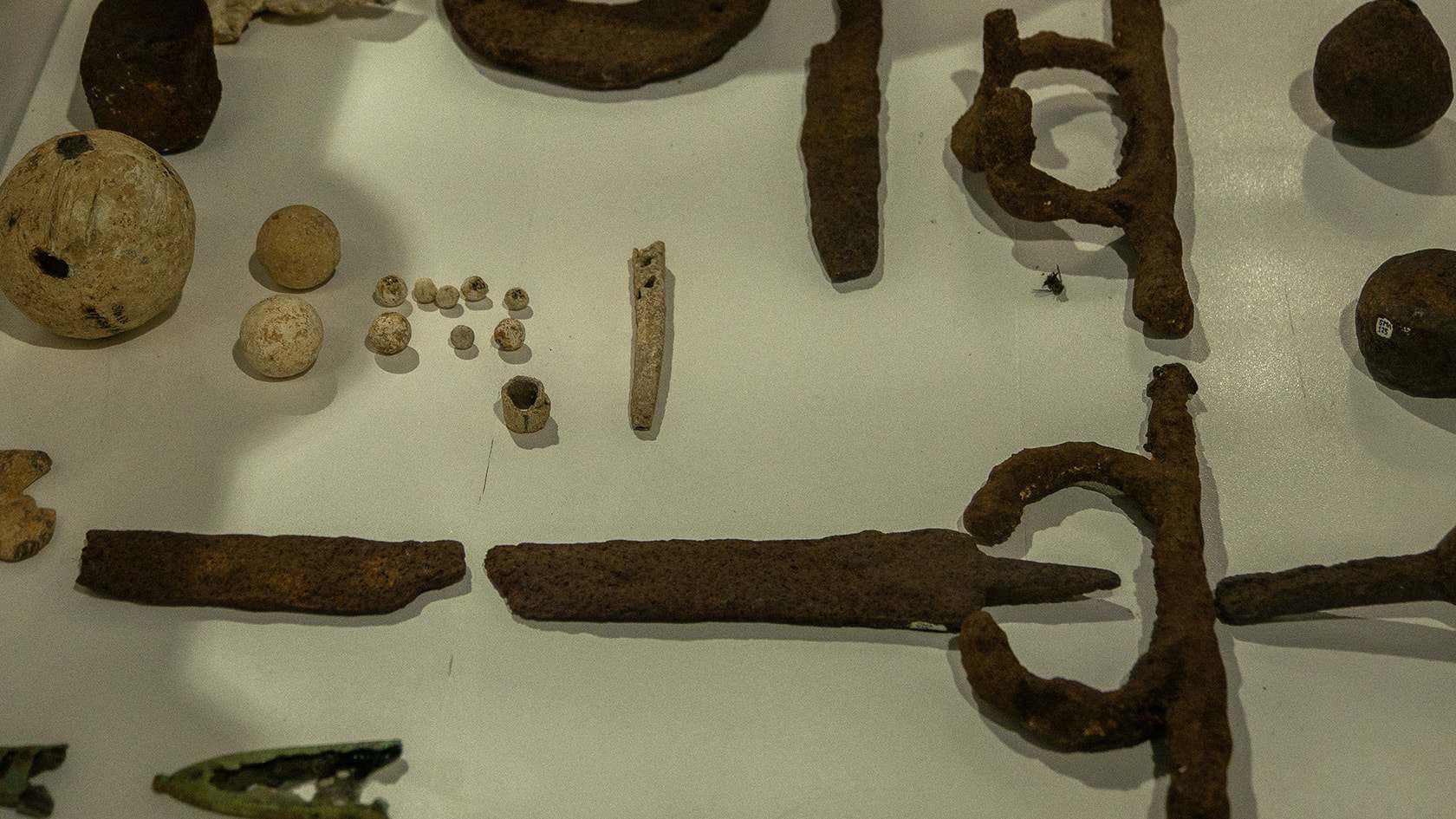
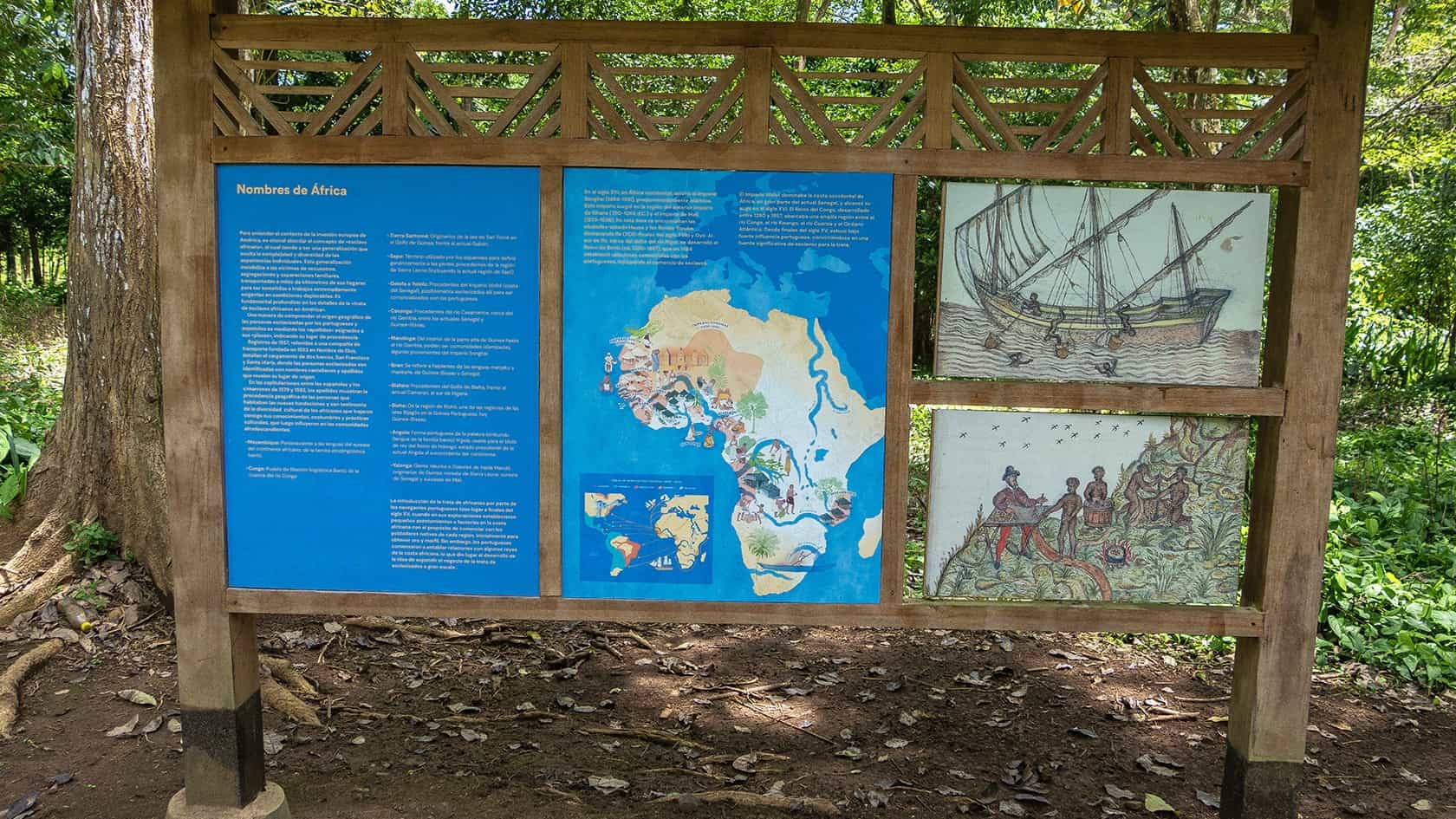
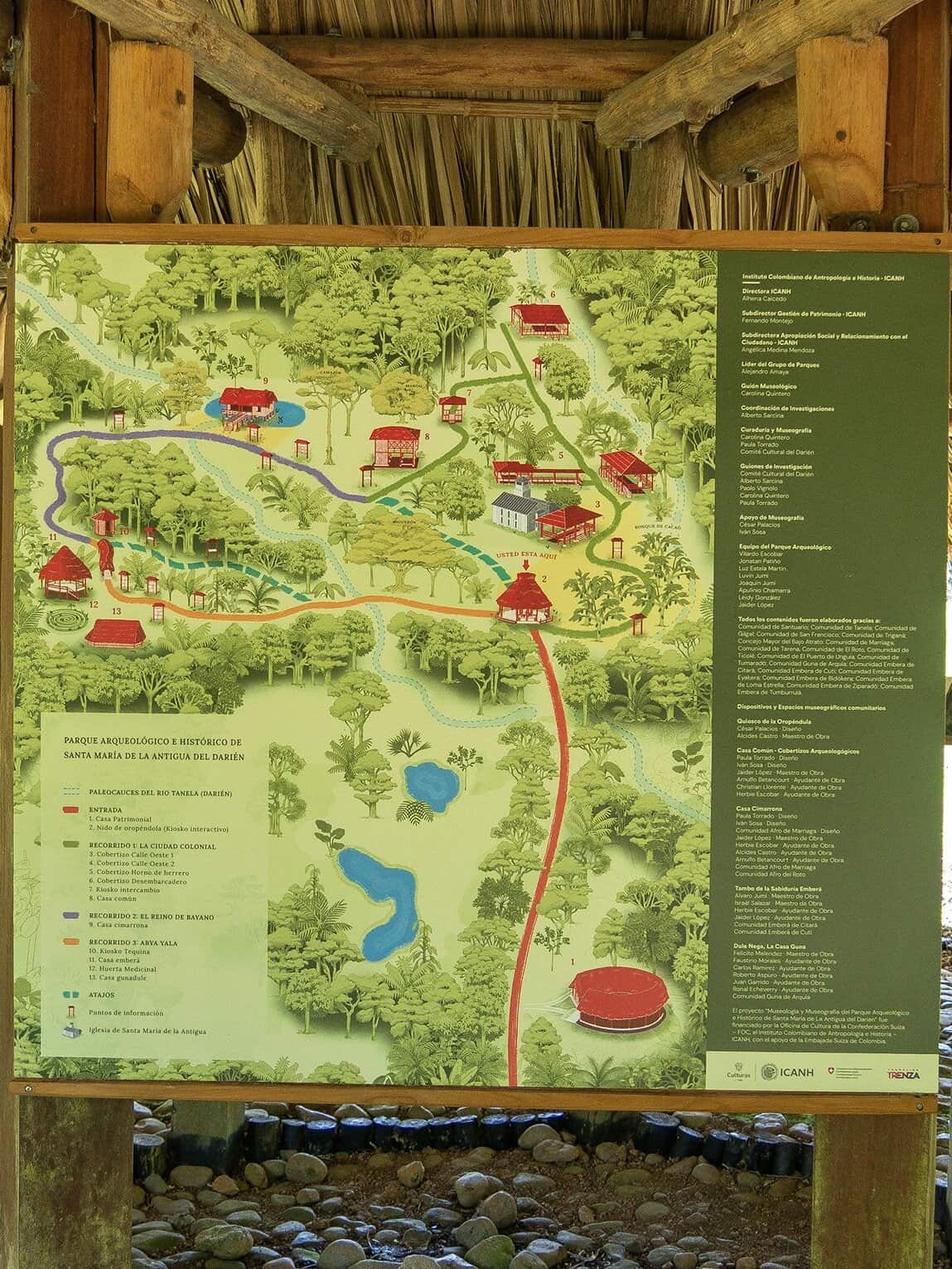
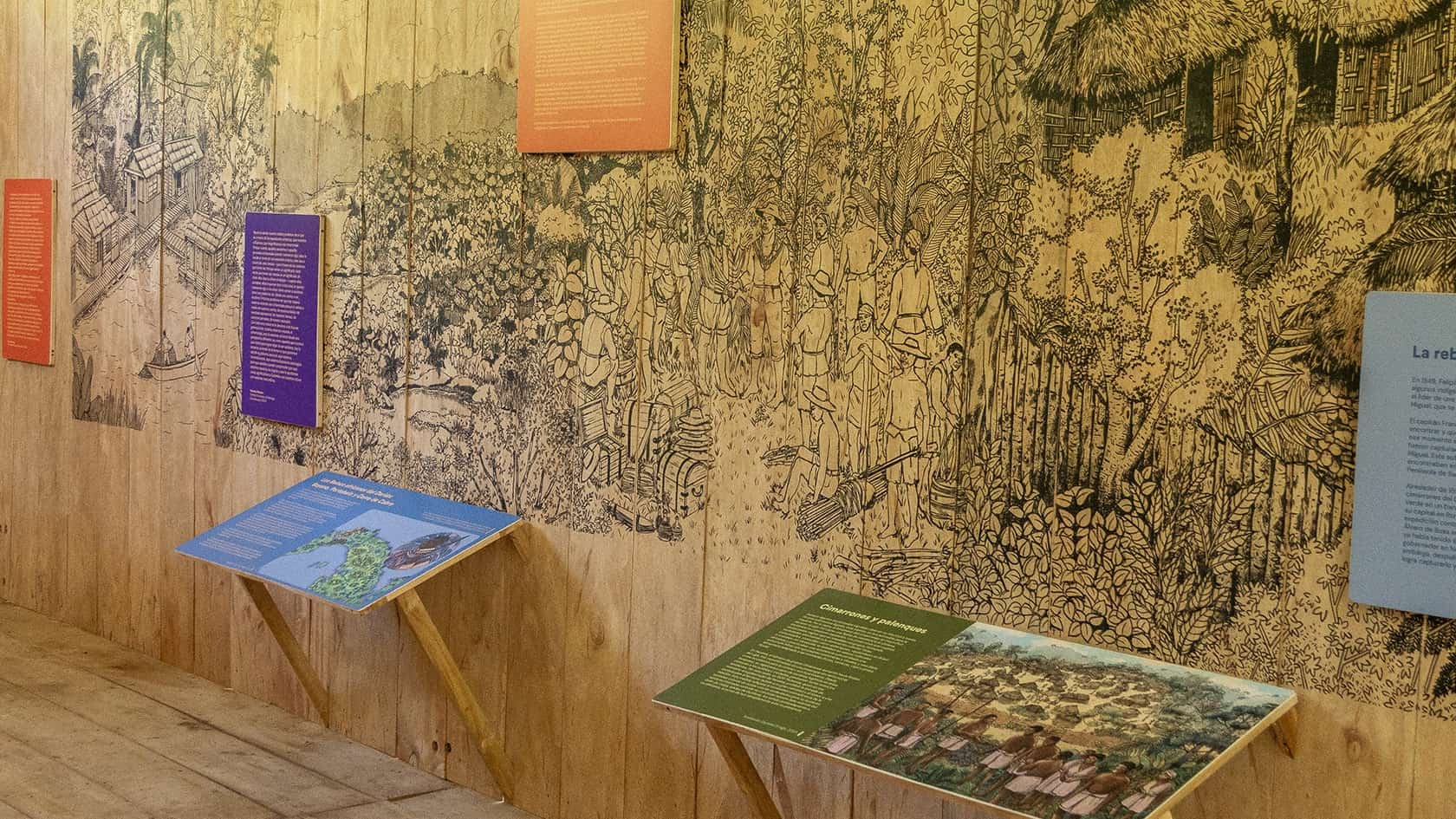
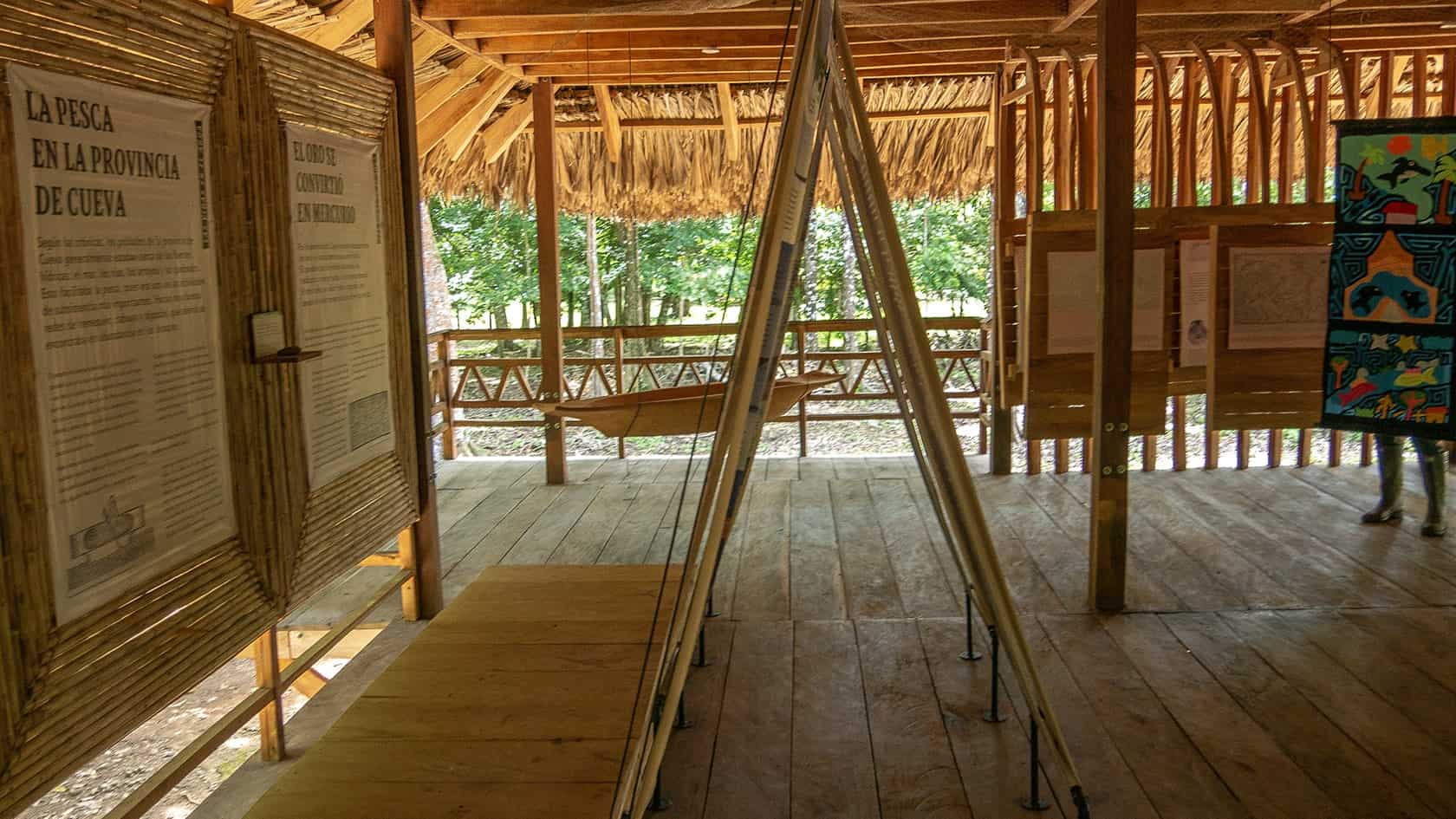
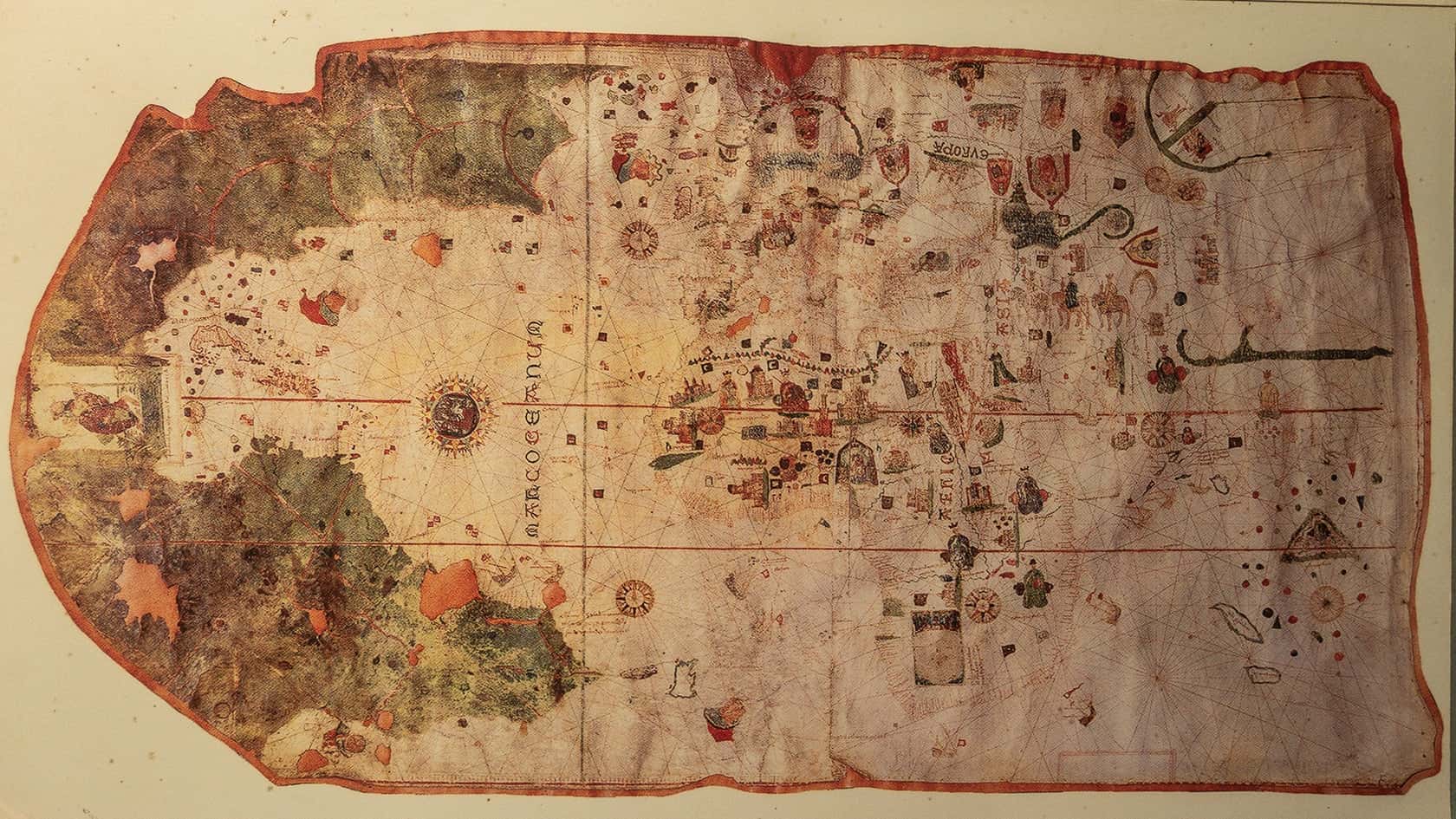
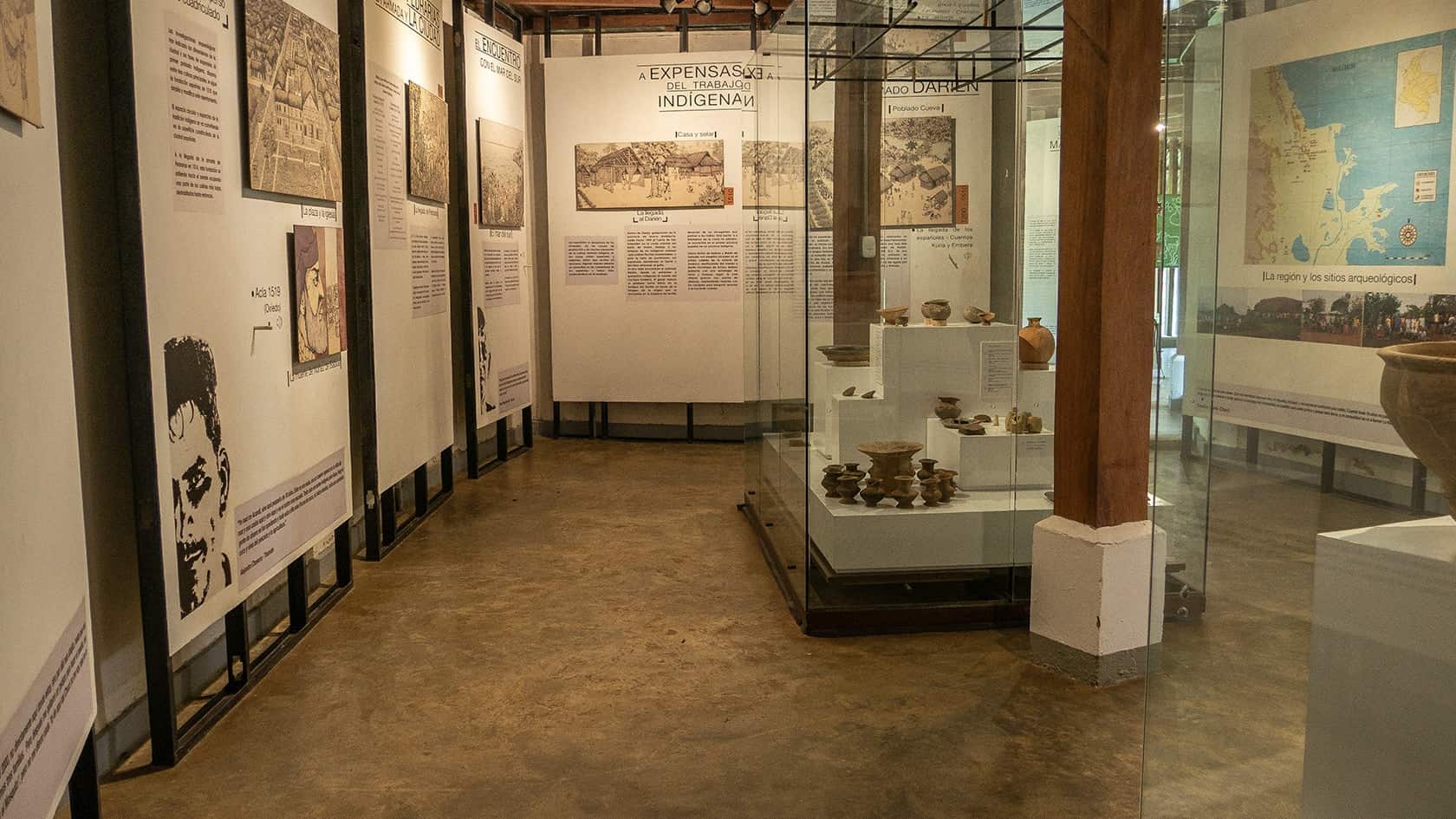
The tour begins inside the building. The museum houses numerous artifacts illustrating the region’s history, from its original indigenous populations to the arrival of the Spanish, the village’s development, and eventually its disappearance. Ceramics, bronze objects, and various artifacts accompany the guide’s explanations, which trace the history of Santa María la Antigua del Darién. Maps and models also help visitors visualize the site’s evolution following the arrival of the Spanish and the changing dynamics of relations with the indigenous peoples.
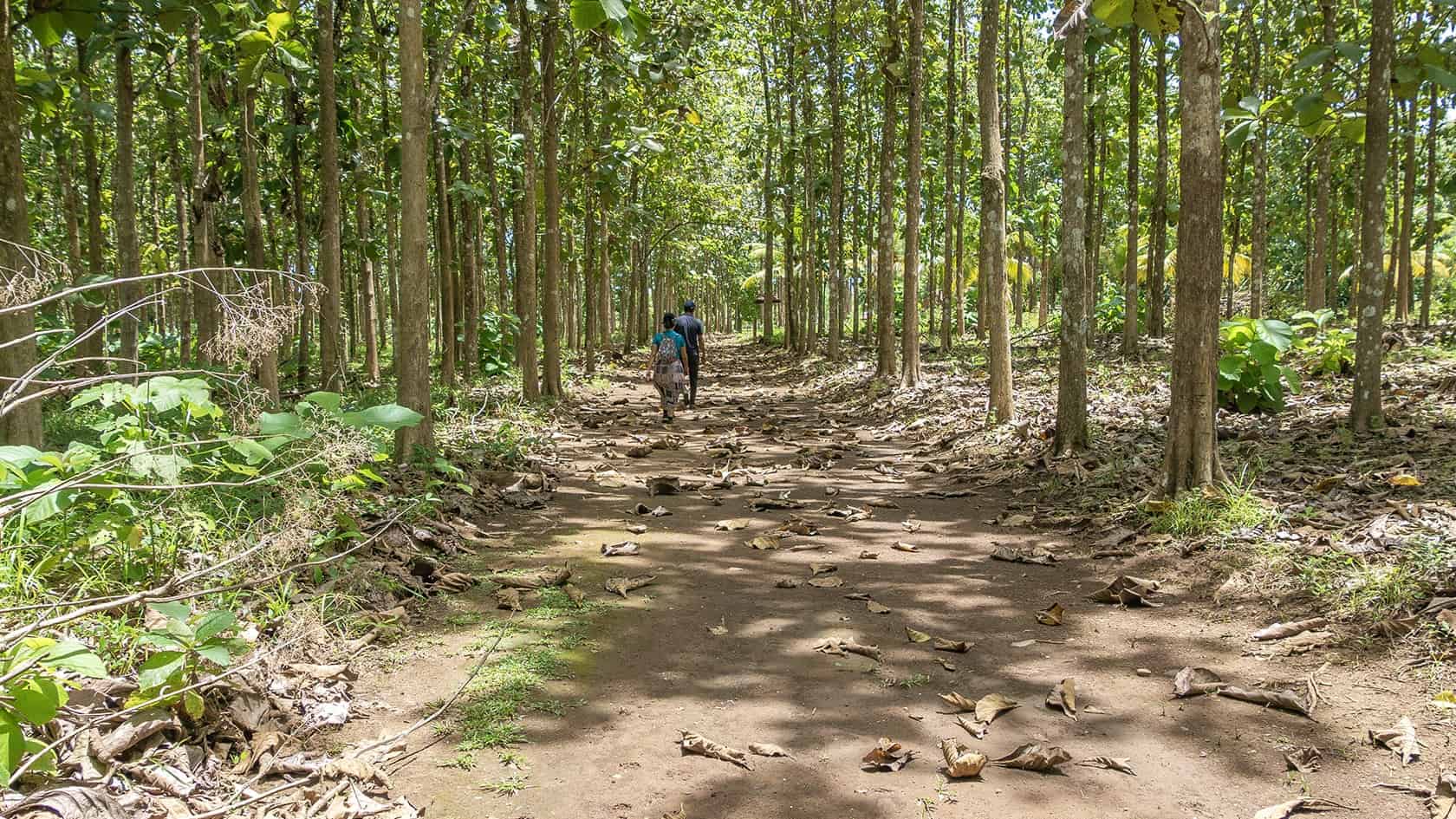
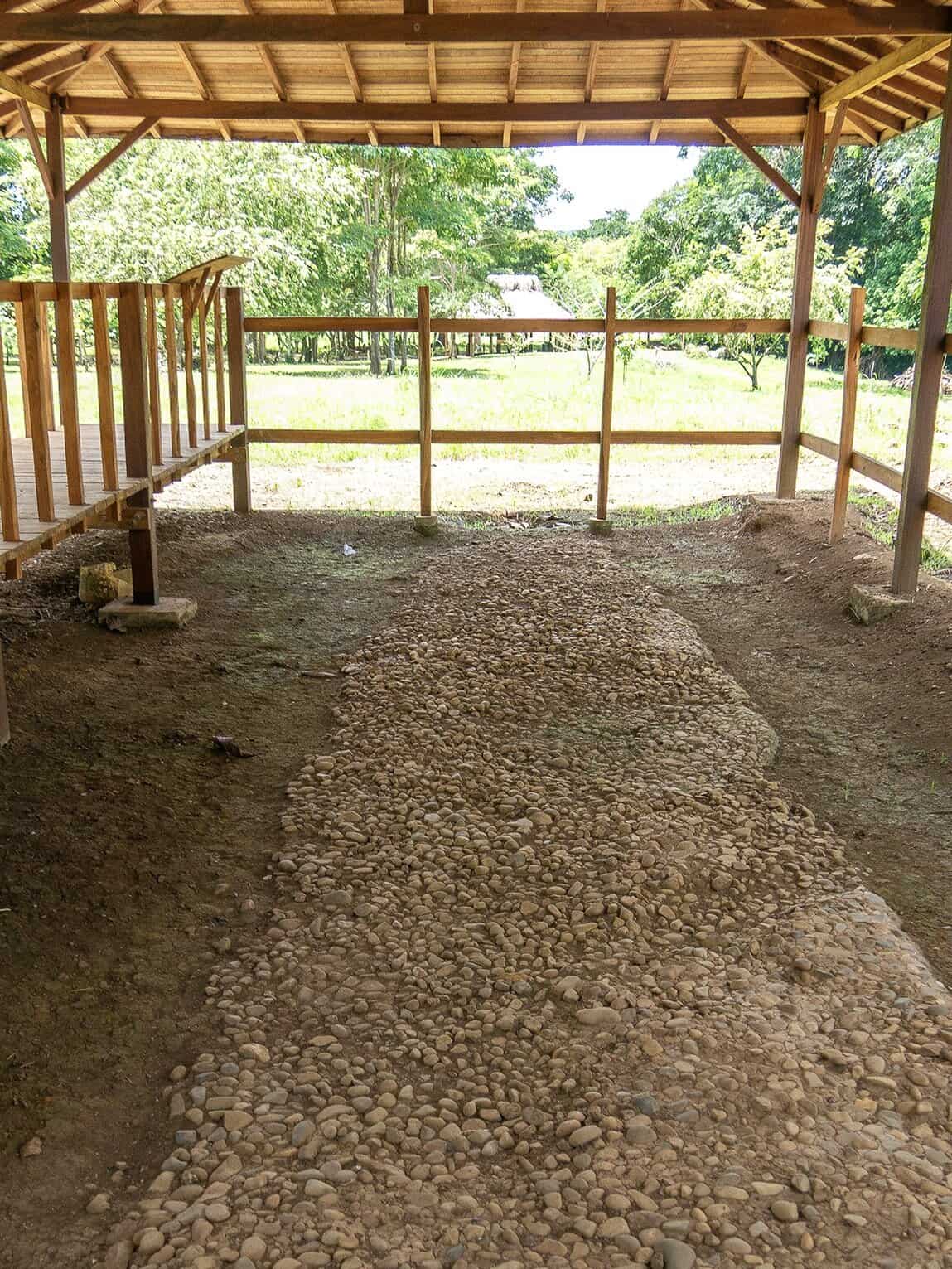
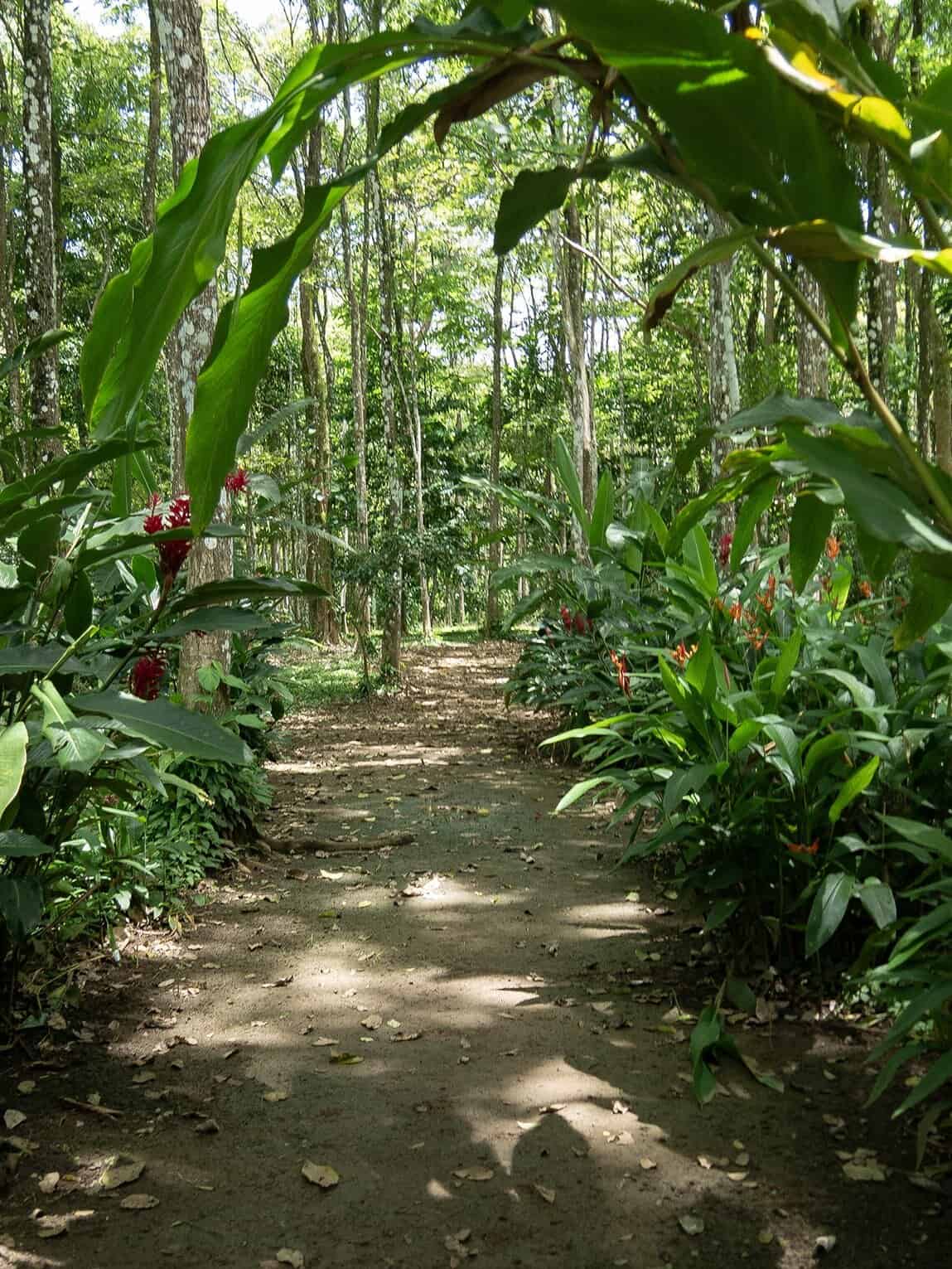
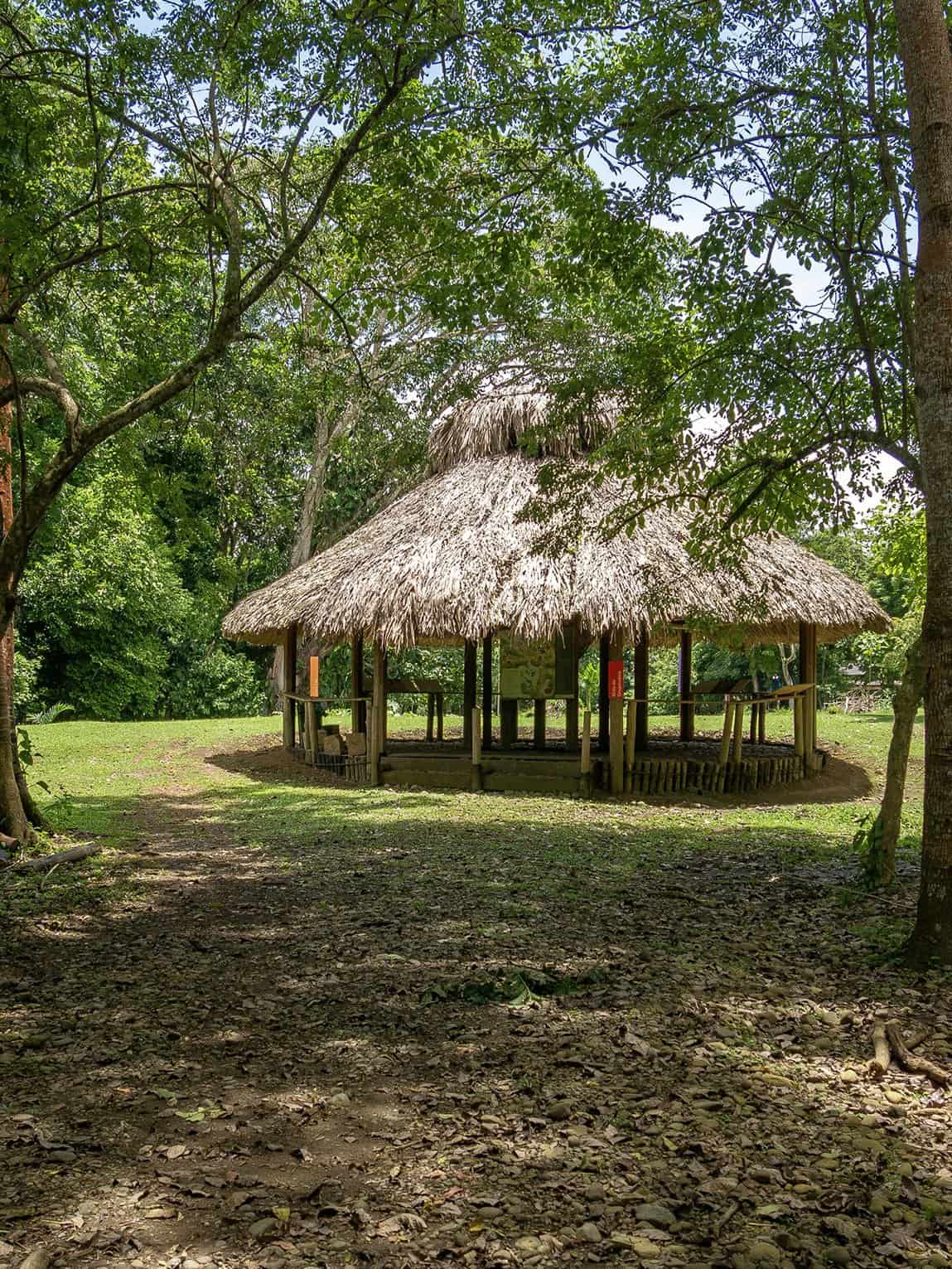
The second part of the tour takes place outdoors. The park covers a vast area, partly covered by tropical forest, where various historical remains are scattered: old paved roads, an iron-processing site, and other traces of the Spanish conquistadors’ presence.
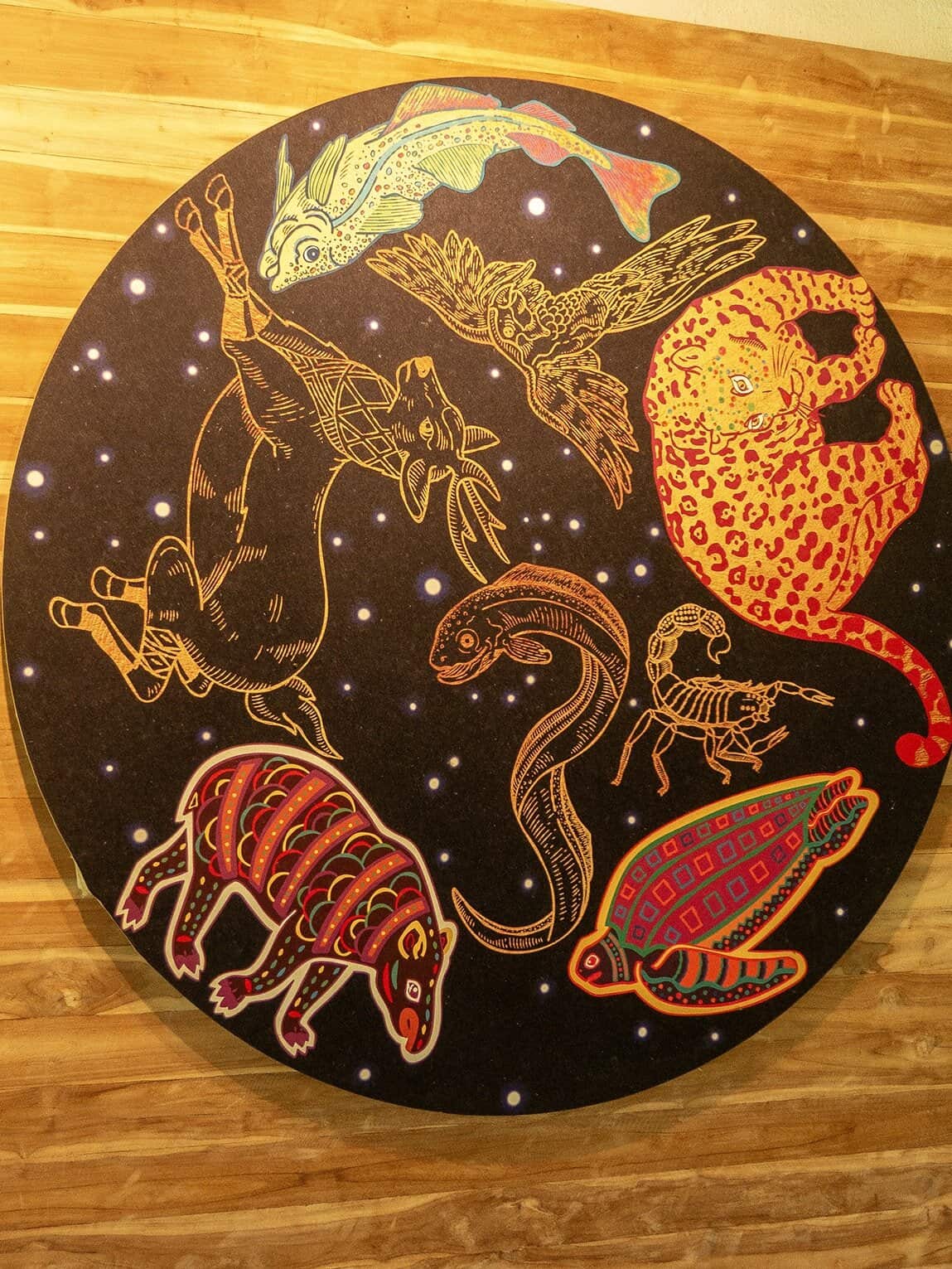
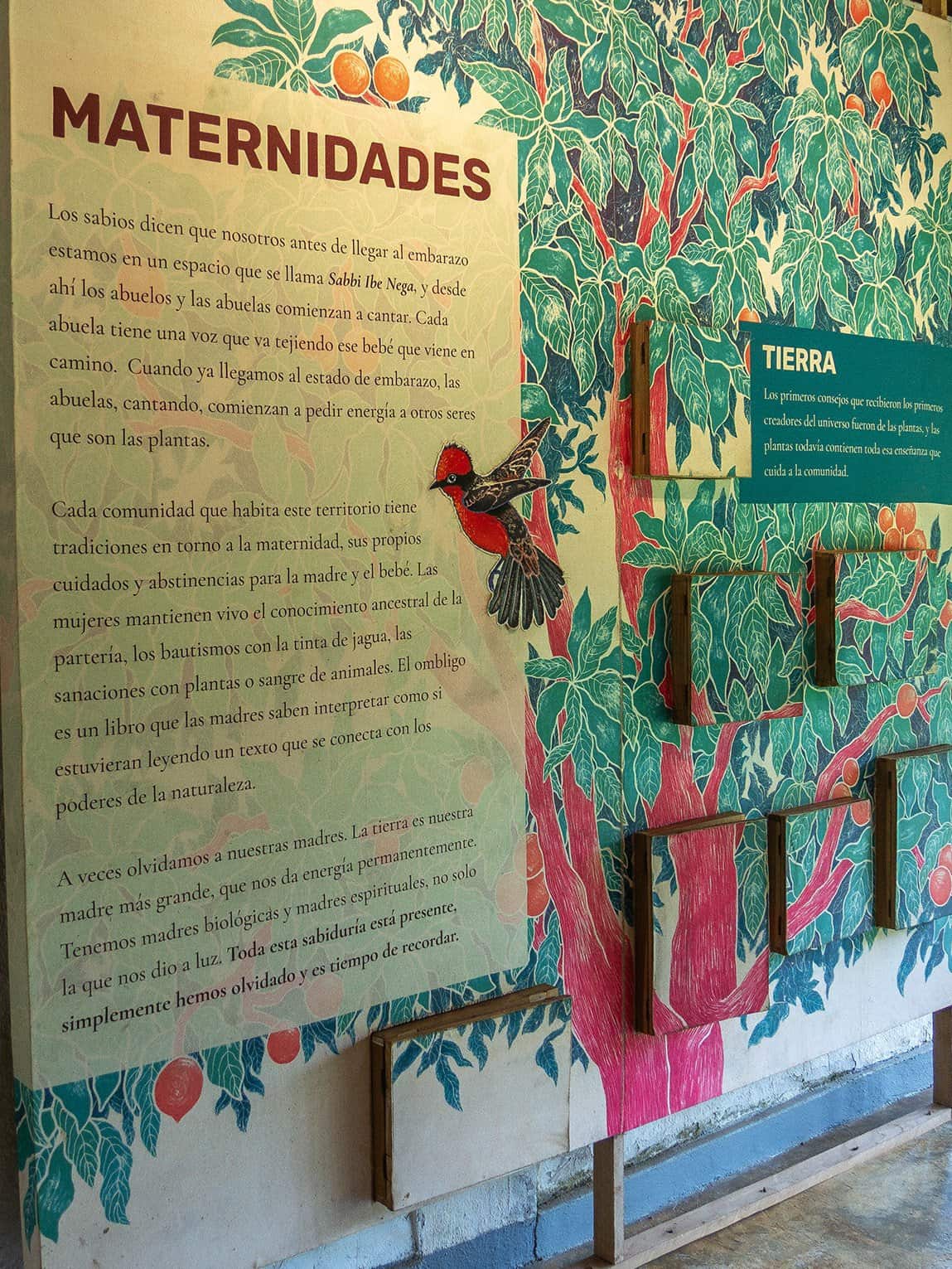
But this place doesn’t just tell the story of Europe. It also highlights the cultures of the region’s indigenous tribes, as well as the African heritage linked to the many African slaves brought to the “New World.” Beliefs, dietary habits, music, dances, and traditional instruments bear witness to this convergence of three worlds that continue to shape much of Latin America today: Indigenous culture, Spanish culture, and African culture.
Taking a walk in the forest is a simple pleasure. There’s something beautiful here—something hard to explain. Perhaps the feeling of a forgotten place.
With the exception of a denser, darker, and more humid area— a veritable paradise for mosquitoes. The infamous “zancudos.” You’d better bring some mosquito repellent.
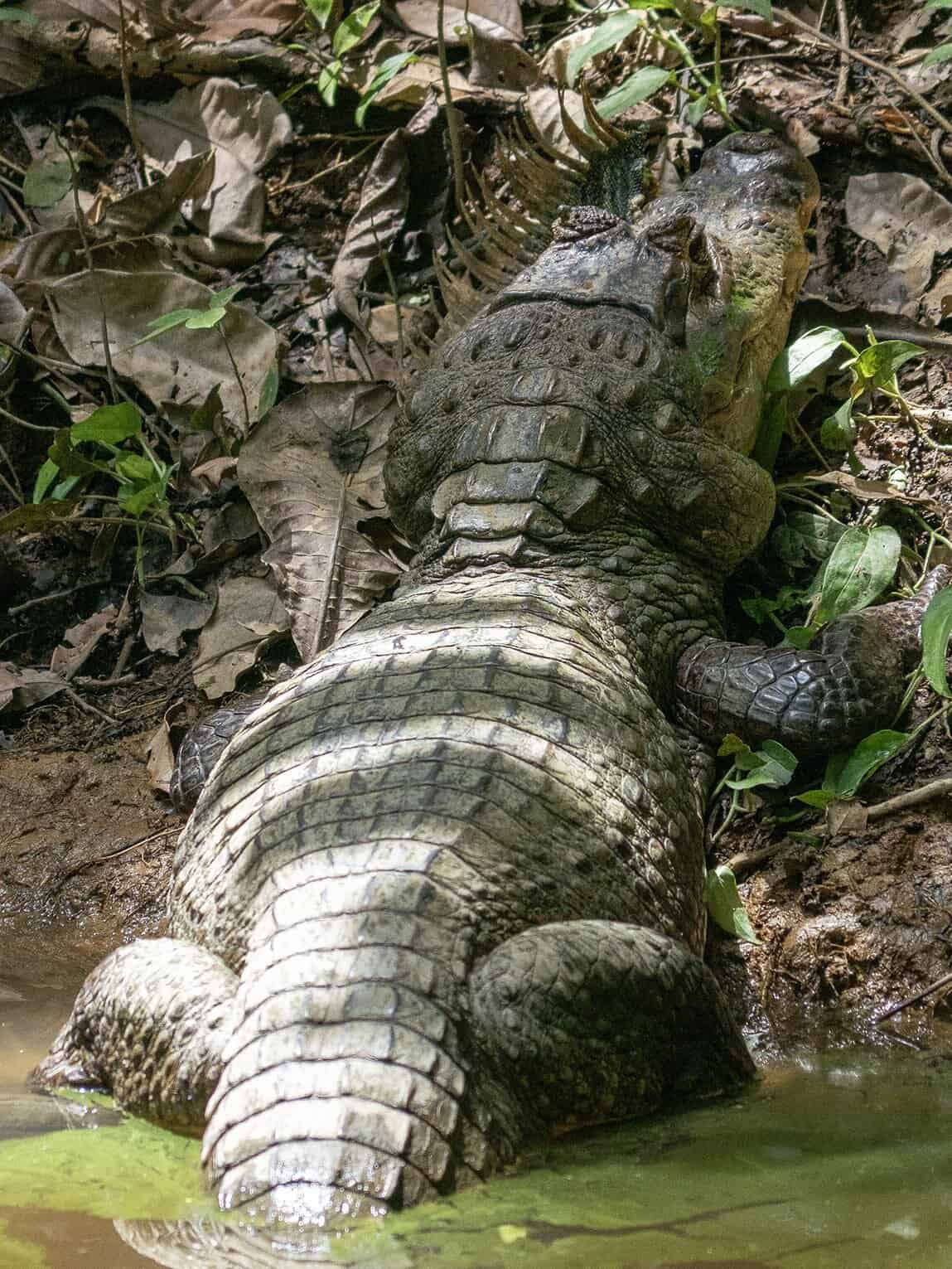
We also meet the guardian of the place: a good-sized crocodile, quietly enjoying life in a pond.
After about three hours of sightseeing, we return to our starting point. The tour is coming to an end. In the meantime, we had to take an impromptu break to apply alcohol to some mosquito bites. After years of traveling throughout Colombia, we had never been attacked like that.
Once our wounds were tended to, it was time for the fun part: lunch.
Right at the park entrance, a family from the hamlet had set up a makeshift table under a tree. The place is simple and peaceful, and the break is well deserved. We ate in an almost surreal silence, with no other travelers around, feeling a bit guilty—but very happy—to have this place all to ourselves.
We really enjoyed this cultural site. We had never heard of it before. It was almost by chance, while chatting with the staff at our hotel on the day we arrived in San Francisco, that we learned about a historic site in Chocó.
This discovery sparked both our curiosity… and a little concern. Since the site is relatively unknown, we were worried about spending an entire day traveling to a remote location only to find that there wasn’t much to see there.
It was quite the opposite.
It’s a place full of history, where there’s so much to learn —as long as you’re curious, love history, and speak Spanish.
We set off again, delighted to have discovered the Santa María la Antigua del Darién Archaeological Park, located south of San Francisco. In the past, it was the first village founded by the Spanish in South America, and even today it offers a better understanding of the region’s history throughout the centuries.
And we should also say: thank you to the Colombian government (yes, really!) for creating this cultural space with such dedication—and for making it free—while also helping to support the local economy of the hamlet. The park is managed by the Colombian Institute of Anthropology and History, a public research center affiliated with the Ministry of Culture, Arts, and Knowledge. Long live culture!
How to Get There Santa María la Antigua del Darién Archaeological Park ?
According to the information we have, the village of San Francisco is the only place from which you can reach the Santa María la Antigua del Darién Archaeological Park directly.
This means that, no matter where you’re staying in the region, you’ll first need to travel to San Francisco before you can arrange your trip to the park.
There is no public transportation to get there, so you must arrange for private transportation. The “road” is actually a trail, often uneven, which makes the use of an all-terrain vehicle essential.
For our part, we discussed this with our host as soon as we arrived in San Francisco. He took care of booking our transportation and accompanied us to the meeting point, which made the whole process much easier.
It’s also important to note that the park is about a 2-hour drive from San Francisco (which is about a 4-hour round trip). This explains the high cost of transportation: 400,000 COP for two people, to be paid directly in cash to the driver. So be sure to bring enough cash before you leave.
| Transportation | Private (no public transportation) |
| Starting Point | About 1 km south of San Francisco |
| Duration (round trip) | 1 hour and 45 minutes one way, or 3 hours and 30 minutes round trip |
| Rate | 400,000 COP |
| Notes | Have enough cash on hand to pay the driver in cash |

Where to Stay in San Francisco (Caribbean Choco) ?
Note:
- Most accommodations are not listed on major platforms such as Booking. Reservations are usually made directly by contacting the owners via Instagram or WhatsApp.
- San Francisco is the most convenient option for visiting the archaeological park. The 4×4 will pick you up south of the village, about a 20-minute walk from the San Francisco pier. You can’t drive to Triganá. If you’re staying there, it will take about 1 hour and 15 minutes to walk from the Triganá pier to the meeting point with the driver, or you can take a boat to San Francisco and then walk to the pickup location.
Finding a place to stay in San Francisco is a big part of the experience. Here, there are no large, impersonal hotels: accommodations consist mainly of small, local establishments run by locals. The welcome there is simple, sincere, and warm. From cozy inns and homes overlooking the bay to more rustic cabins nestled in the heart of nature: everyone can find a place that suits their desire for peace and authenticity.
Given the village’s modest size, staying in Triganá—about a 50-minute walk away—can also be an excellent option. This allows you to experience a variety of atmospheres while further exploring the southern part of Caribbean Chocó.
In this section, we’ll help you choose the accommodation that best suits your travel style, preferences, and budget.
San Francisco

$ – Budget-friendly
Hostel
The Sway of the Hammocks
Al Vaivén De Hamacas is a place that travelers describe as deeply soothing. People come here to slow down, relax in the hammocks, and enjoy a warm and welcoming atmosphere. Homemade meals are often praised, as is the hosts’ attentive hospitality. The accommodations are simple, but the experience is authentic and warm.

$ – Budget-friendly
Hostel
Ecohotel Caracoli
The Ecohotel Caracoli charms guests with its simple, authentic atmosphere, featuring functional rooms that bring guests closer to nature and often open out onto the tropical vegetation. Travelers generally note that the rooms are reasonably clean, offer basic but adequate comfort, and that the staff provides a warm welcome. It’s not a luxury hotel, but an immersive one.

$$ – Average budget
Hotel
CocoMar Hostel
Estefanía is an exceptional host—attentive and caring from the beginning to the end of our stay. We stayed with her for four nights and felt supported every step of the way. The cabins, just a few steps from the sea and only 20 seconds from the dock, are simple but clean. The food is delicious, and the help with organizing activities is truly invaluable.
Trigana

$ – Budget-friendly
Hostel
Treegana Hostel
Treegana Hostal charms guests with its simple, immersive atmosphere, nestled in the heart of the jungle and surrounded by lush vegetation. The rooms are basic but comfortable, some with private bathrooms, and offer everything you need to relax after an active day. Travelers appreciate the pool, the shared kitchen, and the breakfast. The service is attentive. An authentic spot, without any unnecessary frills, but full of charm.

$$ – Average budget
Hotel
Hotel Cabañas Anayansy
Travelers who have stayed at Cabañas Anayansy describe it as a simple, unpretentious experience. The cabins are private, equipped with en suite bathrooms, double beds, and bunk beds, giving them a rustic yet functional feel. Reviews highlight a very natural atmosphere, with basic amenities: fans instead of air conditioning, simple furnishings, and limited services. The property is beautiful and well-maintained.

$$$ – High budget
Hotel
Acuarium Turístico Hotel
Travelers report that the rooms at the Hotel Acuarium Turístico are simple but clean, and that the staff is welcoming and friendly, which creates a relaxed atmosphere during their stay. Some appreciate the tranquility and easy access to the beach, while others note that the amenities are basic, with no luxurious extras—it’s more of a humble, down-to-earth place to relax after a day of sightseeing.
Notes & Tips
Apply mosquito repellent
We recommend that you bring mosquito repellent and apply it once you arrive if you plan to visit the outdoor area of the museum. Some sections pass through a dense forest, where there are large numbers of mosquitoes.
Bring sunscreen
If you choose to visit the outdoor section of the museum—which we highly recommend—you’ll spend about 1 hour and 30 minutes outdoors, sometimes in the sun. Applying sunscreen is therefore strongly recommended.
Bring water
Between the 4-hour round-trip drive and the 3 to 4 hours you’ll spend there, you’re bound to get thirsty! Be sure to bring a bottle of water to help you cope with the hot, humid climate of Chocó.
Bring enough cash
Whether it’s to pay the driver, buy lunch, or make a donation to the museum, everything is paid for exclusively in cash. So be sure to bring enough cash before you leave.


