

In brief

Nestled underground, an hour’s drive from Bogotá, the Zipaquirá Salt Cathedral is one of Colombia’s most fascinating sites. Carved out of an ancient salt mine, it impresses with its monumental architecture and mystical atmosphere. With its play of light and sculptures carved into the salt rock, the visit plunges visitors into a unique underground universe combining history, spirituality and engineering.
A true national pride, this site attracts thousands of visitors every year to admire its galleries and impressive underground nave. But beyond its originality, what is the experience really worth? What should you know before you go? In this article, find out everything there is to see, tips for avoiding the crowds and our opinion on this must-see (or not) tourist site in Colombia.
Salt cathedral
- County: Cundinamarca (Andes)
- Location: Zipaquirá
- Founded: 1801 (salt mine),
- Depth: 180 m
- Altitude: 2,652 m
- Direct access from Bogotá
Our verdict: half and half
Caro and I have very different opinions about the Salt Cathedral. She liked the attraction for its originality and because it’s an ideal solo, couple or family outing from Bogotá. For my part, I didn’t really appreciate it. This must-see tourist site in the region is clearly exploited to attract as many visitors as possible and encourage them to consume. There are a lot of people, and it’s a real human tide on weekends and public holidays, which, in my opinion, spoils the experience. As for the price, it’s simply excessive for what it is. We’ll come back to this in more detail in this article.
Tourist traffic at Zipaquirá Salt Cathedral
Zipaquirá Salt Cathedral is one of Colombia’s most popular tourist sites, attracting hundreds of thousands of visitors every year. Visitor numbers are particularly high at weekends, on public holidays and during school vacations, when many local and foreign tourists flock here. On weekdays, the crowds are more moderate, especially in the mornings, offering a more immersive and enjoyable experience. During the dry season (December-March, July-August), visitor numbers increase considerably. At peak times, particularly in the afternoons, there can be a veritable human tide, making the visit less peaceful. To avoid the crowds, it’s best to visit on weekdays and at opening hours.
Climate in Zipaquirá
Zipaquirá “s climate is temperate, with temperatures similar to Bogotá” s between 18°C and 22°C during the day, thanks to its altitude of 2,600 meters. The dry season months (December to March, July to August) offer cool, sunny days, ideal for exploring the city and its surroundings. By contrast, the rainy season (April to June and September to November) brings frequent downpours.

Find out more about Zipaquirá’s salt cathedral
The Zipaquirá Salt Cathedral, an underground masterpiece, combines history, culture and spirituality. Built in an ancient salt mine, it bears witness to human ingenuity and the importance of salt to the Muisca people, before becoming a religious site and a must-see tourist attraction in Colombia.
Zipaquirá salt mine: ancient origins
The history of the Zipaquirá salt mine dates back to pre-Columbian times, when the region was inhabited by the Muisca, one of South America’s most advanced civilizations. For the Muisca, salt was a precious resource, essential to their economy and trade. Although they did not practice mining as we know it today, they did extract salt from surface waters and salt springs. The area around Zipaquirá, with its wealth of salt, was thus a nerve center of their commercial activity. Salt, used in particular to preserve foodstuffs and as currency, contributed to the prosperity of their economic capital, located near present-day Zipaquirá.
It wasn’t until the arrival of the Spanish conquistadors in the 16th century that salt mining intensified. Equipped with more advanced techniques, the Spaniards began to remove the topsoil to penetrate deeper into the mountain and extract the salt more systematically. This transition marked a turning point in the history of the region, which would later become a place of great industrial and spiritual importance. The Zipaquirá region, located 48 kilometers north of Bogotá, has been identified as a strategic site for the exploitation of salt, a precious resource at the time for food preservation.
The industrial exploitation of the salt mine itself began in 1801, when the Compañía de Minas de Sal took control of production. This marked a turning point for the mine, which became a major source of income for the region and a key player in the Colombian economy. Work in the mine was exhausting and dangerous, and the majority of workers were local miners, often from the working classes. For over 150 years, the Zipaquirá mine continued to operate, becoming one of the most important in the country.
It was in this industrial setting that the idea of an underground chapel emerged, offering miners a spiritual and sacred space in this underground environment.

The Salt Cathedral of Zipaquirá: a unique work of architecture
The origins of the Zipaquirá Salt Cathedral as a religious site date back to the 1930s, when miners working in the mine’s underground galleries decided to build an improvised chapel for prayer. In 1932, they erected their first salt chapel some 60 metres underground, in one of the mine’s tunnels. This simple but significant chapel quickly became an important place of worship for workers and locals alike. However, the chapel is insufficient and too small to accommodate all the believers looking for a place to worship.
Over the years, the need for a larger, safer place of worship became more and more pressing. In 1992, the old chapel was closed due to safety risks and age. The idea of building a new underground cathedral took shape.
In 1990, the project for the new Zipaquirá Salt Cathedral was launched. Architect Roswell Garavito Pearl was commissioned to design the project. The aim was to create a modern cathedral that would not only serve as a place of worship, but would also become a major tourist attraction. Construction began in 1991, and 250,000 tons of salt were extracted from the mine to create a safe underground environment. The cathedral is designed to accommodate up to 10,000 people.
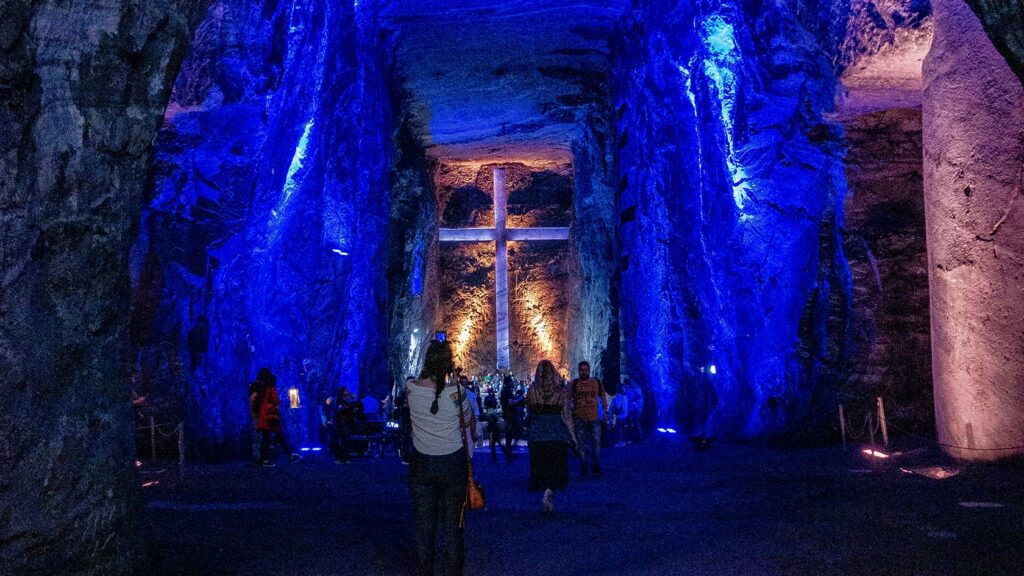
The new cathedral was inaugurated in 1995. It is built on several underground levels. The cathedral’s central feature is a huge Stations of the Cross consisting of 14 stations carved in salt, representing the different stages of Christ’s Passion. The central nave is dominated by a monumental cross carved in salt rock, measuring 120 meters in length and 22 meters in height, making it the largest cross carved in salt in the world. In addition, an 11-metre-high dome symbolizes the union between heaven and earth, reinforcing the spiritual character of the site.

Tourism: a place of worship and discovery
Since its inauguration in 1995, the Salt Cathedral of Zipaquirá has become a real tourist attraction. This unique underground monument combines art, architecture and spirituality, attracting not only pilgrims, but tourists from all over the world. The cathedral offers an immersive experience, with lighting effects that transform the interior into a mystical and impressive place.
From the moment it opened, the cathedral was a runaway success, attracting over 300,000 visitors a year to discover this underground masterpiece. In addition to its religious vocation, the site became a major economic driver for the region, stimulating tourism and local job creation.
Over the years, the site has continued to develop and modernize in response to the influx of visitors. In 2010, improvements were undertaken to enhance security, improve lighting and enlarge reception areas. The cathedral is also equipped with new facilities to offer visitors a more comfortable experience. The addition of interactive guided tours and light displays immerse visitors in an even more fascinating atmosphere.
The spiritual importance of the cathedral continues unabated. Every year, it continues to serve as a place of pilgrimage for Colombians, hosting masses, prayers and religious events, particularly during major Christian festivals. It remains one of the country’s most visited sites, and in 2007 was even listed as one of the Seven Wonders of Colombia, underlining its cultural and historical impact.
The Zipaquirá Salt Cathedral is now a fusion of history, art, spirituality and tourism, symbolizing the resilience of the local community and the transformation of an industrial site into a place of worship and culture. Its reputation continues to grow, attracting visitors from all over the world every year, fascinated by this imposing work of art and this place charged with meaning.

Visit Zipaquirá’s salt cathedral
Our experience and opinion: should you visit Zipaquirá Salt Cathedral?
Visiting the Zipaquirá Salt Cathedral was a fascinating and contrasting experience for us. As soon as we arrived, we were impressed by the sheer size of the site and the originality of the concept. An underground cathedral, dug into the heart of an old salt mine, is quite out of the ordinary! The atmosphere is unique: the play of light sublimates the crosses carved into the rock, while the vast galleries stretching for hundreds of meters and the labyrinthine crossroads add a touch of mystery. The route of the Stations of the Cross, punctuated by stations carved out of salt, particularly impressed us with its symbolism and almost unreal ambience. As for the central nave, it is dominated by a 16-metre cross, billed as the world’s largest – althoughwe have our doubts about this claim. Benches are also provided for visitors to meditate and enjoy the site.
Another aspect that pleasantly surprised us was the diversity of activities on offer. Beyond the visit to the cathedral itself. Catedral de Sal ‘s 17 attractions (depending on the package paid for) include activities such as the Ruta del Minero, an interactive salt mining experience, and theEspejo de Agua, an underground pool. There are also ecological trails, children’s games, and exhibitions such as the Museo Monumental, the Museo Tutankhamon, the Museo de la Brino and bike tours such as the BiciExperiencia. Viacrucis and various observation zones complete the experience.
These options make the cathedral an ideal outing for families: children, who might quickly tire of the spiritual and historical side, can have fun with more interactive experiences. It’s also possible to explore the tunnels with a guide or audioguide, to learn more about the history and secrets of this extraordinary place.
However, despite the originality of the site, there were a few points that left us skeptical. First, the crowds. We knew that the cathedral was a popular attraction, but we hadn’t expected such an influx of visitors. Group after group, discussion after discussion, the atmosphere of contemplation you’d expect to find in a place of worship is largely subdued by the hustle and bustle. For those seeking a moment of calm and contemplation, it’s best to visit on weekdays and avoid public holidays.
Secondly, the entrance fee seemed excessive for what was on offer. Admittedly, the site is impressive, but to pay such a high price to visit a religious site was a real eye-opener-especially as the most expensive package is equivalent to the price of two tickets to a national park! And even then, when we were there in 2019, prices were lower. What surprised us most was the commercial exploitation of the site: stores are set up IN the underground galleries, including an emerald store. As the cathedral is first and foremost a place of worship, we would have appreciated it if part of it had been accessible free of charge to the faithful who simply wished to come and pray. This approach contrasts with other great cathedrals around the world, where admission remains free for believers and is only charged for tourist visits.
Despite these few drawbacks, the Salt Cathedral remains an interesting site for anyone visiting Bogotá-providedyou know what to expect before you go, otherwise you’ll be disappointed. It offers a captivating blend of history, spirituality and underground architecture. It’s an original outing that will delight the whole family, especially as Zipaquirá is a charming little town where you can enjoy a leisurely stroll after your visit. Its historic center, with its lively squares and colourful colonial buildings, is well worth a visit. A cup of coffee in the Plaza de los Comuneros or a stroll through the picturesque alleyways is an excellent way to end the tour on a pleasant note.
Our advice:
✅ Choose a weekday visit to avoid the weekend crowds.
✅ Find out about the different packages available to choose the one that suits you best.
✅ Take the time to explore Zipaquirá for a more complete and authentic experience.

Prices and opening hours of Zipaquirá Salt Cathedral
Opening hours
Open daily from 9:00 am to 5:40 pm.
Rates
There are 3 different ways to visit Zipaquirá Salt Cathedral, each offering different experiences and activities. Entrance fees depend on the type of ticket chosen, as well as the age and nationality of visitors.
Payment methods: Cash and credit cards
| BASIC formula | STANDARD formula | PREMIUM package | |
|---|---|---|---|
| National – Adult | 70,000 COP | 82,500 COP | 108,000 COP |
| National – Children & Seniors | 57,000 COP | 70,000 COP | |
| Foreigners – Adult | 118,000 COP | 126,000 COP | 150,000 COP |
| Foreigners – Children & seniors | 104,000 COP | 114,000 COP |
Check out the official website to see what’s included in each formula.
Reservation
It’s not essential to book tickets in advance, but if you’re visiting at the weekend or on a public holiday, it’s a good idea to avoid long queues.
Tickets can be purchased online on the official website.

How do I get to Zipaquirá Salt Cathedral?
Getting to Zipaquirá Salt Cathedral from Bogotá is relatively straightforward, and there are several options open to you.
By bus (Terminal del Norte)
| Bus company | Alianza |
| Departure | Terminal del Norte |
| Arrival | Near Parque La Esperanza |
| Departure times | Every 20 minutes on average from 05:30 to 23:00 |
| Duration | 1h30 |
| Price (one-way) | 6,000 COP / person |
By bus (Portal del Norte)
To get to Portal del Norte, you first have to pay to use the Transmilenio network, where the station is integrated. You’ll have to pay for the Transmilenio, then take a bus to Zipaquirá.
| Departure | Portal del Norte |
| Arrival | Near Parque La Esperanza |
| Departure times | Every 20 minutes on average from 05:30 to 23:00 |
| Duration | 1h30 |
| Price (one-way) | 5,000 COP / person |
By train
Who said there were no trains in Colombia? There is a line between Bogotá and Zipaquirá, used occasionally, which will allow you to travel differently in Colombia. It’s the Sabana tourist train(official website). A real attraction for Colombians who don’t know trains.
| Departure | Gran Estación shopping center – Carrera 66 and Calle 26 |
| Arrival | Zipaquirá train station – Carrera 12 and Calle 4 |
| Departure times | Saturday, Sunday and public holidays only. Departure from Bogotá at 08.45 a.m. |
| Duration | 2h |
| Price (one-way) | 86,000 COP / person |
The return train leaves Zipaquirá at 3.15pm and arrives at Bogotá station at 5.45pm.
Whether you take the bus or the train, you’ll then have to walk about 20 minutes and cover 1.8 km to get to the Salt Cathedral entrance, or take a cab.
Where to stay to visit Zipaquirá Salt Cathedral?
Bogotá is clearly the most practical option, given that as the capital it is often the arrival point for travelers, whether by plane or bus. The city offers a wide range of accommodation to suit all budgets and preferences. What’s more, it offers a wide variety of activities and visits, making it an ideal base from which to explore the surrounding area, including Salt Cathedral.
Zipaquirá is relatively close by, and easily accessible by public transport or rental car, making it, in our opinion, unnecessary to spend the night in this small town.
LEARN MORE
La Candelaria district
$ – Economical budgeting
Hostal
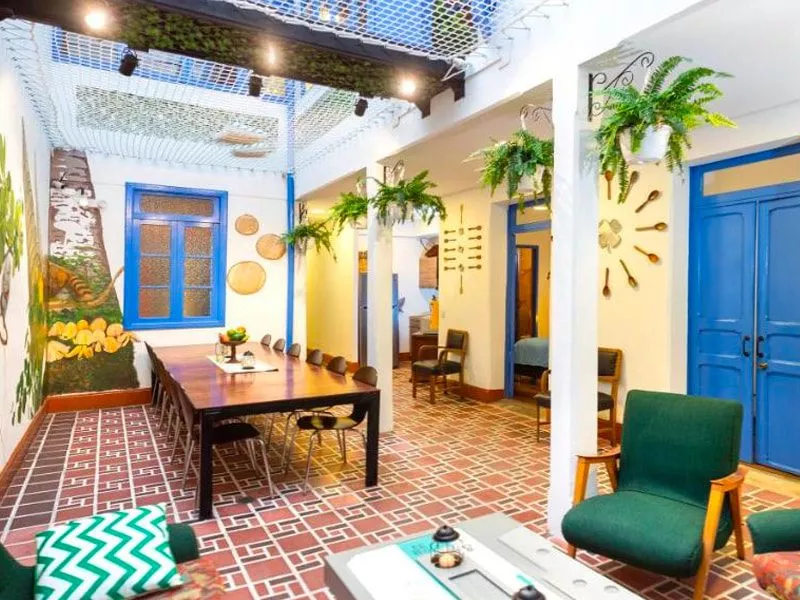
Granada Hostel
(La Candelaria)
The breakfasts are delicious, the staff and manager welcoming, the bedding very comfortable, the premises impeccably clean, the decor carefully thought out and the general atmosphere very pleasant.

$ – Economical budgeting
Hostal
Spotty Bogotá Centro
(La Candelaria)
This chic hostel is nestled in the heart of Bogotá and offers a memorable rooftop! The large swimming pool and heated Jacuzzis are a real treat! The breakfast is delicious, and the dormitories are very comfortable!

$$ – Average budget
Hotel
Hotel Quinta Bolivar
(La Candelaria)
Ideally located for exploring the area, this establishment offers functional rooms and very comfortable beds. The breakfast is delicious and the owner is very friendly. 100% recommended.

$$ – Average budget
Hotel
Hotel Casa de la Vega
(La Candelaria)
Situated in a beautiful location, this establishment benefits from friendly, helpful staff. Breakfast is of the highest quality. The colonial-style architecture gives the place a special charm, accentuated by its patios.

$$$ – High budget
Hotel
The Orchids
(La Candelaria)
This hotel offers a peaceful, intimate atmosphere, with just a few rooms. Decorated with care and refinement, the staff are charming and the breakfasts delicious.

$$$ – High budget
Hotel
Hotel bh Bicentenario
(La Candelaria)
The hotel is ideally located at the foot of the Monserrate mountain, right next to the Gold Museum. The beds are very comfortable and the rooms offer a pleasant, unobstructed view.
Chapinero district

$ – Economical budgeting
Hostal
Urbana Hostel
(Chapinero)
The staff are very helpful and offer an exceptional welcome. The location in the Zona T is ideal. What’s more, the value for money is excellent. We highly recommend this hotel!

$ – Economical budgeting
Hostal
Hostal Macondo
(Chapinero)
The location is excellent, in a very pleasant area with plenty of cafés, restaurants and bars. The dormitories are spotless, with comfortable beds and ample space.

$$ – Average budget
Hotel
Hotel B3 Virrey
(Chapinero)
Located in a lively, safe neighborhood, the hotel offers quiet rooms and attentive staff. The buffet breakfast service is simple and efficient. Helpful and friendly staff.

$$ – Average budget
Hotel
Hotel Espacio 94
(Chapinero)
The rooms are spacious and well-maintained, in an ideal location close to many restaurants and bars, including Park 93. The establishment is run by very friendly people.

$$$ – High budget
Hotel
EK Hotel
(Chapinero)
The central location, surrounded by a multitude of restaurants, combined with the friendliness of the staff and the exceptional quality of the breakfast, make this place a perfect choice in the neighborhood.

$$$ – High budget
Hotel
GHL Hotel Bioxury
(Chapinero)
The hotel offers breathtaking views of the city, and is nestled in a lively neighborhood brimming with restaurants and stores. The staff are friendly, the rooms comfortable and the breakfast generous.
Usaquén district

$ – Economical budgeting
Hostal
Usaquen Station Hostel
(Usaquén)
This inn and its staff are simply remarkable. Their kindness, helpfulness and generosity are extraordinary. What’s more, the hostel is located in a very safe neighborhood.

$ – Economical budgeting
Hostal
Hostal CasAlé Usaquén
(Usaquén)
The establishment is impeccably clean and offers outstanding customer service. The neighborhood offers amenities such as a pharmacy, restaurants, a vending machine and a market.

$$ – Average budget
Hotel
Zana Hotel Boutique
(Usaquén)
The location is simply ideal! The neighborhood is safe and perfect for walking, with a multitude of amenities. The bedding is comfortable and the room was clean. The welcome was incredible.

$$ – Average budget
Hotel
Hotel Primitivo
(Usaquén)
The staff are extremely attentive and supportive. The rooms are well maintained and quite quiet at night. Breakfast is sufficient and with 3 choices, it’s delicious and in good quantity!

$$$ – High budget
Hotel
NH Collection Bogota Hacienda Royal
(Usaquén)
The view from the room is magnificent, and the terrace adds charm. The location is perfect, with the adjacent shopping center. The staff are pleasant.

$$$ – High budget
Hotel
W Bogota
(Usaquén)
The warm welcome, the comfortable room, the delicious breakfasts and the restaurants offering absolutely fabulous cuisine all contribute to a dream stay in a really pleasant area!

Notes on visiting Zipaquirá Salt Cathedral
Tunnels
The tunnels are not simply underground passageways, but have been specially designed to accommodate a wide audience. They are spacious, clean and free from dirt, water and other undesirable elements.
Physical effort
It’s a tourist site open to all: the tunnels are flat and fairly short, making the visit accessible to everyone, from young children to the elderly, with no particular fitness requirements.
Suitable clothing
The temperature in the underground is around 14°C, and when you return to daylight, you could just as easily be greeted by rain as by sunshine. So remember to pack a sweater or pullover and something waterproof, like a poncho or K-Way.
Sunscreen + Sunglasses
Dress in layers to adapt easily to changing weather conditions, which can change rapidly throughout the day. Depending on the temperature, you can add or remove clothing to stay comfortable, as it can be hot or cold.


