In brief

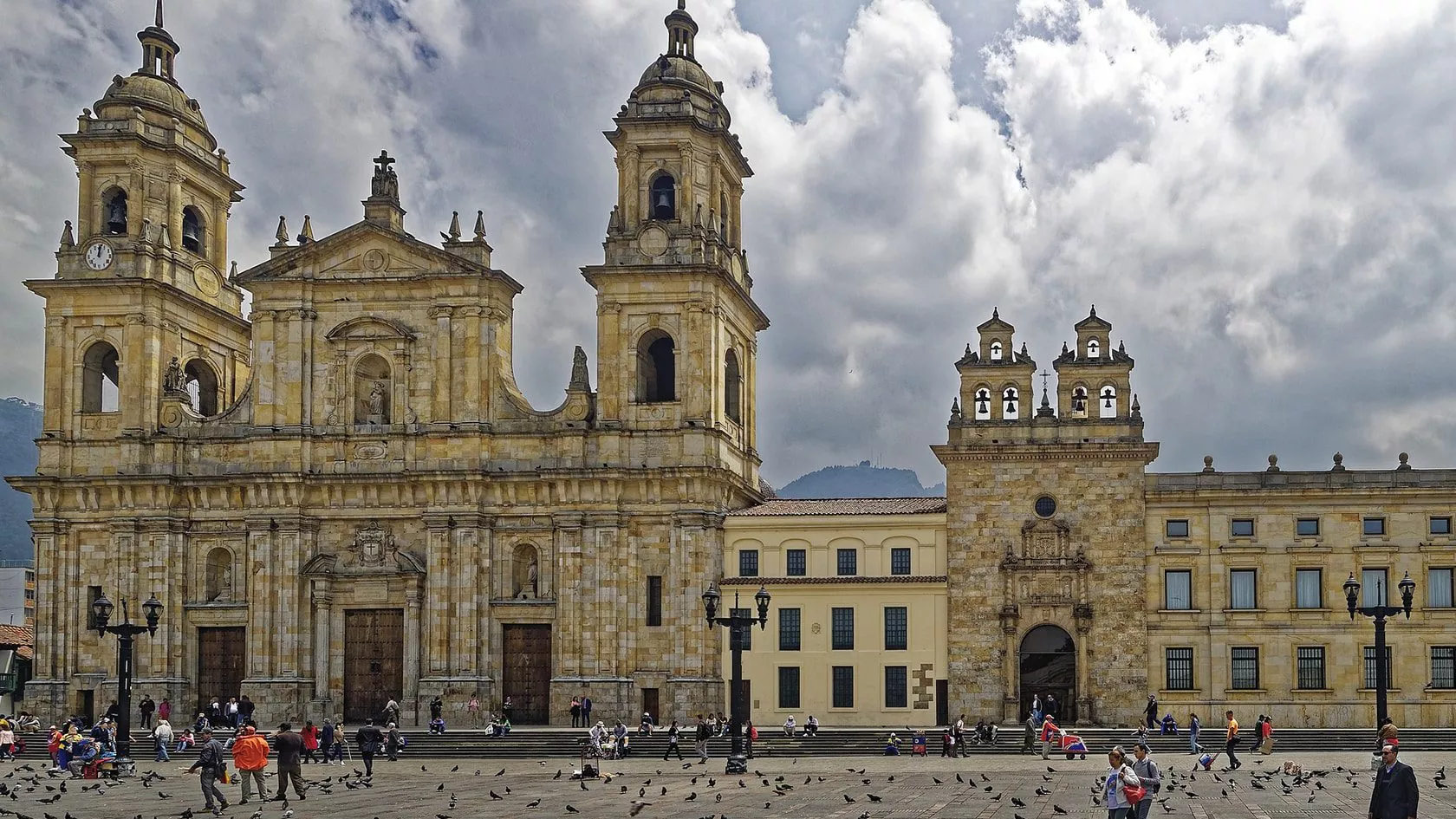


Welcome to Bogotá, the vibrant Colombian capital where history, culture and modernity intertwine in a dynamic and captivating picture. Nestled high in the Andes at 2,600m, this cosmopolitan metropolis offers a fascinating blend of old and new, where modern skyscrapers rub shoulders with colonial churches and bustling neighborhoods. Bogotá captivates with its architectural diversity, renowned museums, lively markets and colorful streets.
Explore the cobbled streets of La Candelaria to discover the city’s historic soul, sample the exquisite flavors of Colombian cuisine in local restaurants, contemplate streets brightened by street art, or take a trip into the surrounding countryside (spoiler: it’s often uphill). Whether you’re passionate about art, history, gastronomy or adventure, Bogotá promises an unforgettable experience. It’s worth taking the time to really get to know Bogotá, to get beyond some of the clichés that cling to its skin, such as pollution, a cool, rainy climate and insecurity. Let’s visit Bogotá muchacho!
Bogotá
- County: Cundinamarca (Andes)
- Founded: 1538
- Altitude: 2,600 m
- Climate: humid temperate
- Population (municipality): 7,968,095 (2023)
- Safety: caution and common sense
- Recommended duration: 3-4 nights
Our opinion: a city to know and understand before judging ★★
Bogotá is a unique Colombian city, with its own atmosphere and vibe. Without a doubt, it’s THE cultural city of the country, with the most important museums, renowned events and festivals and a plethora of gastronomic offerings. It’s one of the country’s oldest cities, and there’s a lot to know and understand, especially in the Candelaria district, which holds many secrets. A guide is essential to understand the essence and soul of the capital. The surrounding area is also superb, with numerous opportunities for hiking in the mountains (waterfalls, paramos, lagoons, etc.). However, the city also presents challenges, not least the dense and sometimes chaotic traffic and security concerns can make exploring Bogotá a little more complex. Despite these aspects, Bogotá’s vibrant atmosphere and diversity make it an exciting destination for those seeking an authentic immersion in Colombian culture.
When should you visit Bogotá?
Bogotá is a great place to visit all year round.
Bogotá tourist numbers: Bogotá is Colombia’s largest city, and while it naturally attracts a significant number of visitors, we don’t consider it overcrowded. The city doesn’t experience a massive influx of tourists, which makes it pleasant to explore. Weekends can be a little busier than weekdays, but this can’t be compared to highly touristy destinations like Guatapé or Villa de Leyva. What’s more, busy periods like December-January, Holy Week, weekends and public holidays are pretty well managed, as many Bogotanos leave the city to relax. In our opinion, Bogotá is less subject to the high and low tourist seasons.
Bogotá climate: Bogotá’s climate is generally cool and temperate throughout the year, due to its high altitude. Located at around 2,600 meters above sea level, the city enjoys daytime temperatures of between 18°C and 22°C. Nights can be cool, around 6-8°C. Bogotá has two main seasons: a dry season and a rainy season. The dry season generally runs from December to February and July-August, while the rainy season extends from April to May and September to November. However, even during the dry season, there may be occasional rainfall.
Bogotá ‘s main festivals and events :
- Festival Iberoamericano de Teatro de Bogotá (Bogotá Ibero-American Theater Festival): this theater festival, one of the most important in Latin America, takes place every two years and attracts theater companies from all over the world.
- Rock al Parque: one of the biggest rock music festivals in Latin America. Held annually in various Bogotá parks, it features free concerts by local and international artists.
- Feria Internacional del Libro de Bogotá (Bogotá International Book Fair): FILBo is one of the region’s most important literary events, attracting writers, publishers and readers from all over the world.
- Festival de Salsa al Parque: salsa lovers gather every year to dance and listen to salsa music at this festival, which showcases Colombian musical culture.
- Festival de Verano (Summer Festival): held in August, this festival offers a variety of cultural, sporting and artistic activities throughout the city, including concerts, parades and sporting competitions.
- Bogotá Carnival: celebrated every August, this colorful carnival showcases Colombia’s cultural diversity through costume parades, traditional dances and festive events throughout the city.
Legend: Blue: transport – Yellow: activities & visits – Green: accommodation – Orange: restaurants
History of Bogotá
Dive with us into the fascinating history, dynamic evolution and rich culture of Bogotá, Colombia’s vibrant capital. From its pre-Columbian origins, where Muisca tribes shaped the land around the city, to its modern development as a major cultural and economic center of Latin America, Bogotá offers a captivating tale of change and diversity. Its history is marked by key moments such as Spanish colonization, the struggle for independence and dazzling urban growth.
Bogotá’s pre-Columbian origins
Bogotá’s first inhabitants were the Muiscas, belonging to the Chibcha language family. When the conquistadors arrived, it is estimated that there were around half a million indigenous members of this group. They occupied the highlands and temperate slopes between the Sumapaz massif to the southwest and the snow-capped Cocuy peak to the northeast, covering an area of around 25,000 km², including the Bogotá plateau, part of today’s Boyacá department and a small region of Santander.
In this region, the population was organized into two federations, each headed by a chief: the south-western region was dominated by the Zipa, whose center was Bacatá, today’s Bogotá. The northeastern region was the territory of the Zaque, centered in Hunza, today’s Tunja. Unlike the Tairona, the Muiscas did not develop large cities.
The Muiscas, mainly farmers, formed a dispersed population occupying numerous small villages and hamlets. There were also a few isolated free tribes: the Iraca or Sugamuxi, the Tundama and the Guanentá. Their main activity was agriculture, supplemented by hunting and fishing. Main crops included corn, potatoes, beans, pumpkins, tomatoes, cubes, cassava, tobacco, arracacha, sweet potatoes and a variety of fruits and vegetables. In the mining field,salt and emeralds were crucial for their personal use and for trade with other tribes, who supplied them with gold and cotton.
The colonial era and the emergence of Bogotá
The conquistadors, who discovered Colombia in 1499 and were charged with founding and populating new territories, set out to create an urban colony where they could lead an organized life under a stable government. Under the leadership of Gonzalo Jiménez de Quesada, they chose to settle in the eastern foothills, near an indigenous settlement called Teusaquillo. This area offered advantages such as access to water, firewood, fertile land and protection from the winds thanks to the Monserrate and Guadalupe hills.
Although there are no official documents attesting to the town’s foundation, the date is generally set at August 6, 1538. The region would then have been named Nuevo Reino de Granada, while the village itself would have been named Santa Fe de Bogotá, after its Spanish birthplace (Santa Fe de Granada).
The city soon became an important administrative and religious center of the Viceroyalty of New Granada, encompassing the territories of present-day Colombia, Venezuela, Ecuador and Panama.
For the rest of the century, Bogotá faced challenges linked to the construction of the Colombian state and the consolidation of central power. The city was the center of political debates and struggles between liberal and conservative factions, which repeatedly clashed for control of the government.
Bogotá prospered thanks tomining, agriculture and trade.Spanish colonial architecture, with its imposing churches and picturesque squares, bears witness to this flourishing period.

Independence and troubled times
Political unrest in the Spanish colonies of Latin America gave rise to various demonstrations in New Granada, helping to accelerate the movement towards independence (see our article on the History of Colombia). One of the most significant was the Revolution of the Comuneros, a popular uprising that began in March 1781 in Villa del Socorro, in what is now the department of Santander. Although repressed by the Spanish authorities and resulting in the execution of its leader, José Antonio Galán, the movement left a lasting imprint.
In 1794, Antonio Nariño, a precursor of independence, followed suit by translating and publishing the Rights of Man and Citizen in Santafé (now on display in Villa de Leyva), followed by the leaders of the July 20, 1810 movement. This cry for independence originated in a seemingly minor dispute between Creoles and Spaniards over the loan of a vase, but quickly developed into a popular uprising.
The period from 1810 to 1815 is commonly referred to as the Patria Boba, as it was during these years that the Creoles (descendants of the Spanish conquerors) confronted each other in their quest for ideal forms of government, marking the beginnings of ideological struggles and the emergence of the first two republican parties: the Federalists and the Centralists.
In 1815, the Expedición Pacificadora, led by Pablo Morillo, landed on the coast of New Granada to put down a colonial revolt. This marked the beginning of a period of repression that lasted until 1819. New Granada was plunged into the War of Independence, during which many prominent figures lost their lives. The struggle finally culminated in the triumph of the liberation campaign led by Simón Bolívar and Francisco de Paula Santander in the decisive battles of Pantano de Vargas and Boyacá in 1819. These victories sealed the country’s independence.
Modern era
Over the course of the 20th century, Bogotá underwent a period of major economic, political and social change that profoundly affected its history.
The first half of the century was marked by political and social unrest, with workers ‘ protests and growing tensions between political parties. In 1948, theassassination of liberal leader Jorge Eliécer Gaitán triggered a period of violence known as“La Violencia“, marked by armed clashes between liberals and conservatives. This violence had a lasting effect on Colombian society, leaving scars that are still felt today.
In the 1950s, General Gustavo Rojas Pinilla seized power in a military coup, establishing a dictatorship that lasted until 1957. During this period, political and economic reforms were implemented, but political repression and human rights violations were also commonplace.
After the departure of Rojas Pinilla, Bogotá experienced a period of rapid economic development, marked by the urbanization and industrialization of the city. New residential districts and modern infrastructure were built, while manufacturing and services expanded.
In the 1980s and 1990s, Bogotá faced growing challenges from violence caused by drug trafficking and armed groups. These included the 1985 seizure of the Palace of Justice by the M-19, a communist movement used by Pablo Escobar. However, the city has also made great strides in areas such aseducation and culture.
In the last decade of the 20th century, Bogotá began to implement urban reform policies aimed at improving the quality of life of its inhabitants, reducing crime and promoting sustainable development. These efforts, with varying degrees of success, have helped transform Bogotá into a modern, dynamic metropolis, ready to meet the challenges of the 21st century.


What to see and do in Bogotá
In Bogotá
Bogotá, Colombia’s vibrant capital, is packed with fascinating sites to explore. From the historic district of La Candelaria, with its cobbled streets and colorful buildings, street art and graffiti, to the panoramic views from the Monserrate lookout, the city blends rich history and modernity. Culture lovers will appreciate the Gold Museum and the Botero Museum, while nature lovers will find refuge in the Botanical Gardens. The lively districts of Usaquén and Zona Rosa offer exceptional shopping and culinary experiences.
AGENCIES AND LOCAL GUIDES
Visiting Bogotá is all about understanding the city. For this, there’s nothing better than guided tours, but also to discover the city’s surroundings. Here are a few good contacts for organizing these tours.
1.Thomas, a Frenchman based in Bogotá: kihicha
2.Martin, a French-speaking Colombian: +57 3229435588
3.Felipe, a Colombian guide in Bogotá and throughout Colombia: elcafetour
La Candelaria district
Generally speaking, the La Candelaria district in the heart of Bogotá is a historical and cultural treasure that’s a must-see. With its cobbled streets, colorful colonial houses and numerous museums, it offers a fascinating immersion in Colombian history. This bohemian district also abounds in cafés, art galleries and theaters, creating a vibrant, artistic atmosphere.
To be done with a guide to fully understand the history of the city
Parque 93 Zona T / Zona Rosa (Chapinero)
These areas in the Chapinero district are not in themselves known for their historical or cultural interest. They are, in fact, places to go out, especially in the evening, with a wide choice of bars, restaurants, clubs and so on. Mind you, this is the “trendy” part of town, and prices are (very) high. In short, perfect places to party and have fun, but no real tourist spots or attractions to discover.
Guide not required, no historical/cultural interest
Usaquén (around Parque Usaquén)
Usaquén, around Parque Usaquén (Parque fundacional de Usaquén), is a charming district of Bogotá known for its bohemian atmosphere and colonial architecture. The area is packed with fine restaurants, welcoming cafés and artisanal stores. On weekends, the flea market attracts visitors with its colorful stalls of local crafts, delicious food and live music, offering a unique cultural experience.
No guide required, as the area is quite small
Plaza Del Chorro de Quevedo
The Plaza Del Chorro de Quevedo, nestled in Bogotá’s historic La Candelaria district, is a picturesque square reputed to be the legendary site of the city’s foundation. Surrounded by charming colorful houses and street art, the square is a lively place where artists, musicians and storytellers gather. With its intimate cafés and artisanal stores, it’s an ideal cultural meeting point for locals and visitors alike.
Be part of the La Candelaria district
Gold Museum
The Museo del Oro (Gold Museum), located in the La Candelaria district, is one of Colombia’s most famous museums. It houses a vast collection of over 55,000 pieces of pre-Columbian goldwork. Visitors can discover fascinating artifacts, interactive exhibits and the history of ancient civilizations, offering a captivating dive into the country’s rich cultural heritage.
Opening hours: Tue to Sat 9am to 7pm / Sun holidays 10am to 5pm
Last admission 1h before closing
Prices: Tue to Sat + holidays: 5,000 COP / pers. / Sun. free of charge
Botero Museum
The Botero Museum, located in the historic district of La Candelaria, features an impressive collection of works by Colombian artist Fernando Botero. Opened in 2000, the museum exhibits his famous, generously proportioned paintings and sculptures, as well as works by renowned international artists, offering visitors an enriching artistic and cultural experience in the heart of Bogotá.
Opening hours: Mon. to Sat. 9am to 7pm / Tues. closed
Sundays and holidays 10am to 5pm /
Rates: free of charge
National Museum of Colombia
The Museo Nacional de Colombia, founded in 1823, is one of the country’s most important museums. It offers a fascinating insight into Colombian history, art and culture, with a vast collection of historical and artistic objects. Exhibits include pre-Columbian artifacts, colonial and contemporary works, as well as historical documents, enriching the visitor experience.
Opening hours: Mon. closed / Tue. to Sun. 9am to 5pm
Special closures: January 1 – May 1 – December 25.
Prices: from 5 to 18 USD / pers.
Bogota Museum of Modern Art
The Museo de Arte Moderno de Bogotá (MAMBO), founded in 1966, is a major cultural institution in Colombia. It houses a varied collection of modern and contemporary Colombian and international works. Its exhibitions explore various artistic currents, offering visitors an enriching cultural experience. MAMBO also organizes events to promote art.
Opening hours: Mon. closed (if Monday is a holiday, museum closed on Tuesday)
Tue. to Sat. 10 am to 6 pm / Sun. and holidays 12 pm to 5 pm
Prices: 20,000 COP / pers.
International Emerald Museum
The Museo Internacional de la Esmeralda is a unique institution dedicated to the history and culture of emeralds in Colombia. Founded to highlight the importance of this precious stone in Colombia’s heritage, the museum presents fascinating exhibits on its extraction, transformation and trade. Visitors can also admire an impressive collection of rough and cut emeralds, and a boutique!
Opening hours: Mon. to Fri. 9am to 5.30pm / Sat. 10am to 5.30pm
Sundays and public holidays: closed
Prices: 6,000 COP / pers.
Quinta de Bolívar Museum
La Quinta de Bolívar is a historic residence that was home to the famous revolutionary Simón Bolívar during his stays in the Colombian capital. Now transformed into a museum, it exhibits Bolívar’s artefacts and personal objects, as well as documents and works of art relating his major role in the independence of Colombia and other South American nations.
Opening hours: Mon. closed / Tue. to Sun. 9am to 5pm
Prices: 5 – 10 USD / pers.
Free: Wednesdays 3pm to 5pm + last Sunday of the month.
Maloka Interactive Museum
Bogotá’s Maloka Interactive Museum is an educational and entertaining destination offering an immersive experience in science and technology. Featuring interactive exhibits, live demonstrations and hands-on workshops, the museum encourages visitors to explore different fields of science, from astronomy to biology, while having fun and learning.
Opening hours: Mon. closed / Tues. to Fri. 8am to 5pm
Weekends and public holidays 9am to 6pm
Prices: 13,000 – 45,000 COP / pers. and per theme
Pasaje Rivas
Pasaje Rivas, often referred to simply as “El Pasaje”, is a hidden gem in the historic district of La Candelaria. This picturesque passageway is famous for its craft stores, art galleries and quaint cafés. A stroll through this passageway reveals a variety of Colombian handicrafts, from colorful paintings to exotic wood carvings. Visitors can also enjoy local gastronomy in the small restaurants lining the passage, offering a charming escape in the heart of the capital.
Be part of the La Candelaria district
Bolívar Square
Bolívar Square is the historical and political heart of the city. Surrounded by emblematic government buildings such as the National Capitol, Bogotá City Hall and the Supreme Court, it is a symbol of Colombian democracy. The square is also a popular gathering place for demonstrations, festivals and cultural events, as well as being a place of relaxation for locals and visitors alike.
Be part of the La Candelaria district
Cathedral of the Immaculate Conception, Bogotá
This cathedral, also known as the Cathedral Primada, is a masterpiece of neoclassical architecture located in Plaza Bolívar, the city’s main square. Built in the 19th century (1823), it is Bogotá’s main church and the seat of the archdiocese. With its imposing columns and magnificent stained-glass windows, the cathedral is a historic place of worship and a tourist attraction in the Colombian capital.
Be part of the La Candelaria district
San Francisco Church
The Church of San Francisco, located in the historic district of La Candelaria, is one of the city’s oldest and most emblematic churches. Built in the 16th century, it boasts impressive colonial architecture with its thick walls and ornate vaults. The church also houses an important collection of religious art and is an active place of worship for the local community and visitors alike.
Be part of the La Candelaria district
Our Lady of Carmelite Shrine, Bogota
The Sanctuary of Our Lady of Carmel, located in the La Candelaria district, is a Catholic church dedicated to the Virgin of Mount Carmel. Built in the 17th century, this sanctuary is an outstanding example of Colombian Baroque architecture, with a richly decorated façade and elegant interiors. As a place of worship and historic site, it attracts devotees and visitors alike for its religious celebrations and cultural significance.
Be part of the La Candelaria district
Play tejo at Tejo La Embajada
Tejo La Embajada is a popular place to discover a traditional Colombian activity: tejo. This ancient game, a kind of explosive petanque, involves throwing metal discs at explosive targets. La Embajada’s friendly atmosphere, with local drinks and music, makes it an ideal place for locals and tourists alike to immerse themselves in Colombian culture. Of course, it’s not the only place to play tejo.
Opening hours: Mon. to Wed. from 4pm to 11pm / Thurs. from 4pm to 1am
Fri. and Sat. from 1pm to 3am / Sun. from 1pm to 8pm
Prices: package from 67,900 – 129,000 COP / pers.
Pulgas de Usaquén market
The Pulgas de Usaquén Market, located in Bogotá’s charming Usaquén district, is a must-see attraction every Sunday. This lively market offers a variety of handicrafts, antiques, vintage clothing and local products. Strolling among the colorful stalls, visitors can discover unique treasures while enjoying live music and a popular atmosphere. Surrounded by cafés and restaurants, the market offers a rich and authentic cultural experience.
Opening hours: Every Saturday, Sunday and Monday from 9:00 to 17:30
Paloquemao market
Bogotá’s Paloquemao Market is one of the city’s largest markets, famous for its vast selection of fruits, vegetables, flowers, meats and local produce. Open every day, it offers an authentic immersion in everyday Colombian life. Visitors can discover exotic flavors and vibrant colors, making Paloquemao a must for lovers of local gastronomy and culture.
Opening hours: Mon. to Fri. 4:30am to 4:30pm /
Sun. and public holidays 5am to 2:30pm
To be enjoyed with a guide to discover local products.
Cerro de Monserrate (by cable car)
The Cerro de Monserrate, overlooking Bogotá, is an emblematic mountain reaching 3,152 meters in altitude. Accessible by cable car or hiking trail, it houses a religious shrine and restaurants, offering spectacular panoramic views of the city. It is a pilgrimage site and a major tourist attraction.
It is advisable to take the cable car to get there. Thieves who prey on walkers are sometimes reported on the route.
Times: Mon.-Sat. 6.30am-10pm / Sun.-Fri. 6.30am-6pm
Rates (round trip): 29,500 COP / pers.
Simón Bolívar Park
Parc Simón Bolívar, located in the heart of Bogotá, is the city’s largest urban park. Offering a vast expanse of greenery, it’s perfect for outdoor activities, picnics and sports. The park boasts a large lake, hiking trails, playgrounds and spaces for cultural and musical events. It’s a popular place to relax for locals and tourists alike, especially on festive weekends with a great atmosphere and plenty of street-food stalls.
Opening hours: Monday to Sunday, 5:00 a.m. to 6:00 p.m.
Jardín Botanique
The Bogotá Botanical Garden, officially named Jardín Botánico José Celestino Mutis, is a haven of peace in the heart of the city. It houses a rich collection of native plants, including orchids, palms and medicinal plants. Visitors can explore its greenhouses, themed gardens and enjoy tranquil trails. The garden is also a research and conservation center.
Opening hours: Tue-Fri 8am-5pm / Sat-Sun-Holidays 9am-5pm
Rates: 7,000 – 25,000 COP / pers. depending on package chosen


Around Bogotá
Need some fresh air after spending time in this bustling metropolis? No problem, there are plenty of opportunities for day trips around Bogotá: from numerous outings in the beautiful surrounding mountains to past fincas and places in … salt!
Chingaza National Park (read more)
Chingaza National Park is a spectacular natural refuge home to a variety of ecosystems, including paramos and crystal-clear lakes. Hikers will find picturesque trails offering breathtaking views. It’s also a habitat for local wildlife, such as the Andean condor and the spectacled bear, making Chingaza an ecological paradise.
Opening hours: daily from 07:00 to 16:00
Rates: 71,000 COP / non-resident foreigner
Sumapaz National Park
Sumapaz National Park, south of Bogotá, is the world’s largest paramo. This vast and unique ecosystem is home to an incredible diversity of flora and fauna, including endemic species. Visitors can explore its breathtaking landscapes, lakes and misty peaks, while discovering the crucial ecological importance of this region.
The park is currently closed due to the fragility and importance of the ecosystem.
The Laguna de Guatavita, north of Bogotá, is a mystical lake surrounded by indigenous legends, notably that of El Dorado. This sacred lagoon of the Muiscas is a fascinating historical and natural site. Visitors can hike around its verdant shores, discover its rich history and enjoy the serene beauty of the surrounding landscape.
Opening hours: Tuesday to Sunday, 08:30 to 16:00
Rates: 12,000 – 25,000 COP / person
Zipaquirá Salt Cathedral (more)
The Salt Cathedral of Zipaquirá is an astonishing underground construction carved out of an ancient salt mine. This impressive sanctuary, spectacularly illuminated, houses chapels and religious works of art. A true masterpiece of engineering and faith, it offers visitors a unique spiritual and visual experience.
Opening hours: daily, 9:00 a.m. to 5:40 p.m. (last entry)
Rates: 97,000 – 140,000 COP / person depending on package
Chorrera waterfall (read more)
The Cascade de La Chorrera, Colombia’s highest waterfall, is about 1h30 from Bogotá. This spectacular natural site, surrounded by forests and mountains, offers a captivating and fairly easy 3-hour hike along picturesque trails. With its impressive 590-metre waterfalls, La Chorrera is a must-see destination for nature lovers and adventure enthusiasts.
Opening hours: daily from 08:00 to 15:00 (last admission)
Price: 45,000 COP / person (admission + snack)
Fincas de café
Around Bogotá, visits to coffee fincas are an immersive experience that immerse visitors in the Colombian coffee world. These operations offer guided tours to discover the production process, from cultivation to roasting. Visitors can taste freshly brewed coffees and enjoy picturesque plantation landscapes while learning about the cultural importance of coffee in Colombia.
The fincas are not easily accessible by public transport. It is advisable to go with a guide.
Nemocón salt mine
The Nemocón Salt Mine is a fascinating destination offering a journey through ancient underground galleries. Visitors can explore impressive tunnels, admire unique salt formations and learn about local mining history. The mine also houses a spectacular brine mirror and exhibits on traditional salt extraction techniques.
Opening hours: daily from 09:00 to 17:00
Rates: 40,000 – 45,000 COP / person
Cerro de Quinini
Cerro de Quinini, 2h30 south of Bogotá, is a sacred mountain of the ancient Panche, meaning “moon goddess”. Rock engravings can be found here. The climb follows the historic “Camino Real” paths. Along the way, you can observe a rich flora and avifauna. At the summit, the Pico del Águila offers breathtaking views over the Magdalena Valley and the Nevado del Ruiz volcano.
Opening hours: daily from 08:00 to 15:00
Price: 26,200 COP / person
Farallones de Sutatausa
The Farallones de Sutatausa, about two hours from Bogotá, are impressive rock formations ideal for climbing and hiking. The site offers spectacular panoramic views of the surrounding valley and is home to ancient petroglyphs, testifying to the cultural heritage of the Muiscas. Visitors can explore the picturesque trails while discovering the region’s rich history and biodiversity.
Opening hours: always open
Price: free
AGENCIES AND LOCAL GUIDES
Visiting Bogotá is all about understanding the city. For this, there’s nothing better than guided tours, but also to discover the city’s surroundings. Here are a few good contacts for organizing these tours.
1.Thomas, a Frenchman based in Bogotá: kihicha
2.Martin, a French-speaking Colombian: +57 3229435588
3.Felipe, a Colombian guide in Bogotá and throughout Colombia: elcafetour


How to get to Bogotá
Getting to Bogotá is easy. The city has excellent transport links. You can get there by bus from other Colombian cities, thanks to a well-developed ground transportation network. The best way is to go directly to the transport terminal in your departure city for information.
The nearest airport to Bogotá isEl Dorado Luis Carlos Galán SarmientoInternational Airport, commonly known as Bogotá or El Dorado Airport. This is Colombia’s main airport, and one of the largest in Latin America. It is therefore well served. It is located directly in the city, about 15km from downtown (La Candelaria).
Please note: Bogotá has 3 bus terminals: Terminal Salitre (the main one), Terminal del Norte and Terminal del Sur. When traveling by bus to or from Bogotá, it’s important to check the terminal in Bogotá. If in doubt, go to the Salitre terminal for departures.
Getting to Bogotá from Villa de Leyva by bus
| Companies | Valle de Tenza, Libertadores (Coflonorte) |
| Opening hours | Every 45 minutes on average from 05:00 to 17:20 |
| Departure | Terminal de transporte, Villa de Leyva |
| Arrival | Terminal Salitre, Bogotá |
| Duration | 3h30 |
| Route type | Direct (no change) |
| Price (one-way) | 35,000 – 45,000 COP / person |
Getting to Bogotá from Medellín by bus
| Companies | Arauca, Flota Magdalena, Expreso Bolivariano, Expreso Brasilia, Rápido Ochoa, Rapido Tolima |
| Opening hours | Every 30 minutes on average from 06:00 to 23:30 |
| Departure | Terminal del Norte, Medellín |
| Arrival | Terminal Salitre, Bogotá |
| Duration | 10 a.m. to 12 p.m. |
| Route type | Direct (no change) |
| Price (one-way) | 90,000 – 101,000 COP / person |
Getting to Bogotá from Cali by bus
| Companies | Expreso Palmira, Expreso Bolivariano, Flota Magdalena |
| Opening hours | Every 30 minutes on average from 04:30 to 23:30 |
| Departure | Terminal de transporte, Cali |
| Arrival | Terminal Salitre, Bogotá |
| Duration | 11 a.m. to 1 p.m. |
| Route type | Direct (no change) |
| Price (one-way) | 60,000 – 90,000 COP / person |
Getting to Bogotá from Neiva by bus
| Companies | Coomotor, Expreso Bolivariano, Flota La Macarena, Lineas Verdes |
| Opening hours | Every 30 minutes on average from 00:05 to 23:45 |
| Departure | Transport terminal, Neiva |
| Arrival | Terminal Salitre, Bogotá |
| Duration | 06h to 07h |
| Route type | Direct (no change) |
| Price (one-way) | 39,000 – 75,000 COP / person |
Getting to Bogotá from Bucaramanga by bus
| Companies | Omega, Copetran, Autoboy, Expreso Brasilia, Berlinas del Fonce, Concorde |
| Opening hours | Every 30 minutes on average from 01:00 to 23:59 |
| Departure | Terminal de transporte, Bucaramanga |
| Arrival | Terminal Salitre, Bogotá |
| Duration | 10 a.m. to 1 p.m. |
| Route type | Direct (no change) |
| Price (one-way) | 71,000 – 83,000 COP / person |
Getting to Bogotá from Armenia by bus
| Companies | Expreso Palmira, Expreso Bolivariano |
| Opening hours | Every 40 minutes on average from 00:15 to 23:45 |
| Departure | Terminal de transporte, Armenia |
| Arrival | Terminal Salitre, Bogotá |
| Duration | 08h to 10h |
| Route type | Direct (no change) |
| Price (one-way) | 65,000 – 75,000 COP / person |
Getting to Bogotá from Santa Marta by bus
| Companies | Copetran, Expreso Palmira, Expreso Bolivariano, Expreso Brasilia |
| Opening hours | Every 45 minutes on average from 2 p.m. to 9:15 p.m. |
| Departure | Terminal de transporte, Santa Marta |
| Arrival | Terminal Salitre, Bogotá |
| Duration | 5 to 9 p.m. |
| Route type | Direct (no change) |
| Price (one-way) | 108,000 – 125,000 COP / person |
Getting to Bogotá from Cartagena de Indias by bus
| Companies | Copetran, Expreso Brasilia, Concorde, Berlinas del Fonce |
| Opening hours | Every hour on average from 07:00 to 21:00 |
| Departure | Transport terminal, Cartagena de Indias |
| Arrival | Terminal Salitre, Bogotá |
| Duration | 22h to 25h |
| Route type | Direct (no change) |
| Price (one-way) | 110,000 – 140,000 COP / person |


Getting around Bogotá
Getting around the city of Bogotá can seem daunting, but don’t worry, the city offers an efficient and varied transportation network to suit every need. Whether you prefer to travel by metro, metro-cable, bus, cab or car-sharing service, Medellín has options for every type of traveler.
TransMilenio: main public transport system
The TransMilenio is the bus rapid transit system serving Bogotá. Inaugurated in December 2000, this network is the capital’s main public transport service, as there is no metro. The TransMilenio network includes dedicated lanes for red articulated and bi-articulated buses, guaranteeing fast, efficient travel on all the main routes through the city. The TransMilenio is generally sufficient for tourists wishing to discover Bogotá’s must-sees.
Network: the system is divided into several lines (or trunk lines), each identified by a color and a letter. These lines cover the city’s main arteries, and local bus and express bus services (green and blue buses) complete the network to reach outlying districts. Consult the official interactive map.
Fares: payment is made via a rechargeable card, the “Tu Llave” card, which is used to enter stations. Fares are fixed for each journey, regardless of the distance covered. A trip costs 2,950 COP. The card costs 8,000 COP. The card and refills are purchased directly from the ticket office at each TransMilenio station.
Frequency and timetables: the TransMilenio operates every day, with extended service hours from 4:00 to 23:00. Buses run at high frequency, especially during rush hours. Beware: depending on the schedule and the line, it can get really crowded (packed like sardines in the Paris metro). And beware of pickpockets.

SITP: secondary transit system
SITP (Sistema Integrado de Transporte Público) is Bogotá’s integrated transport system, designed to offer a complete and efficient mobility solution for residents and visitors to the Colombian capital. Set up to complement and integrate the TransMilenio network, SITP combines different modes of transport to cover the entire city and its surroundings.
Network: these buses serve specific areas of the city, linking neighborhoods to the main arteries and TransMilenio stations. These are often small buses. Look for a route covered by the SITP network.
Fares: payment is also made via the “Tu Llave” card, used for TransMilenio. This card entitles the holder to free or reduced-fare connections between the various SITP transport modes and TransMilenio. A trip also costs 2,950 COP, and the card costs 8,000 COP. You can buy and recharge it directly at the ticket offices of each TransMilenio station.
Frequency and timetables: SITP buses operate from 4.30 a.m. to 11.00 p.m., with varying frequencies depending on the line and the time of day.
Cab
As in all Colombian cities, there are many cabs available throughout the city. It’s also a practical way to get around Bogotá, if you avoid rush hour and traffic jams. Official cabs can be identified by their yellow color and the nameplate on their body.
Fare indications:
– Taxi El Dorado – La Candelaria international airport: 25,000 – 35,000 COP (rate varies according to time and traffic).
– Minimum fare 6,300 COP.
– Rate per unit 125 COP.
– Airport pick-up surcharge: 6,300 COP.
– Night and holiday surcharge: 3,000 COP.
Tips:
– Make sure the cab has a visible identification number on the doors.
– Safety: there’s no problem taking a cab on the street by raising your arm. However, at night, it is advisable to book a cab in advance.
– Every cab is equipped with a taximeter, usually located near the center mirror. Make sure it’s switched on before you start your journey.
– Payments are made in cash only. Small denominations are preferable for short trips (2,000, 5,000 and 10,000 COP bills).
Transport applications
In Bogotá, various transportation apps are available to simplify your trips around the city. Using these apps offers several advantages:
– Know fares in advance.
– Plan a trip in advance.
– Often pay less than a traditional cab.
– Sometimes pay directly via the app, eliminating the need for cash for the driver.
The main applications are:
– Uber
– Beat
– Cabify
– Indrive

Where to sleep in Bogotá?
In Bogotá, you’ll find a wide range of accommodation options to suit all tastes and budgets. Here are the main areas we recommend:
1. La Candelaria: for an experience at the heart of Bogotá’s cultural action, stay in the historic district of La Candelaria. Here you’ll find charming hostels, boutique hotels and guesthouses offering easy access to the city’s main sights, such as the Botero Museum, Plaza Bolívar and the Paloquemao market. For safety’s sake, stay north of Calle 7 and east of Carrera 10.
2. Chapinero (Zona Rosa or T, Parque 93): if you’re looking for a lively nightlife and a multitude of restaurants and bars nearby, Zona T is the place to be. It’s a middle-class neighborhood with a very special atmosphere.
3. Usaquén: this district retains its peaceful village charm and is renowned for its colorful alleyways, bars and typical restaurants, notably near the Santa Bárbara church / Parque fundacional de Usaquén. It’s one of the best places to stay in Bogotá. The weekend flea market in Parque Usaquén is a must, where artisans, artists, musicians and cooks gather, offering an immersion in Colombian social life.
La Candelaria district
$ – Economical budgeting
Hostal
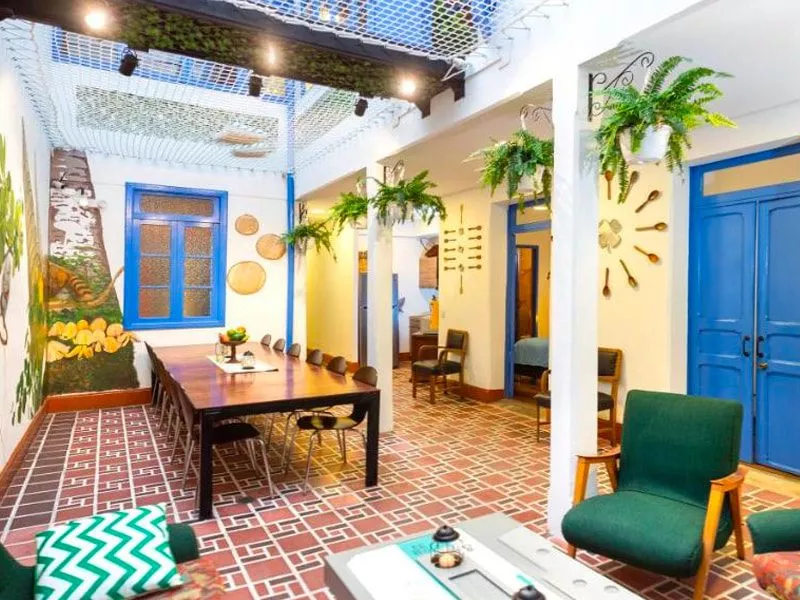
Granada Hostel
(La Candelaria)
The breakfasts are delicious, the staff and manager welcoming, the bedding very comfortable, the premises impeccably clean, the decor carefully thought out and the general atmosphere very pleasant.

$ – Economical budgeting
Hostal
Spotty Bogotá Centro
(La Candelaria)
This chic hostel is nestled in the heart of Bogotá and offers a memorable rooftop! The large swimming pool and heated Jacuzzis are a real treat! The breakfast is delicious, and the dormitories are very comfortable!

$$ – Average budget
Hotel
Hotel Quinta Bolivar
(La Candelaria)
Ideally located for exploring the area, this establishment offers functional rooms and very comfortable beds. The breakfast is delicious and the owner is very friendly. 100% recommended.

$$ – Average budget
Hotel
Hotel Casa de la Vega
(La Candelaria)
Situated in a beautiful location, this establishment benefits from friendly, helpful staff. Breakfast is of the highest quality. The colonial-style architecture gives the place a special charm, accentuated by its patios.

$$$ – High budget
Hotel
The Orchids
(La Candelaria)
This hotel offers a peaceful, intimate atmosphere, with just a few rooms. Decorated with care and refinement, the staff are charming and the breakfasts delicious.

$$$ – High budget
Hotel
Hotel bh Bicentenario
(La Candelaria)
The hotel is ideally located at the foot of the Monserrate mountain, right next to the Gold Museum. The beds are very comfortable and the rooms offer a pleasant, unobstructed view.
Chapinero district

$ – Economical budgeting
Hostal
Urbana Hostel
(Chapinero)
The staff are very helpful and offer an exceptional welcome. The location in the Zona T is ideal. What’s more, the value for money is excellent. We highly recommend this hotel!

$ – Economical budgeting
Hostal
Hostal Macondo
(Chapinero)
The location is excellent, in a very pleasant area with plenty of cafés, restaurants and bars. The dormitories are spotless, with comfortable beds and ample space.

$$ – Average budget
Hotel
Hotel B3 Virrey
(Chapinero)
Located in a lively, safe neighborhood, the hotel offers quiet rooms and attentive staff. The buffet breakfast service is simple and efficient. Helpful and friendly staff.

$$ – Average budget
Hotel
Hotel Espacio 94
(Chapinero)
The rooms are spacious and well-maintained, in an ideal location close to many restaurants and bars, including Park 93. The establishment is run by very friendly people.

$$$ – High budget
Hotel
EK Hotel
(Chapinero)
The central location, surrounded by a multitude of restaurants, combined with the friendliness of the staff and the exceptional quality of the breakfast, make this place a perfect choice in the neighborhood.

$$$ – High budget
Hotel
GHL Hotel Bioxury
(Chapinero)
The hotel offers breathtaking views of the city, and is nestled in a lively neighborhood brimming with restaurants and stores. The staff are friendly, the rooms comfortable and the breakfast generous.
Usaquén district

$ – Economical budgeting
Hostal
Usaquen Station Hostel
(Usaquén)
This inn and its staff are simply remarkable. Their kindness, helpfulness and generosity are extraordinary. What’s more, the hostel is located in a very safe neighborhood.

$ – Economical budgeting
Hostal
Hostal CasAlé Usaquén
(Usaquén)
The establishment is impeccably clean and offers outstanding customer service. The neighborhood offers amenities such as a pharmacy, restaurants, a vending machine and a market.

$$ – Average budget
Hotel
Zana Hotel Boutique
(Usaquén)
The location is simply ideal! The neighborhood is safe and perfect for walking, with a multitude of amenities. The bedding is comfortable and the room was clean. The welcome was incredible.

$$ – Average budget
Hotel
Hotel Primitivo
(Usaquén)
The staff are extremely attentive and supportive. The rooms are well maintained and quite quiet at night. Breakfast is sufficient and with 3 choices, it’s delicious and in good quantity!

$$$ – High budget
Hotel
NH Collection Bogota Hacienda Royal
(Usaquén)
The view from the room is magnificent, and the terrace adds charm. The location is perfect, with the adjacent shopping center. The staff are pleasant.

$$$ – High budget
Hotel
W Bogota
(Usaquén)
The warm welcome, the comfortable room, the delicious breakfasts and the restaurants offering absolutely fabulous cuisine all contribute to a dream stay in a really pleasant area!

Where to eat in Bogotá
In Bogotá, gastronomy promises an exciting journey through a variety of flavors and culinary experiences. From traditional Colombian delights to contemporary international influences, the city abounds in gustatory delights to discover. Whether you’re looking for street food, elegant dining or trendy cafés, Bogotá has something for everyone. Bogotá, as the country’s capital and largest city, will be the best place in Colombia for gastronomy, as there is so much diversity and, above all, so many great chefs.
Typical dishes from Bogotá and the region
Ajiaco: this thick, nourishing soup is made with chicken, corn, arracacha (a tuber), nasturtiums and other ingredients, offering an explosion of flavors.
Chocolat Santa Fe: this traditional Bogotá hot drink is made from a blend of milk, cream, sugar, cloves and cinnamon. Usually accompanied by cheese and almojábana, this drink is a popular specialty.
Fritanga: this popular dish of Hispanic origin has become a culinary tradition in Bogotá, blending a variety of cultural influences. It features pork and beef offal, as well as tubers such as fried yucca, corn, Creole potatoes and ripe plantains.
Changua: less well-known than ajiaco but just as emblematic, changua is an egg-and-milk-based soup seasoned with butter, coriander, salt and other ingredients. This dish is traditionally eaten for breakfast.
Here’s our selection of restaurants in the famous La Candelaria, Chapinero and Usaquén districts, to suit different budgets.
La Candelaria district



Chapinero district


Usaquén district


Safety in Bogotá
As the country’s gateway, the Colombian metropolis welcomes a wide variety of foreigners, both tourists and professionals. The recurring question is one of safety: is it safe to visit or live in Bogotá? The security situation in Bogotá is similar to that in many other South American cities. Overall, we would not describe Bogotá as a dangerous destination, although some precautions are necessary. By following these precautionary measures and adopting a calm attitude, visitors can enjoy the splendor of the city in complete peace, thus minimizing the risks.
Here are a few tips (often just common sense):
- “No dar papaya” is a Colombian expression which simply means that you should avoid exposing your wealth and valuable possessions in public to prevent trouble. Avoid walking around all day with a camera or phone in your hand, and avoid expensive jewelry and clothes, etc.
- Be aware of your environment: stay aware of your surroundings and trust your instincts. If you feel uncomfortable in a given situation, walk away and seek help if necessary.
- Take only the money you need for the day. Leave important documents in a secure place at your accommodation (safe or in a suitcase locked with a padlock).
- Choose your neighborhoods (or even streets) carefully: some areas may be more sensitive than others. Safe” areas include Usaquén (Parque fundacional de Usaquén), Chapinero (zona rosa, Parque 93), La Candelaria (stay north of calle 7 and east of carrera 10). Avoid neighborhoods such as María Paz (Kennedy), Patio Bonito (Kennedy), Santa Fe (Santa Fe), Las Cruces (Santa Fe) and Quiba (Ciudad Bolivar).
- Use official cabs or ride-sharing apps: if you use cabs, give preference to official cabs or ride-sharing apps like Uber for greater safety and reliability.
- Transmilenio and pickpockets: be careful with your belongings on Transmilenio buses and in stations. There are pickpockets all over the network. Carry your bag in front of you and avoid using your phone.
- Avoid travelling alone at night: as far as possible, avoid travelling alone at night, especially in poorly lit or isolated areas.