In brief


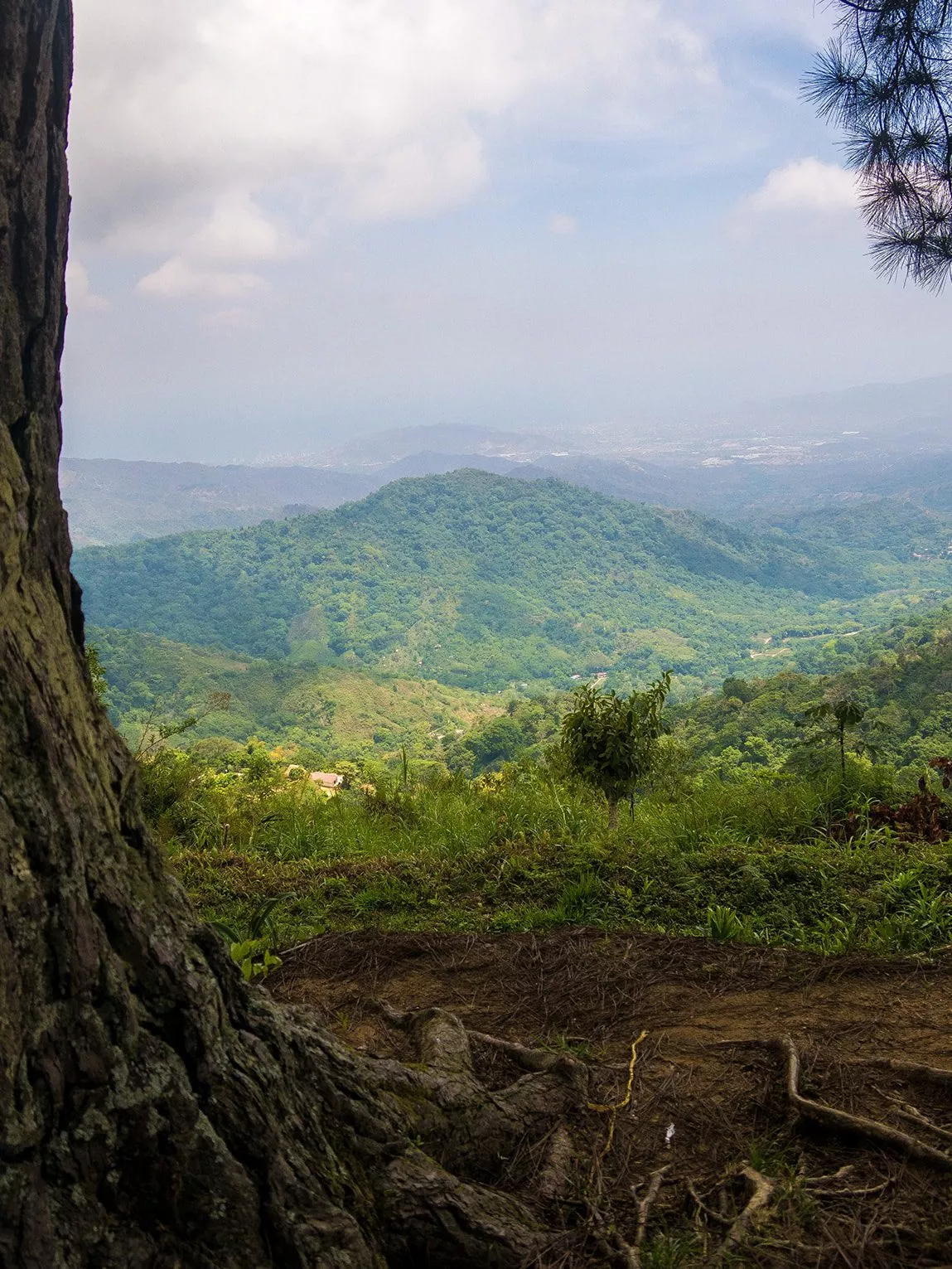

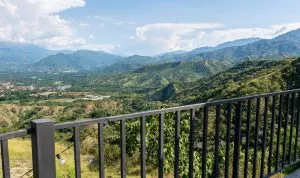
Nestled in the lush foothills of the Sierra Nevada de Santa Marta, Minca is a small mountain village of discreet charm, but incredible natural wealth. Just 45 minutes from Santa Marta, this haven of peace perched at an altitude of 650 metres offers a striking contrast to the hustle and bustle of the Caribbean coast. Here, dense jungle, refreshing waterfalls, coffee plantations and panoramic sea and mountain views create the ideal backdrop for nature lovers, hikers and tranquillity seekers. Minca seduces with its authentic atmosphere, cooler climate, and welcoming community of artisans, guides and travelers seeking sustainable experiences. Whether you come to explore trails, swim in crystal-clear rivers or simply reconnect with what’s essential, Minca invites you to slow down, breathe… and wonder. A not-to-be-missed stop on any trip to Colombia.
Minca
- Department: Magdalena (Caribbean)
- Founded: 1825
- Altitude: 650 m
- Climate: tropical
- Urban population: 600 (2022)
- Safety: safe
- Recommended length of stay: 2 nights
- Direct access: Santa Marta
Our opinion: La Salento de la Sierra Nevada de Santa Marta ★
Minca is a surprising place. In less than an hour, you go from the scorching beaches of the Caribbean Sea to the verdant mountains of the Sierra Nevada. The contrast is so striking that it’s hard for our brains to realize just how rapid the change is. The cooler, more bearable climate is a real relief, especially after several days on the coast. That said, don’t expect to fall under the spell of the village itself: it has no particular architectural charm, nor any real cultural or historical interest. Heritage villages tend to be found in the Andes, not here. Minca is a roots destination. The roads are in a rather chaotic state (plan on motorcycle cabs or good shoes), the weather is unstable, and accommodation is often simple, sometimes rudimentary. But if you love nature, you’ll be delighted. We went on some superb hikes, with miradors offering incredible views of the Sierra and the ocean. There are plenty of small waterfalls, rivers for swimming, and several cocoa and coffee fincas to visit. The region is also teeming with life: the flora is exuberant and birds are everywhere – a veritable paradise for birdwatchers.
When to visit Minca
Whatever the season, Minca remains a must-see destination that will seduce you at any time of the year.
Tourist numbers in Minca : this small village nestled in the Sierra Nevada de Santa Marta, has experienced significant growth in recent years. In 2019, there were 101 commercial tourism establishments here, including travel agencies, accommodation and catering services. This increase is explained by the rise of ecotourism and community tourism, which have attracted more and more travelers in search of authentic, sustainable experiences. Minca has thus become a popular stopover for nature lovers, hikers and cultural discoverers, making it a kind of Salento of the Sierra Nevada de Santa Marta. So don’t expect a secret spot untouched by mass tourism.
Climate in Minca: the climate is tropical. Temperatures average between 18°C at night and 28°C during the day, offering a welcome coolness compared to the neighboring Caribbean coast. The dry season, from December to March, is the ideal time to visit Minca: the skies are clear, trails are easy to negotiate and the views of the Sierra Nevada are spectacular. On the other hand, the rainy season, from May to November (with peaks in May and October), brings frequent but often short showers, especially at the end of the day. The vegetation is then particularly lush, but some paths can become slippery. In both wet and dry seasons, humidity is persistent, adding to the feeling of heat.
Legend: Blue: transport terminal – Yellow: activities & visits – Green: accommodation – Orange: restaurants
History of Minca
Minca, a small village nestled in the foothills of Colombia’s Sierra Nevada de Santa Marta, has a rich and complex history, shaped by indigenous peoples, European settlers, coffee planters, armed conflict and, more recently, the revival of tourism. Its evolution illustrates the profound social, economic and cultural transformations of this emblematic region of northern Colombia.
From Tayrona territory to Spanish colonization
Before the arrival of the Spanish, the Minca region was inhabited by the Betoma, a province of the Tayrona people. The Tayrona, famous for their technological advances in terraced agriculture, architecture and craftsmanship, occupied vast areas of the Sierra Nevada. The remains of these cultures – paved paths, agricultural terraces, pottery – can still be seen in the mountains surrounding Minca. This pre-Hispanic heritage bears witness to a sustainable way of life, in close connection with nature.
The arrival of the Spanish in the Sierra Nevada dates back to 1620, with the founding of the Quinta San Pedro Alejandrino, near Santa Marta. During the 18th century, Minca began to be mentioned as a productive area, mainly for the cultivation of sugarcane and coffee. Colonization introduced new economic and religious dynamics: trade routes were traced across the mountains, linking indigenous villages to coastal towns, while churches were erected, gradually imposing the Christian faith. Settlers moved into the fertile lands of Minca, transforming the landscape and local social structures.
The 19th century: the rise of coffee plantations
In the early 19th century, Minca became the center of important coffee farms. The De Mier family, owners of the famous Quinta San Pedro Alejandrino, acquired land in Minca and developed several haciendas. These included Hacienda Minca, one of the first in the country to produce coffee on a large scale. Minca coffee quickly gained international renown, particularly on the Caribbean coast. Writings of the time, such as those by French geographer Élisée Reclus, underline the exceptional quality of the coffee produced in Minca.
However, the abolition of slavery disrupted this economic model. The former landowners struggled to adapt to free farming, and yields declined. To overcome the labor shortage, Joaquín de Mier brought in farming families from Genoa (Italy), while others tried to introduce German workers. These initiatives largely failed, due to tropical diseases such as yellow fever and a lack of adaptation to local conditions.
20th century: internal migration and armed conflict
From the mid-20th century onwards, Minca became a refuge for many families displaced by the political violence and armed conflicts that shook Colombia. Inhabitants of Antioquia, Santander and northern Santander settled in Minca, attracted by its temperate climate, fertile land and the possibility of a peaceful life. These new arrivals, mostly from rural areas, have helped to revive local agriculture.
But this stability was short-lived. From the 1970s onwards, the region suffered from the growing presence of illegal armed groups, first guerrillas, then paramilitaries. Minca became a territory of strategic control, and its inhabitants suffered threats, extortion, murder and forced displacement. This dark period has left a deep mark on the village’s collective memory.
Renewal through ecotourism
Since the 2000s, the security situation has improved significantly. With armed groups having left the region, Minca is enjoying a veritable renaissance, driven by ecotourism and the rediscovery of its natural riches. Surrounded by tropical forests, waterfalls, clear rivers, bird sanctuaries and organic coffee fincas, Minca attracts travellers and nature lovers from all over the world.
Conservation and sustainable tourism projects were born: eco-responsible hostels, guided hiking trails, coffee plantation tours, community initiatives… Today, Minca is a model of territorial resilience. This small mountain village, once scarred by violence, is reconnecting with its natural and cultural heritage, and writing a new page in its history, becoming one of the Caribbean coast’s leading tourist sites.


What to see and do in Minca
In Minca
Minca is distinguished not by its village itself, but by the natural treasures that surround it. Unlike places with colonial charm such as Barichara or Jericó, you can’t expect to stroll through a picturesque village with a rich architectural heritage. The village is modest and unassuming, but it’s a gateway to the spectacular nature that is the real wealth of the region.
AGENCIES & GUIDES
Minca Tours Agency offering various activities and experiences around Minca (birdwatching, night walking, motorcycle tours, etc.).
Jungle Joe A well-known and reputable agency in Minca, offering all the main popular activities.
Museo del Cacao de Minca
Minca’s Cocoa Museum is an artisan chocolate factory, tasting room and cultural center in one. They offer daily workshops to learn how to make your own chocolates, as well as tastings of cocoa, coffee and coca products. The museum traces the ancestral history of cocoa through archaeological replicas. You can also enjoy tropical juices, craft beers and hot drinks.
From 15,000 COP / person
Opening hours: 07:00 – 19:00
Museo Minca
The Museo Minca (Fundación Casa de la Memoria) is a community museum dedicated to the living memory of the region. It uses local stories to raise awareness of the consequences of armed conflict, strengthen collective identity and encourage social action. For local residents, it is a place of remembrance and recognition; for visitors, an immersive cultural experience that sheds light on the complex history of the territory while supporting a more united future.
Free


Around Minca
Other remarkable sites to discover in the Minca area include the following destinations.
AGENCIES & GUIDES
Minca Tours Agency offering various activities and experiences around Minca (birdwatching, night walking, motorcycle tours, etc.).
Jungle Joe A well-known and reputable agency in Minca, offering all the main popular activities.
Cascada Oído del Mundo
Nestled in the heart of the Sierra Nevada de Santa Marta, Cascada Oído del Mundo is a natural gem near Minca. Accessible in a 30-40 minute walk (uphill) from the village or by motorcycle cab (approx. 10,000 COP), this two-level waterfall offers a shallow natural pool, ideal for cooling off. Considered sacred by the indigenous Koguis, it’s a peaceful spot, perfect for a break away from the hustle and bustle. The water is really cool, perfect for a refreshing dip.
Opening hours: always open
Price: free (beware, some people ask you to pay, it’s a scam, don’t pay anything).
Cascada Marinka
Cascada Marinka, located around 4 km from Minca, is a cool haven in the heart of the Sierra Nevada de Santa Marta. Accessible in 1h20 by hike or 12 minutes by motorcycle cab, this private site features two waterfalls surrounded by lush vegetation. The first cascade offers a natural pool for swimming, while the second, higher up, is ideal for photography. The site is chargeable and includes access to facilities such as landscaped paths, hanging nets for relaxing and an on-site café-restaurant.
Schedule: 09:00 to 17:00
Rate: COP 10,000 / person
Pozo Azul
Pozo Azul is one of Minca’s most popular sites, consisting of two waterfalls nestled in the heart of the rainforest. To avoid the crowds, it’s best to go early in the morning. Accessible on foot from Minca via a 1-hour walk or by motorcycle cab (COP 10,000), this natural pool is ideal for a refreshing dip before the tourist groups arrive from 9am.
Schedule: 08:00 to 17:00
Price: 6,000 COP / person
Cascada Escondida/Perdida
On the way back to Minca from Pozo Azul, it’s well worth stopping off at Cascada Escondida. True to its name, this little-known “hidden waterfall” can be reached via an unassuming path between a panadería and an inn. The path, a little steep and overgrown, leads to a river, which you cross before turning left to reach this isolated waterfall.
Schedule: 09:00 to 17:00
Price: 8,000 COP / person
Cascada Sagrada
We didn’t have the chance to discover this waterfall, probably one of the most impressive and authentic in the region, far from the tourist circuits. However, feedback from travelers has been very positive. This place, immersed in dense jungle, is incredible. To reach it, it takes around 2 hours’ walk from San Lorenzo station, passing through private farms and an indigenous community, with a contribution required for the visit.
Guide required
Price: payable (amount unknown)
Cerro Kennedy
Cerro Kennedy is an iconic hike near Minca, offering spectacular views at 2600 meters over the Sierra Nevada, from Santa Marta to Pico Simón Bolívar. The 12 km trail starts at Tienda La Y, accessible by motorcycle cab. Many choose to spend a night at the Hostal Donde Moncho to split the climb and watch the sunrise from the summit. An unforgettable adventure for mountain lovers.
The ascent can be made without a guide, but you need to make arrangements in advance (accommodation, departure time, route to follow, then return to Minca).
Mirador Los Pinos
Los Pinos is one of Minca’s best sunrise and sunset spots, with panoramic views of the Sierra Nevada. There are two paths to get there: the easier main road, or a steeper path via the Tierra Adentro reserve. This hike can be combined with other sites such as the Marinka waterfalls, Oído del Mundo and Finca Semilla to enrich the experience.
Price: 5,000 COP / person. Possibility of sleeping on site. It takes about 3h30 to walk there, or 25 min by motorcycle cab.
Finca La Victoria (coffee)
Finca La Victoria is one of the region’s most emblematic coffee plantations. Founded in 1892, it perpetuates a tradition of organic and responsible farming. You’ll discover ancient know-how, a coffee mill and a superb setting in the heart of the Sierra Nevada. There’s also a bistro where you can enjoy a meal with a view of the mountains. It’s a 2.5-hour walk or 45 minutes by motorized transport from Minca.
Schedule: 09:00 to 16:30
Rate: 25,000 COP / person
Contact: Instagram / Whatsapp: +573242401129
Finca San Rafael (coffee & cocoa)
Finca San Rafael, nestled in the Sierra Nevada near Minca, is an ecological farm founded in 1961. It grows coffee, cocoa and fruit. Their 1-hour tour immerses you in all stages of production, with tastings and even a cocoa face mask at the end of the visit. Accessible in 1 hour by foot or 25 by motorcycle cab, the finca also offers a swimming pool with panoramic views, meals and a family atmosphere.
Schedule: 09:00 to 16:30
Rate: 35,000 COP / person
Contact: Instagram / Whatsapp: +573133052990
Finca La Candelaria (coffee & cocoa)
Finca La Candelaria (or El Paraiso de Tuki), perched high above Minca, is a small, family-run organic coffee and cocoa farm. Its one-hour “cacao tour” takes you through all the stages of processing, from bean to cup, with tastings and a chocolate mask to finish. Accessible on foot (45 min) or by motorcycle cab, the experience is as gourmet as it is authentic – and Tuki the toucan is waiting for you!
Schedule: 10:30 a.m. – 12:00 p.m. – 1:00 p.m. – 3:00 p.m. – 4:00 p.m.
Rate: 35,000 COP / person
Contact: Instagram / Whatsapp: +573215887985


How to get to Minca ?
Minca is only accessible by public transport from Santa Marta, just 21 km away. If you’re arriving from other cities such as Cartagena, Palomino, Bogotá or Medellín, you’ll need to get to Santa Marta first, then take a minivan to Minca.
The nearest airport is Simón-Bolívar International Airport in Santa Marta, around 28 km from Minca. There are no direct public transport links between the airport and Minca. You have two options: first go to downtown Santa Marta to take a shared van, or take a cab directly from the airport (about 100,000 COP).
NOTE: Activities around Minca often require the use of a motorcycle cab, as many sites of interest are well away from the village center, and roads are often in poor condition and not accessible by conventional car. Unlike other Andean regions, there is no local bus network or jeep service to reach these remote areas.
Getting to Minca from Santa Marta by public transport
| Transport | Cootransminca |
| Departure | Mercado publico de Santa Marta |
| Departure times | 07:00 to 18:00 – Departures every 30 minutes |
| Arrival | Minca Center |
| Duration | Approx. 50 minutes |
| Route type | Direct |
| Price (one-way) | 10,000 COP / person |


Where to stay in Minca?
You’ll find a wide range of accommodation in Minca, from friendly inns to eco-lodges in the middle of the forest, often with spectacular views. Here’s a guide to choosing where to stay in Minca to suit your budget and your taste.


Where to eat in Minca
Perched in the Sierra Nevada mountains, Minca is first and foremost a destination prized for its lush natural surroundings and peaceful ambience. In terms of gastronomy, the village doesn’t boast an exceptional culinary scene, but there are a few good places to eat after a hike or a visit to a finca. Here’s a selection of simple but popular places to eat in Minca.