
In a nutshell

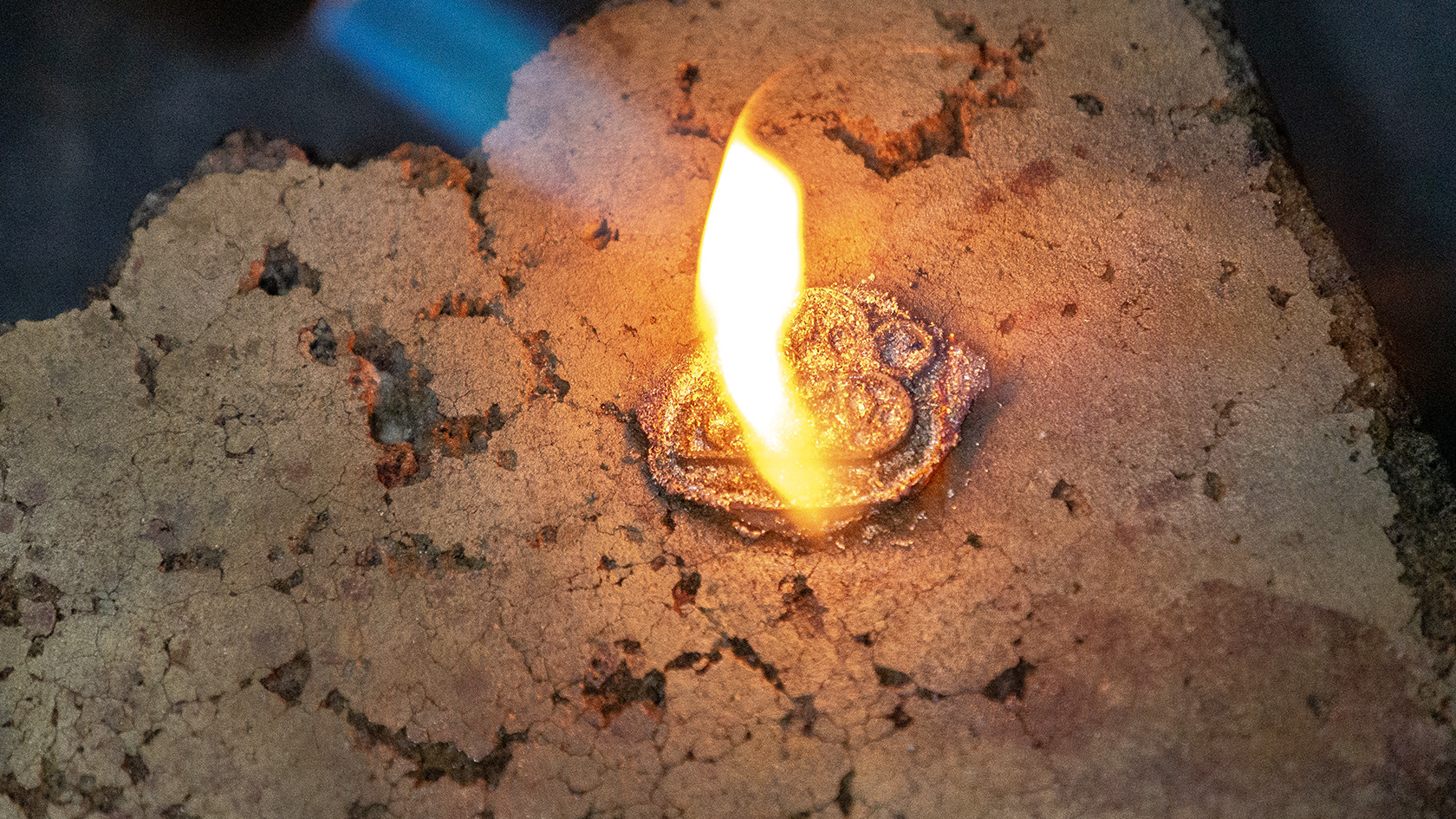
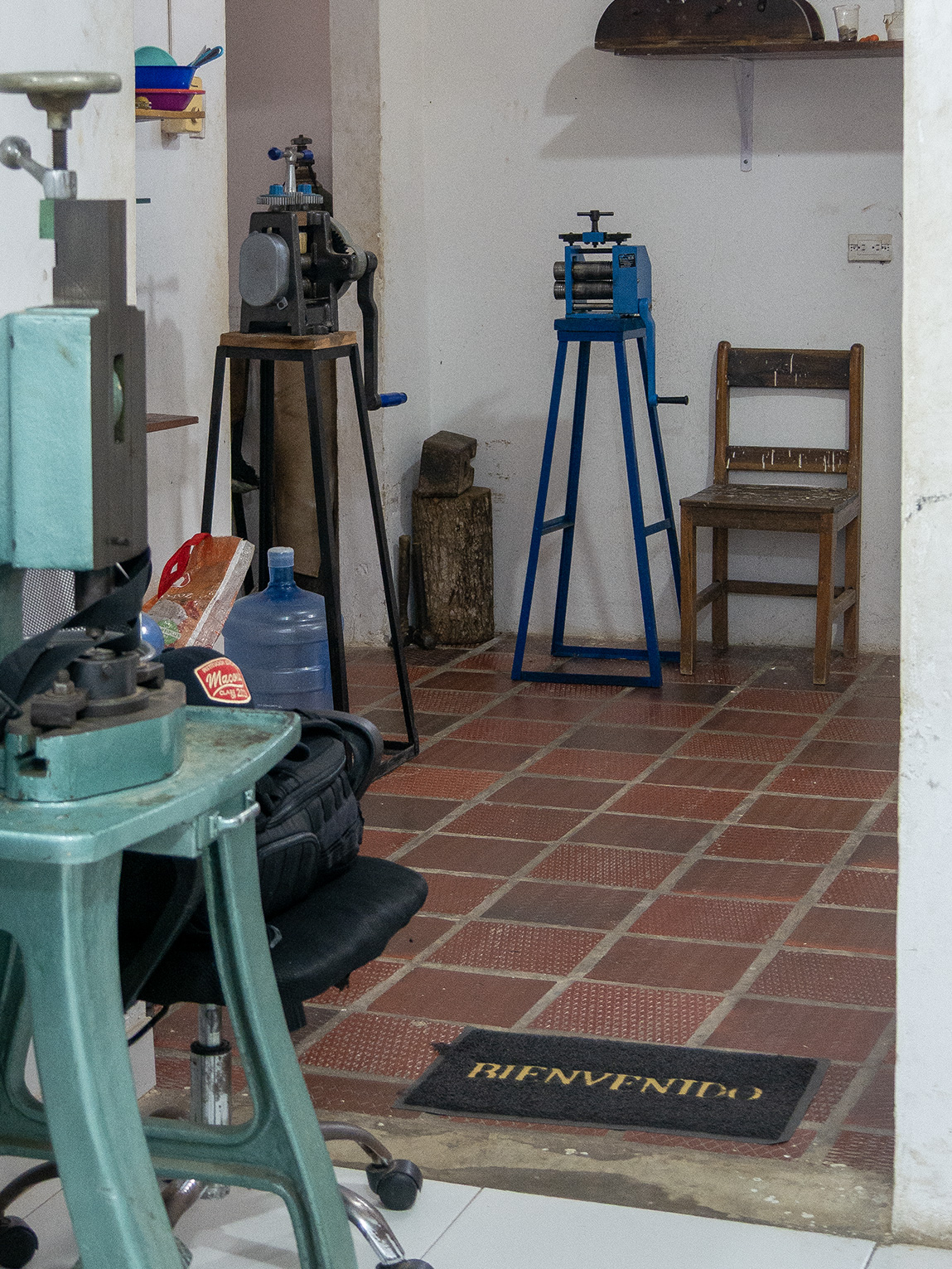
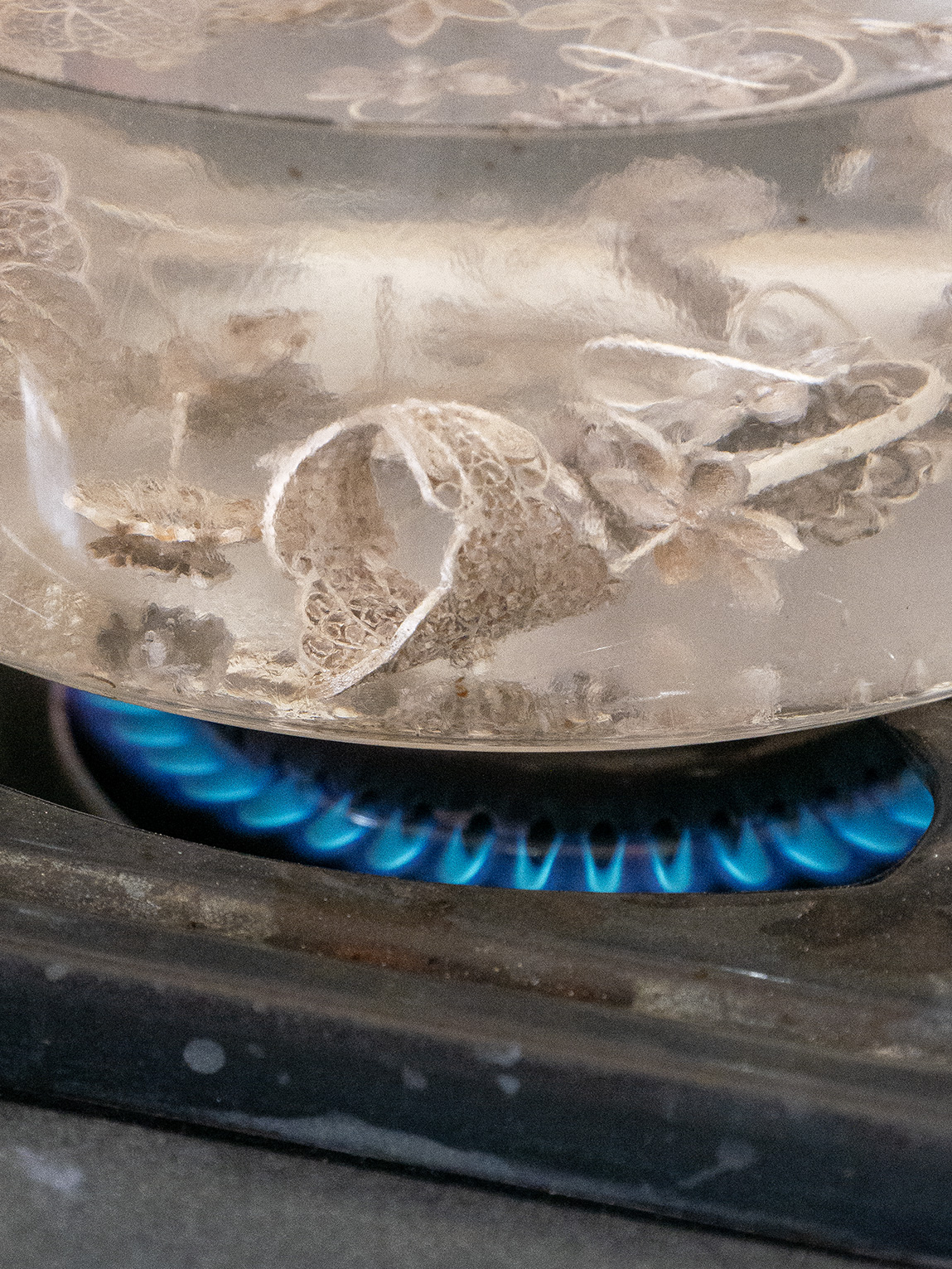
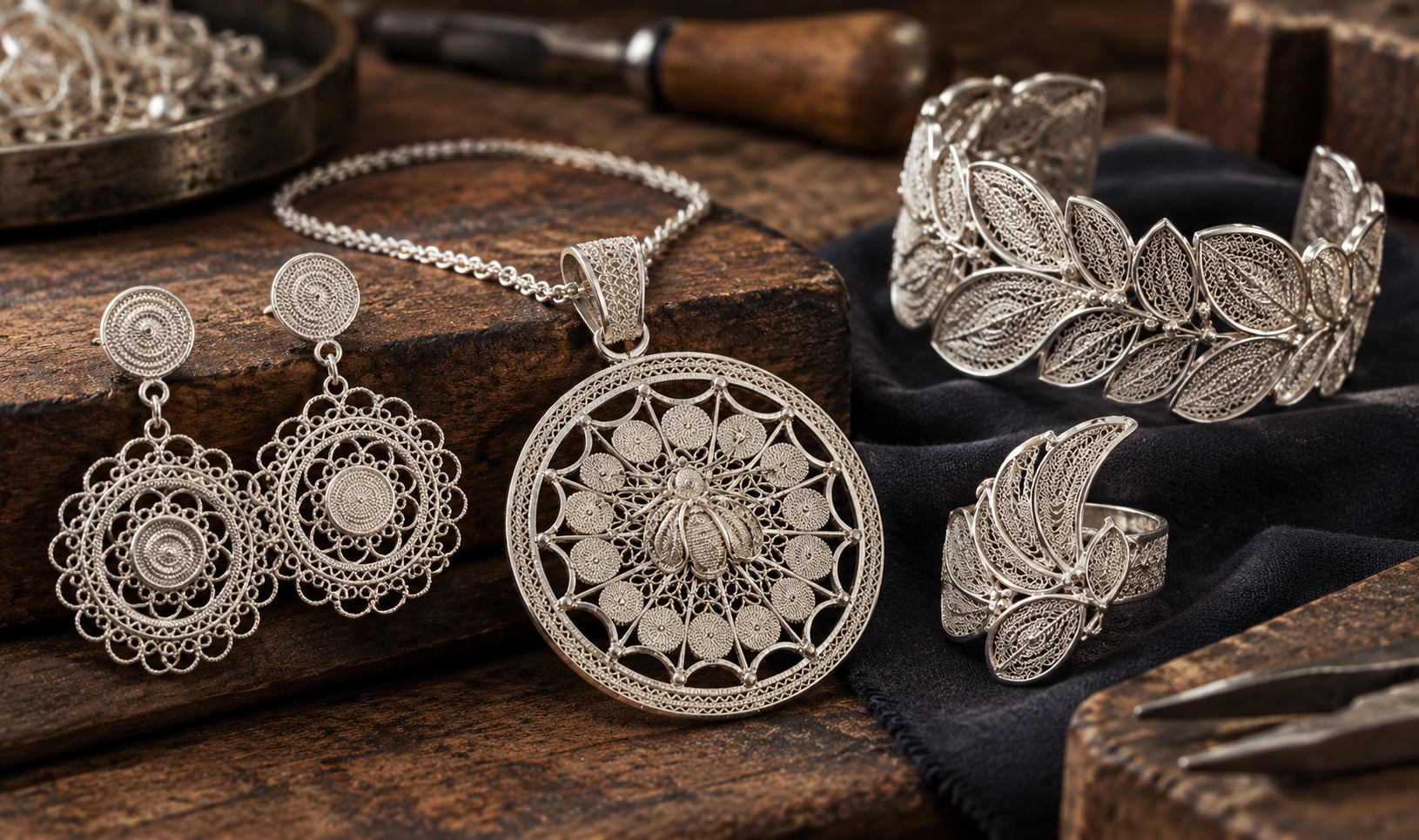
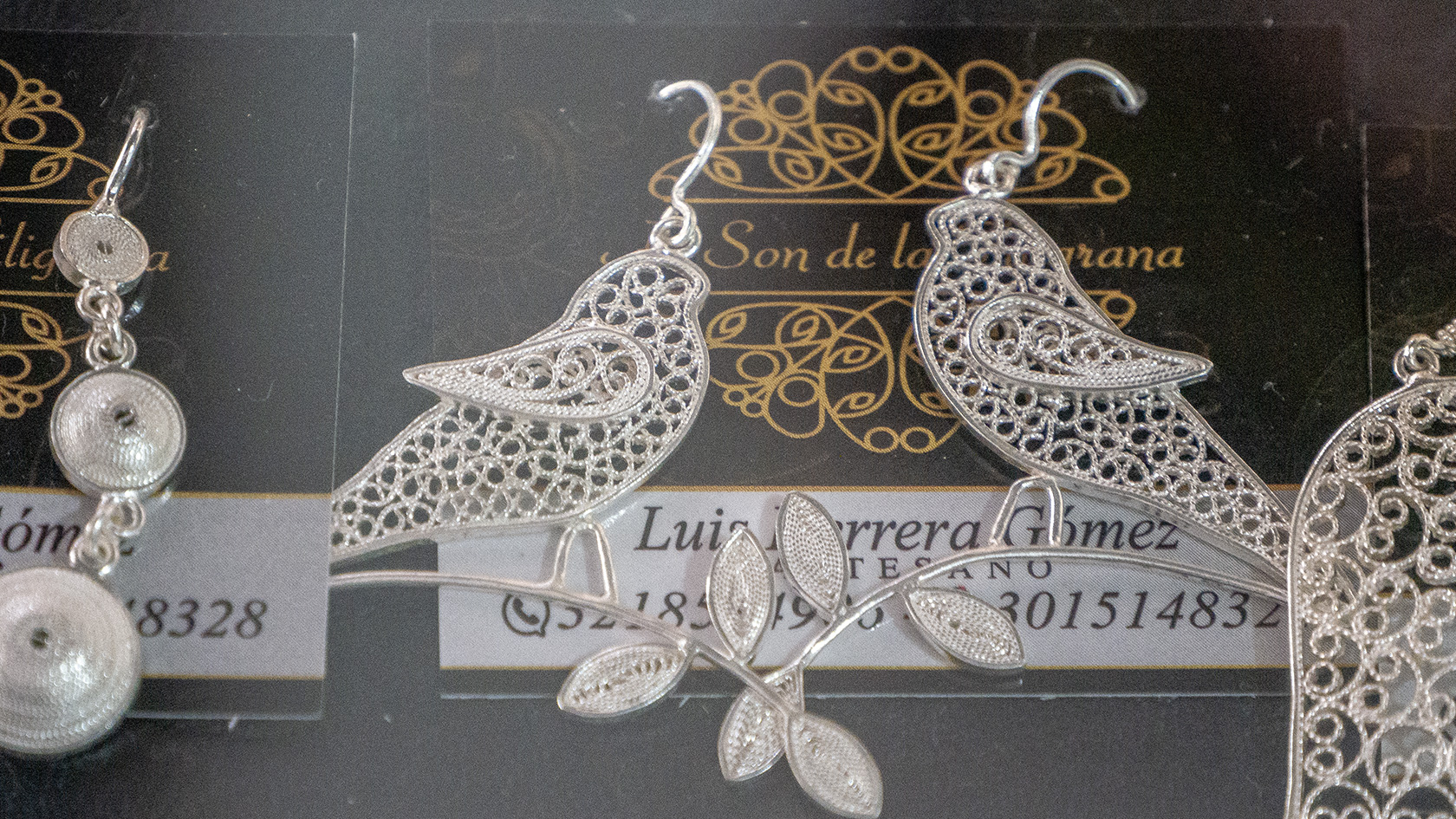
In Mompox, you only need to step inside certain workshops to realize that here, jewelry is more than just a souvenir. Filigree is part of the city’s identity. For generations, artisans have been working with tiny threads of gold or silver, which they twist, solder, and assemble by hand to create pieces of astonishing delicacy. Some pieces require several hours—or even several days—of work, depending on their complexity and the precision of the designs.
What interested us most was that this craft can still be experienced firsthand with the people who practice it. In the historic center, several workshops offer visitors the chance to observe the various stages of production, talk with the artisans, and gain a better understanding of why certain motifs recur regularly in Momposina creations. It’s also a different way to discover Mompox, beyond its colonial architecture and churches.
In this article, we’ll explain what Mompox filigree really is, where this tradition comes from, and how the jewelry is made. We’ll also share our tips on how to experience this craft firsthand and better understand what you’re buying if you’d like to take a piece home with you.
Momposina filigrana
- Origin: Santa Cruz de Mompox, Bolívar
- Craft: Traditional metalwork
- Signature technique: filigree
- Metals used: gold and silver
- Principle: assembly of very fine twisted wires shaped by hand
- Characteristic motifs: plant, geometric, and animal forms
- Iconic piece: articulated fish from Mompox
- Estimated time: about 3 hours to learn the process
Our take: a simple, peaceful, and truly enjoyable outing ★★
We really enjoyed this experience, especially because it goes far beyond the simple piece of jewelry you see in a store window. We took a guided tour that lasted about three hours—which we’ll describe in more detail later in this article—to understand every step of the manufacturing process.
What struck us was the amount of work, precision, and craftsmanship required to achieve the final result. It also requires specialized equipment, patience, and true mastery of the techniques involved. When you look closely at certain pieces, with their very fine and sometimes extremely complex patterns, the result is almost mesmerizing.
We always enjoy discovering the work of Colombian artisans, as it gives us a deeper understanding of a region through its traditional crafts. Although filigree has its origins much further away—specifically in Mesopotamia, before being introduced to the New World by the Spanish—Mompox has successfully made it its own and turned it into a true local signature.
Where can you see filigree craftsmanship in Mompox?
You’ll find many jewelry stores in the historic center of Mompox, especially around Calle Real del Medio, but not all of them make the jewelry they sell themselves. Some of the shops are primarily retail outlets or resellers, while only a few have a real workshop where pieces are designed and crafted on-site. If your goal is simply to buy a piece of jewelry, you’ll have plenty of options; however, if you want to understand filigree and see the artisans at work, be sure to look specifically for a “taller de joyería.” Fortunately, the various tourist agencies have their contacts and know where to go! As for us, we had this experience at Taller y Joyería Luis Herrera Gómez, a 2-minute walk from our Bioma hotel (which we highly recommend!). But there are others as well, such as Taller Joyería Roberto Villanueva, Taller de Joyería HEMA, Taller y Joyería Andrea Rocha, and so on.
Tourist Attendance at the Workshops
Don’t think of filigree workshops as a centralized tourist attraction with groups coming and going all day long: they are generally small workshops scattered throughout the center of Mompox, and visitor traffic varies greatly depending on the workshop, the time of day, and the time of year. Under normal circumstances, the experience can therefore be quite peaceful, allowing you to observe the artisans in a relaxed setting, sometimes even alone (as was the case for us). The situation changes more significantly during Mompox’s peak tourist seasons, particularly during Holy Week or FestiJazz, when the city welcomes many more visitors and both accommodations and the streets of the historic center fill up.
About the Momposina filigree
At first glance, a filigree piece may seem almost weightless, as if drawn rather than crafted. Yet behind these intertwining patterns of gold or silver lies a series of precise steps: melting the metal, drawing it into extremely fine wires, twisting them, constructing a framework, and then filling in the spaces one by one. In Mompox, this craft has become so closely associated with the city that it’s easy to imagine it originated there. Its history, however, is much more nomadic. The technique arrived from Europe during the colonial period, blended with the goldsmithing traditions already present in Colombia, and then evolved over several centuries before becoming the Mompox filigree we know today. And, interestingly, it did not always hold the top spot in the city’s workshops.
A technique that has come a long way
The origins of filigree date back to antiquity, in the Middle East and the Mediterranean basin. The technique developed notably in regions marked by Arab goldsmithing traditions before being passed on to the Iberian Peninsula and then brought to the Americas by the Spanish. But to speak of it as simply a European technique imported to Mompox would be an oversimplification. When the colonizers arrived in the region, goldworking had already been practiced for a long time: pre-Hispanic populations, particularly the Zenú, had mastered goldsmithing and techniques such as lost-wax casting and gold alloying. Research by Artesanías de Colombia thus describes Mompox jewelry as the result of an encounter between indigenous and European traditions, to which certain Afro-Colombian influences were also added. Mompox did not, therefore, invent filigree: it absorbed it, transformed it, and integrated it into its own traditions, eventually giving it a distinct identity.
Why did filigree take root in Mompox?
To understand this story, one must look to the Magdalena River. During the colonial period, Mompox occupied a strategic position on the river, which was then the main transportation route between the interior of the country and the Caribbean coast. The city itself did not have any major mines, but ships carrying gold—particularly from the mining regions inland—would stop there. Precious metals were traded and worked there, and Mompox was also home to activities related to the royal control of gold. This constant flow of wealth encouraged goldsmiths to settle there. The Church also played an important role: workshops received orders for crosses, rosaries, chains, chests, and various religious objects made of gold or silver.
But filigree did not immediately become the dominant technique. The artisans of Mompox were skilled in several techniques, including stamping, which allowed them to create patterns in the metal using dies. In fact, the famous articulated fish of Mompox historically belongs to this other tradition of jewelry-making. Filigree was initially used primarily to complement or decorate larger pieces. The crosses and the camándulas — a type of rosary — made using this technique were, however, much lighter than hammered jewelry and required less metal. They gradually gained in popularity. Until the mid-1970s, stamping and filigree still coexisted widely in the workshops, before the latter definitively took the lead and became the very hallmark of Momposina jewelry.
Turning a Metal Bar into Lace
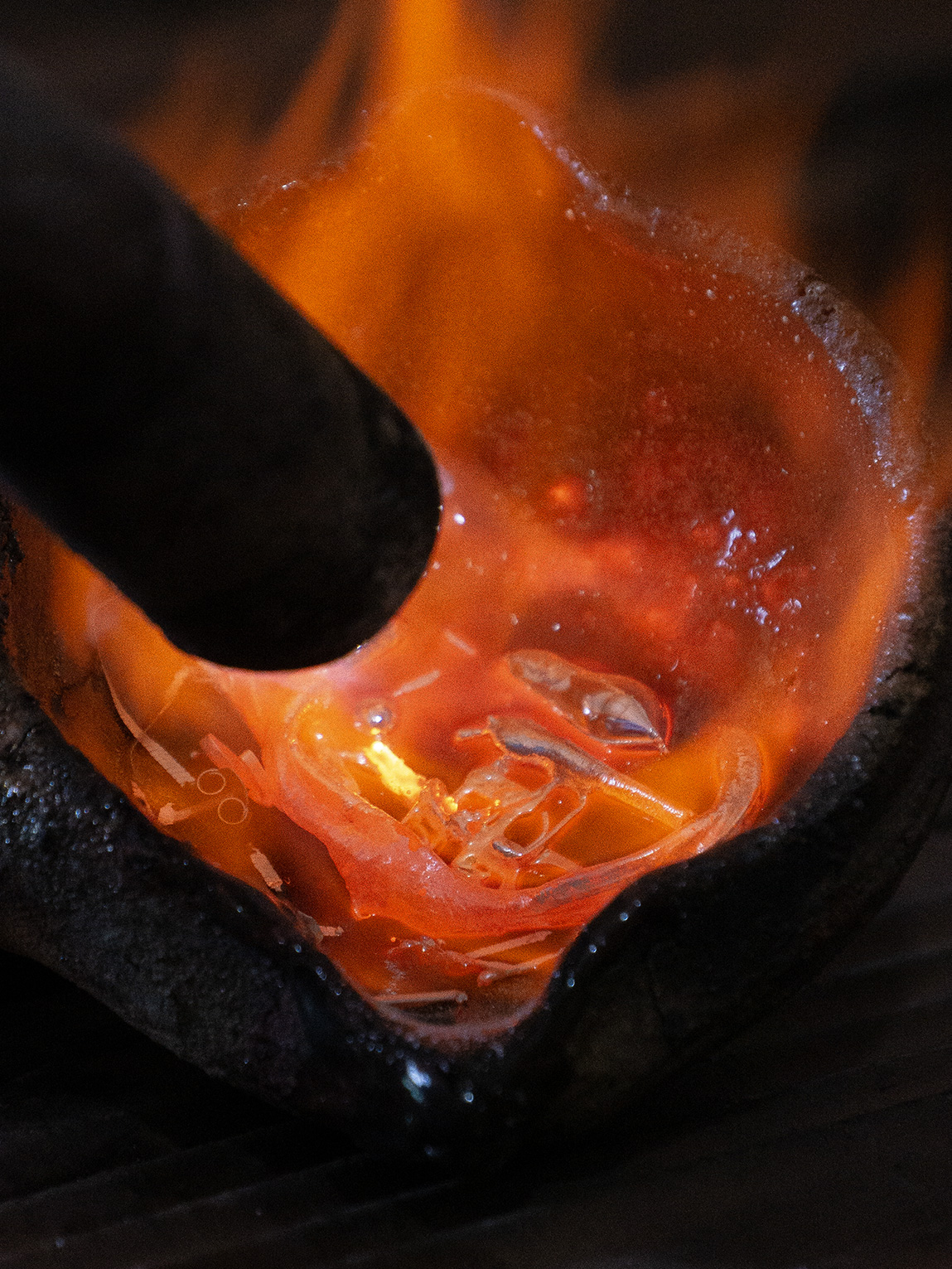
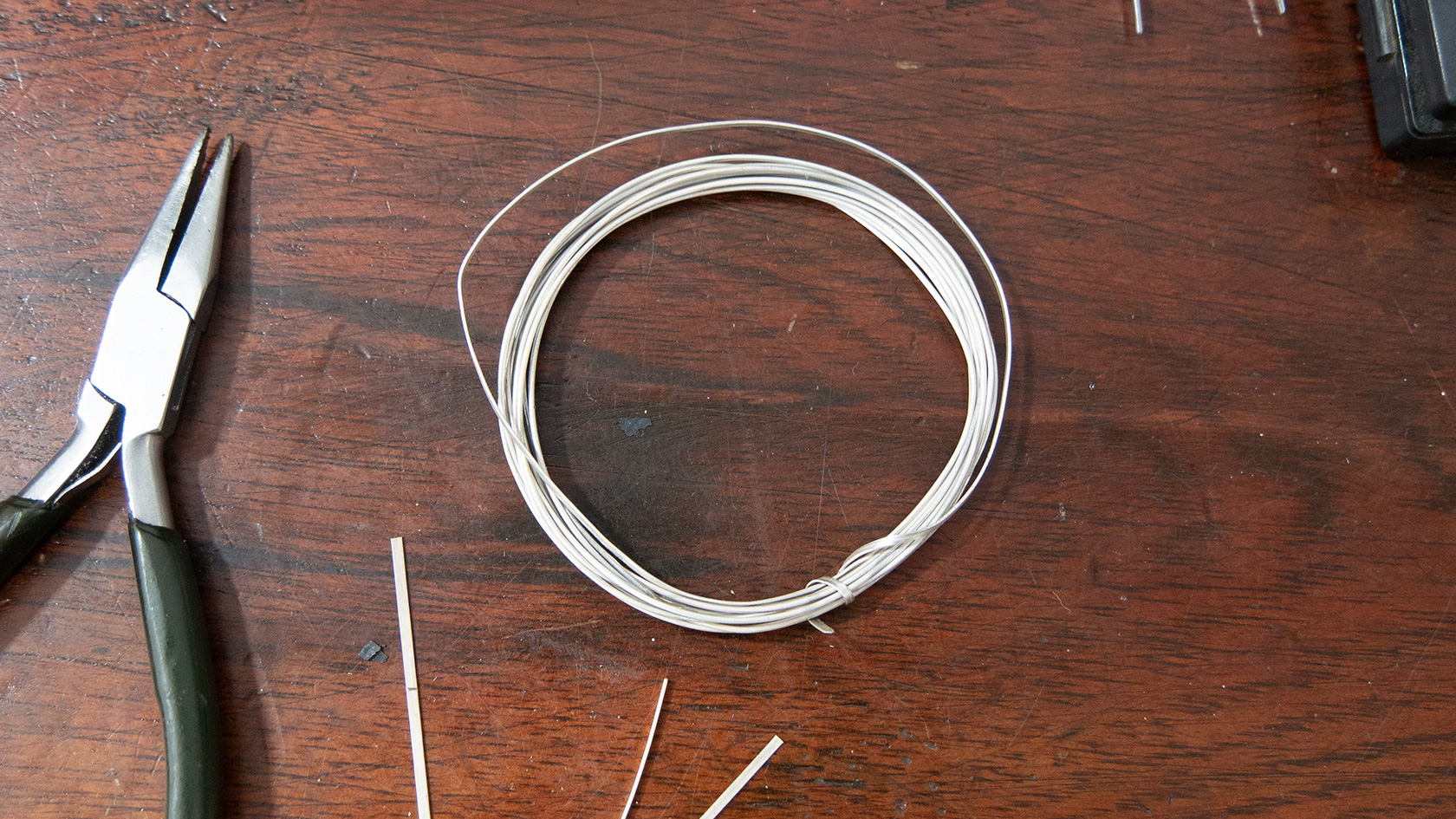
It is only when you follow the manufacturing process from the very beginning that you truly understand the intricacy of the work. The gold or silver is first melted and then shaped into a small bar. This bar is gradually rolled and drawn until it becomes a wire. In the workshops documented by Artesanías de Colombia, the outer framework of a piece may be made with 21-gauge wire, while the finest parts of the filigree can be as thin as 32- or 33-gauge. Two wires can then be twisted together during the “entorchado” process, before being flattened or shaped according to the desired result.
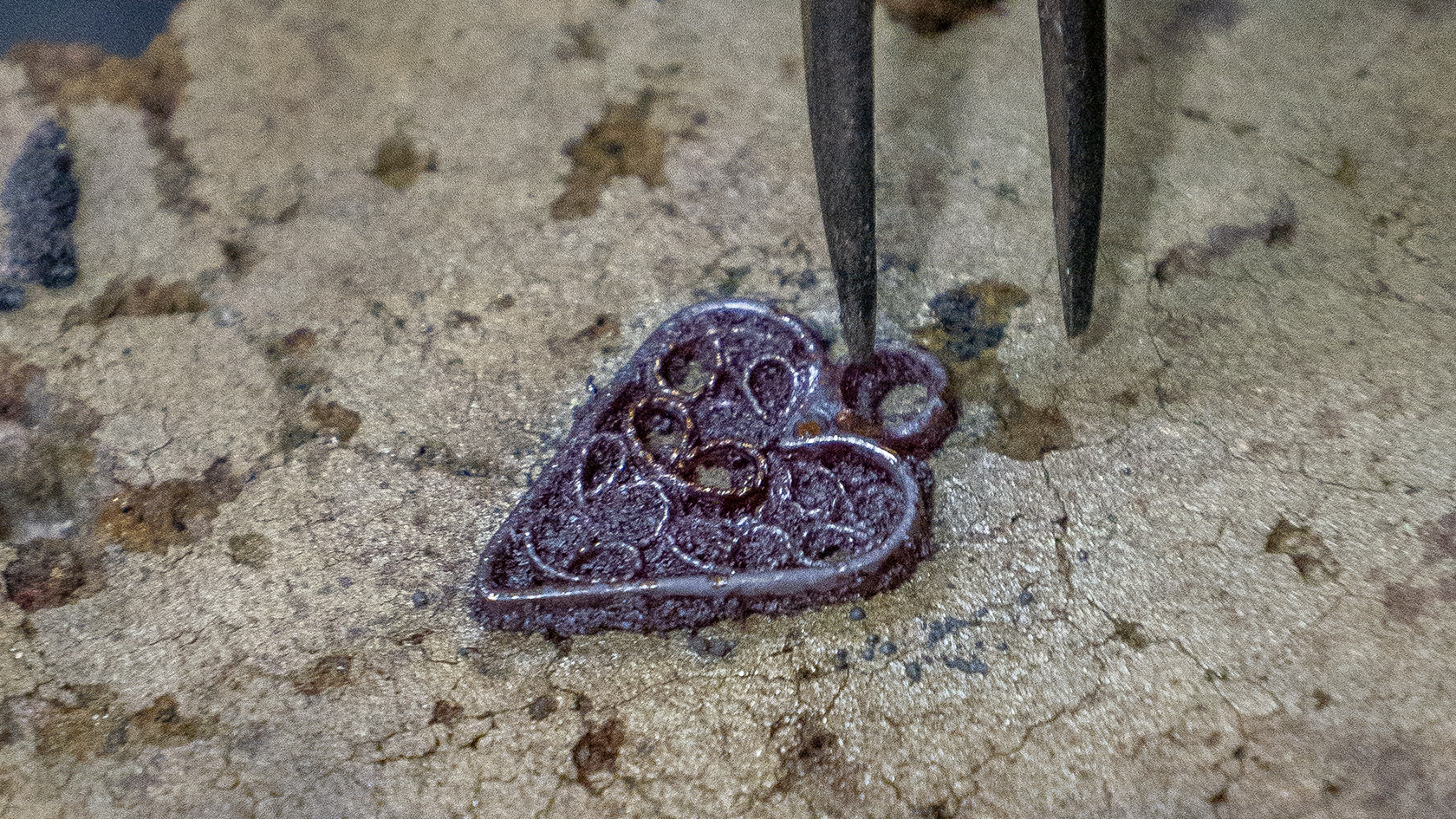
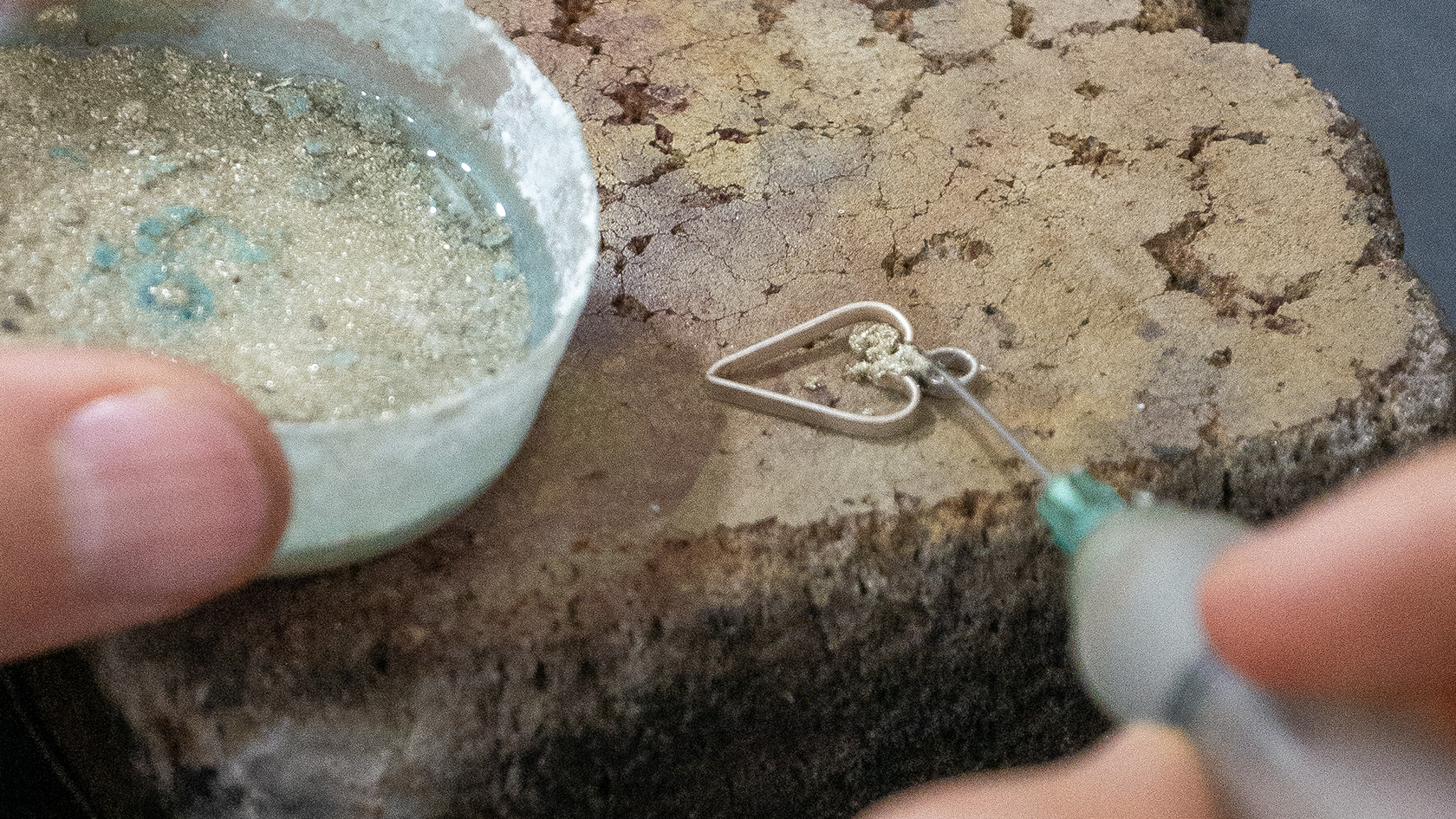
The artisan first creates the outline that will give the piece of jewelry its shape and rigidity. Next comes the most spectacular part: the empty spaces are filled with tiny elements that have been shaped separately. The Momposino artisans give them names such as curls, waves, shingles, braid or zigzag patterns. Each one is bent, coiled, or folded before being fitted inside the frame and then secured. An earring or pendant is therefore not carved from a single piece of metal: it is constructed almost like lace, fragment by fragment. It is this accumulation of small elements that gives the most elaborate pieces that sense of movement and that almost unreal delicacy when viewed up close.
Expertise that continues to evolve
Mompo filigree did not remain confined to the religious jewelry of the colonial era. Artisans have gradually introduced new forms and developed their own decorative language: spirals, flowers, roses, birds, butterflies, geometric patterns, and nature-inspired designs can now be found in earrings, bracelets, rings, and pendants. The metal used has also evolved. Gold used to play a much more prominent role, whereas silver is now widely used in workshops, particularly because it allows artisans to offer more affordable pieces. The technique, however, remains similar whether one metal or the other is being worked.
What has also been passed down are the techniques. For a long time, apprenticeship took place mainly within families or directly under a master artisan. Some techniques were even jealously guarded within workshops, and according to accounts gathered by Artesanías de Colombia, some of this knowledge may have been lost along with the older masters. Today, training also takes place in workshop schools and through local training programs. Mompox filigree thus remains a living craft: the heir to techniques from several continents, yet shaped over generations by the hands of Mompox’s goldsmiths until it became one of the city’s most recognizable cultural hallmarks.

Our Experience
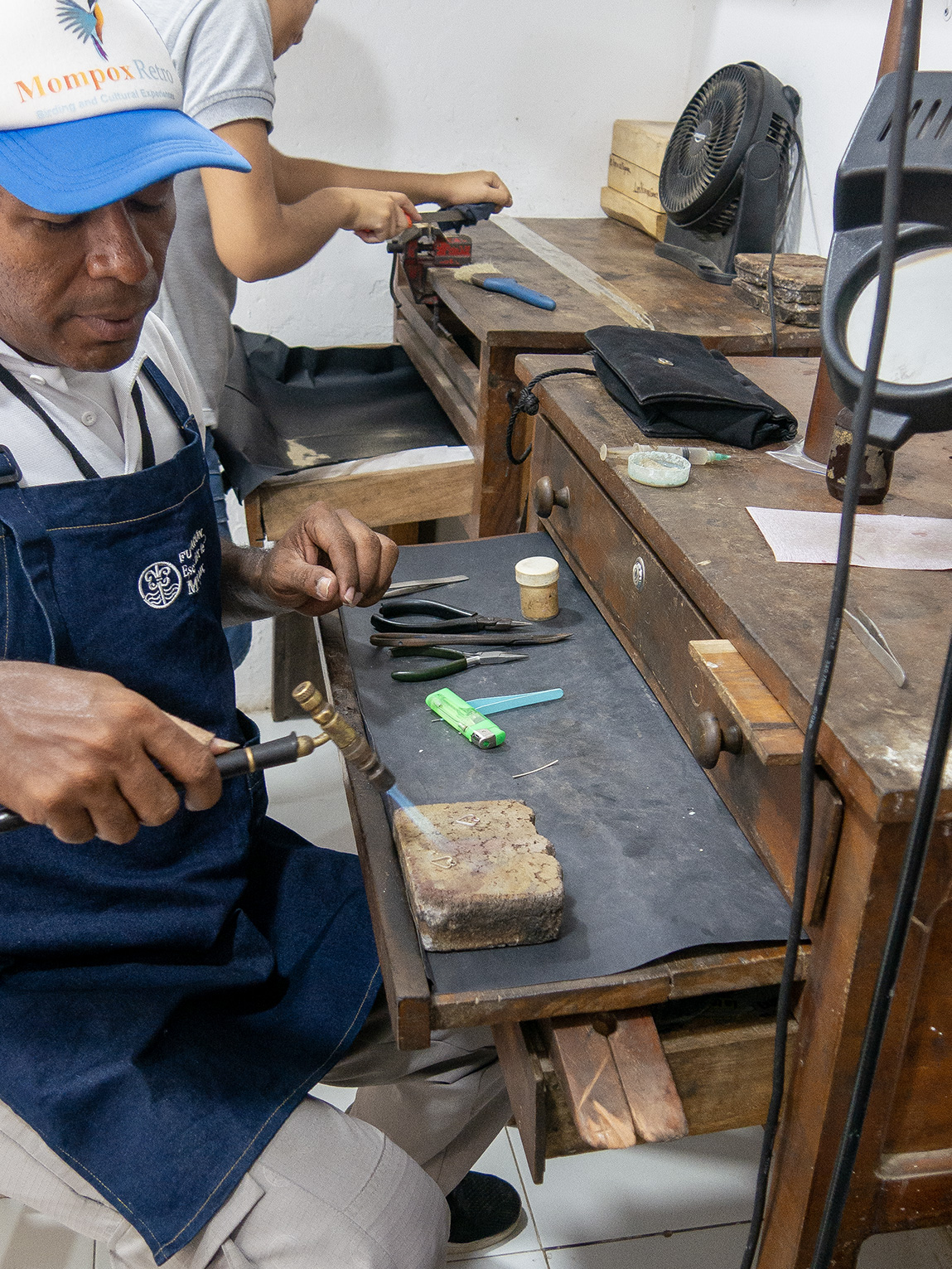
To explore filigree in a way other than just through the shop windows of Mompox, we chose the “Ruta de la Filigrana de Mompox Retro,” a roughly three-hour experience held at the Taller y Joyería Luis Herrera Gómez. And we didn’t just watch the artisans at work: we chose the option that lets us participate in making our own earrings—one earring each. It was an excellent idea, because getting hands-on in the process allows you to quickly appreciate everything that goes into a piece of jewelry that seems so delicate once it’s finished.
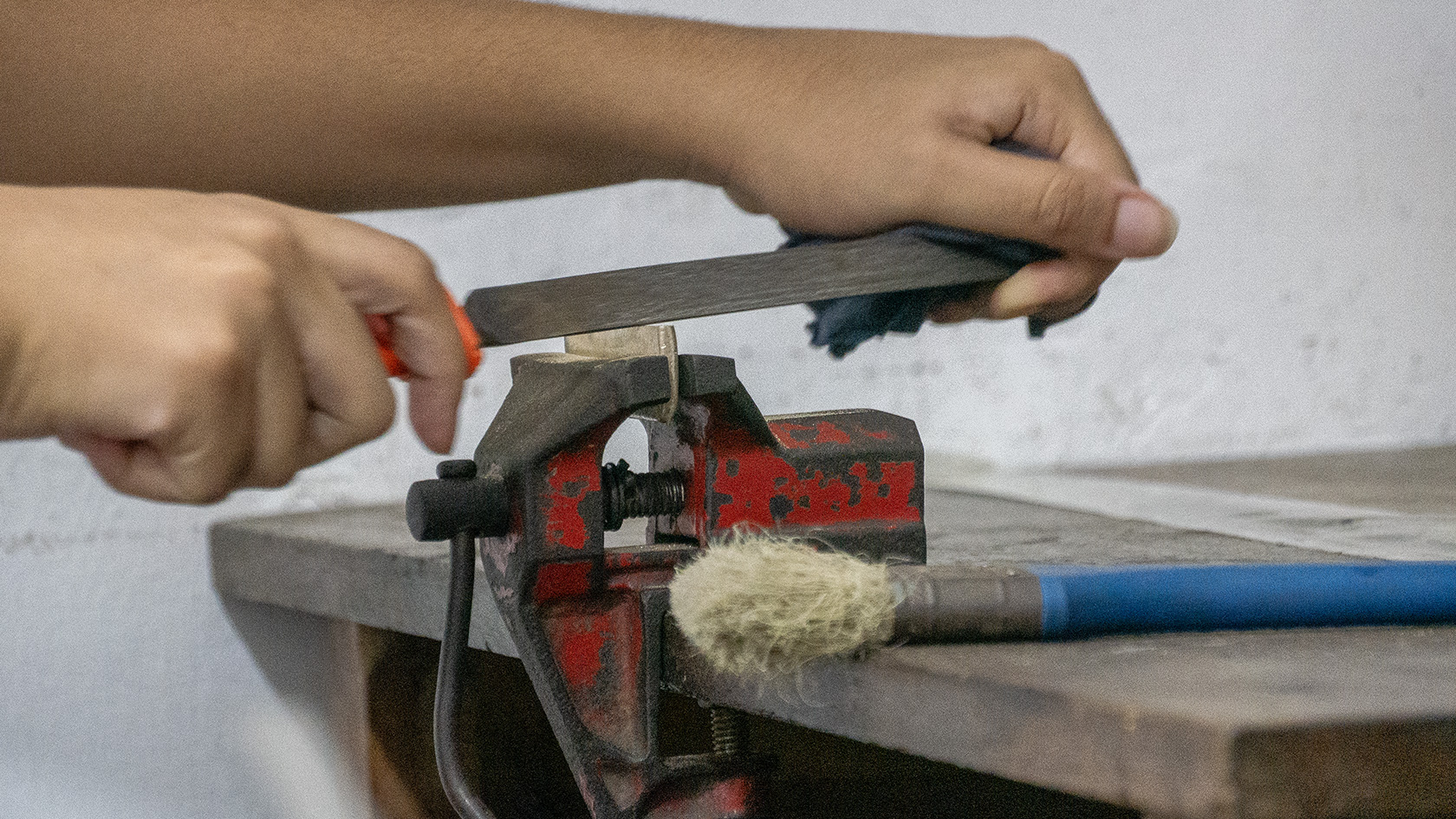
Accompanied by a guide, we followed the manufacturing process from the raw material—silver in our case; we weren’t exactly going to practice with gold!—all the way to the finished piece of jewelry. We were able to participate in the various stages, handle the tools, and try out some of the techniques used daily by the artisans. That’s when you truly understand the patience and dexterity required. Some steps demand impressive precision, while others are surprisingly physically demanding.
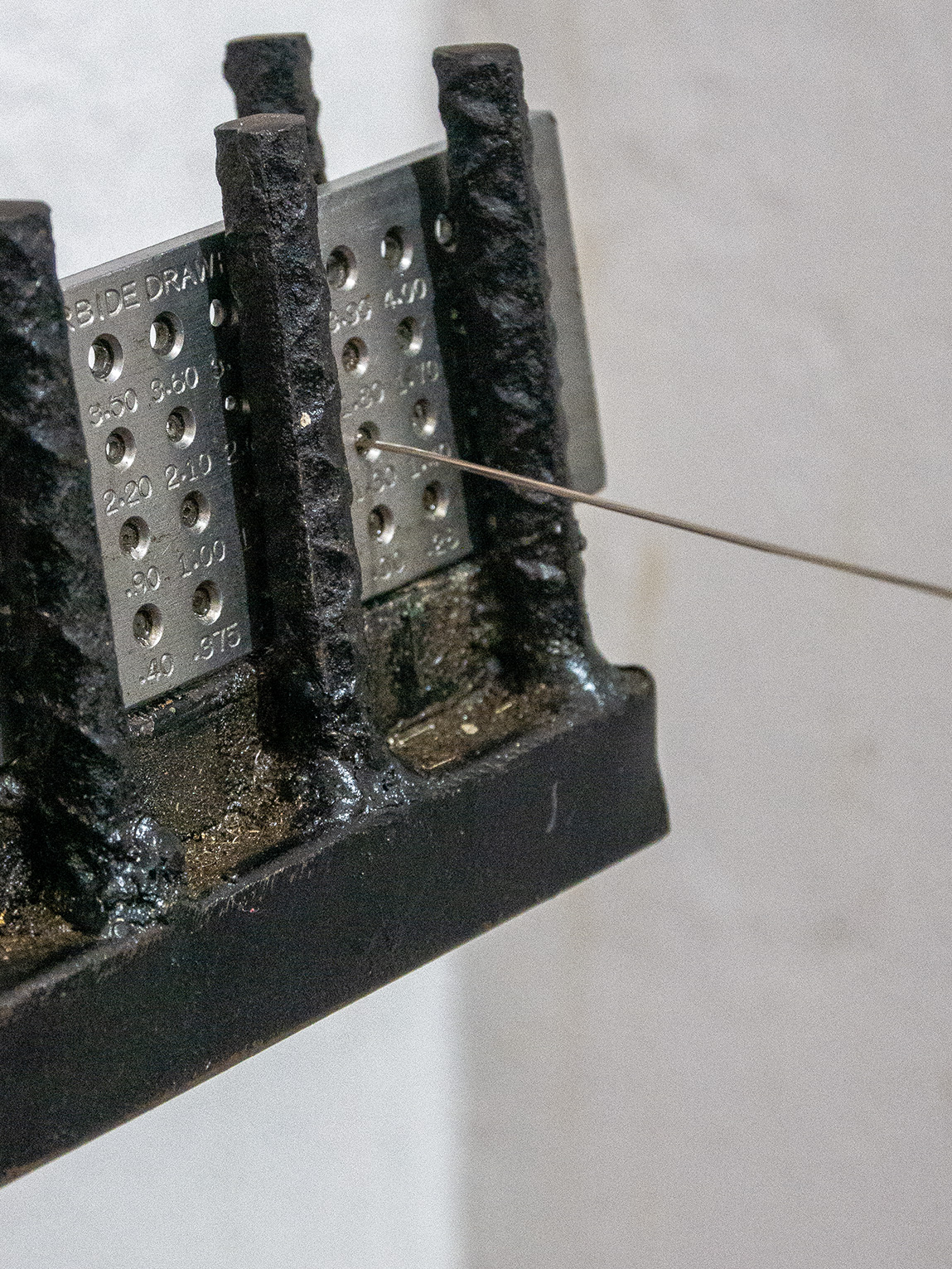
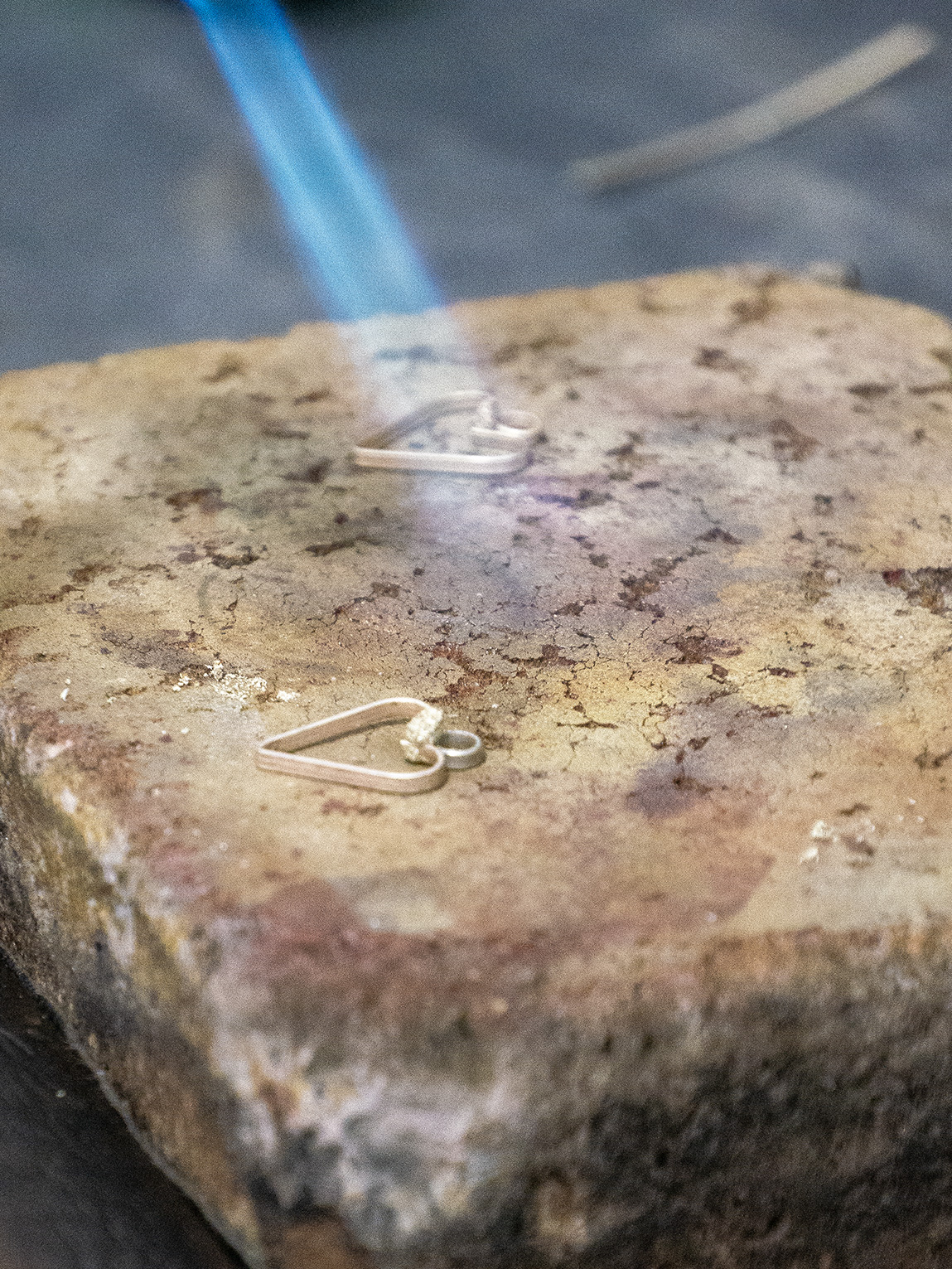
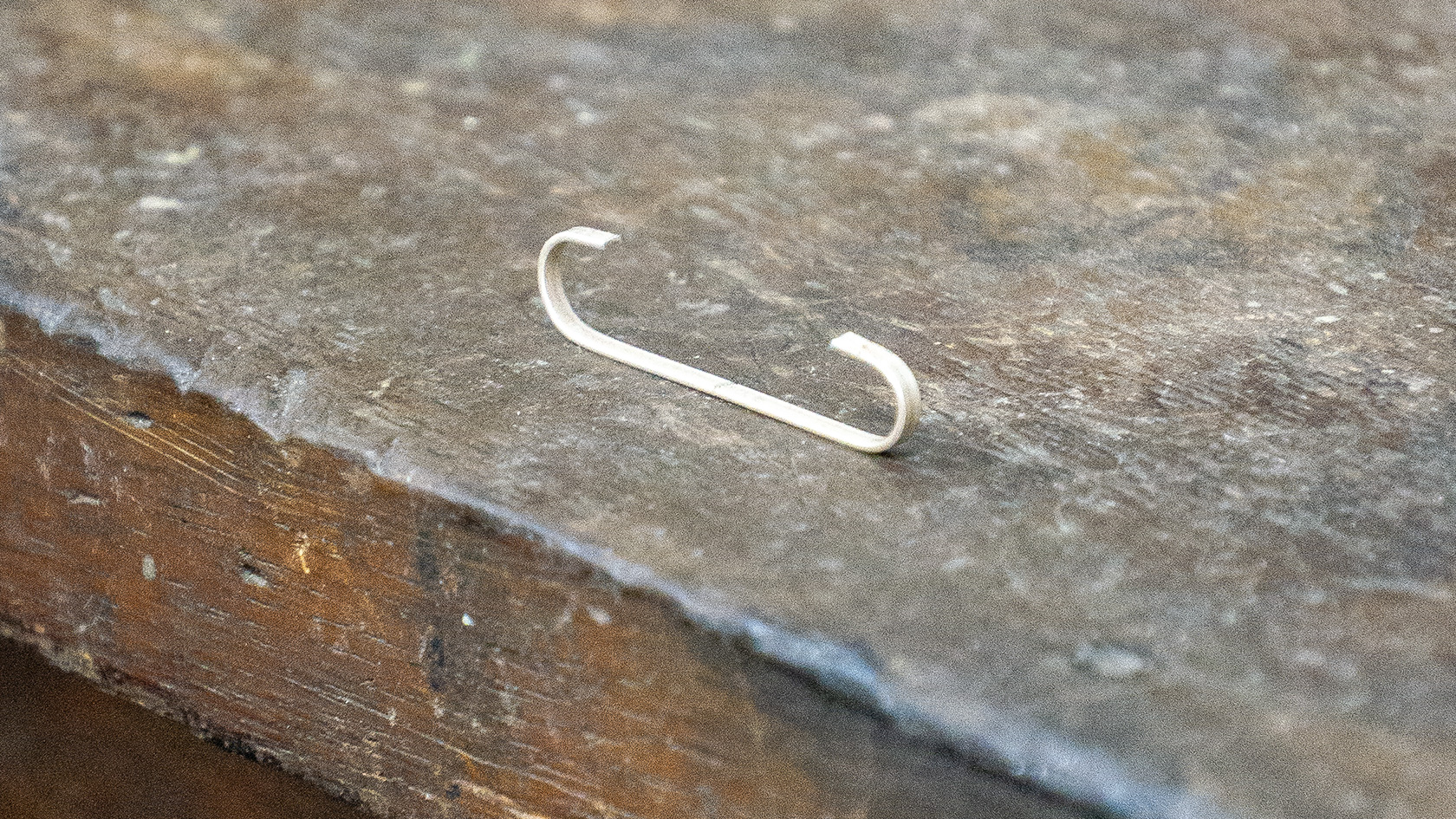
The process is actually quite fascinating to watch, since it starts with a piece of silver that is not yet delicate at all. The metal is first worked to produce a wire that is still relatively coarse. Between certain steps, it is heated to make it more malleable before continuing its transformation. Then begins a long process of refining: the wire is passed successively through increasingly smaller openings until it reaches the desired diameter. And here, fineness matters greatly: the finer the wire, the more delicate the patterns can be. But the finer it becomes, the more demanding it is to work with. The wire is then twisted, flattened, or shaped as needed, before being cut into tiny pieces and assembled to form the characteristic filigree patterns.
We quickly realized that this craft requires both precision and patience. Some steps call for a very steady hand, while others even require a bit of strength—especially when working with metal at the beginning of the process. Then, as the wire becomes thinner, the work grows increasingly meticulous. Watching the material gradually transform into a pattern almost as delicate as lace truly allows you to appreciate all the hidden craftsmanship behind a pair of earrings.
We were the only tourists in the workshop, which made the experience particularly enjoyable. Up front, the manager continued to greet customers at the jewelry store, while in the back, an employee worked alongside us and went about her business. So we felt more like we were being welcomed into a real workplace than participating in a demonstration staged specifically for visitors. The explanations are given in Spanish, which is something to keep in mind if you don’t speak the language at all.
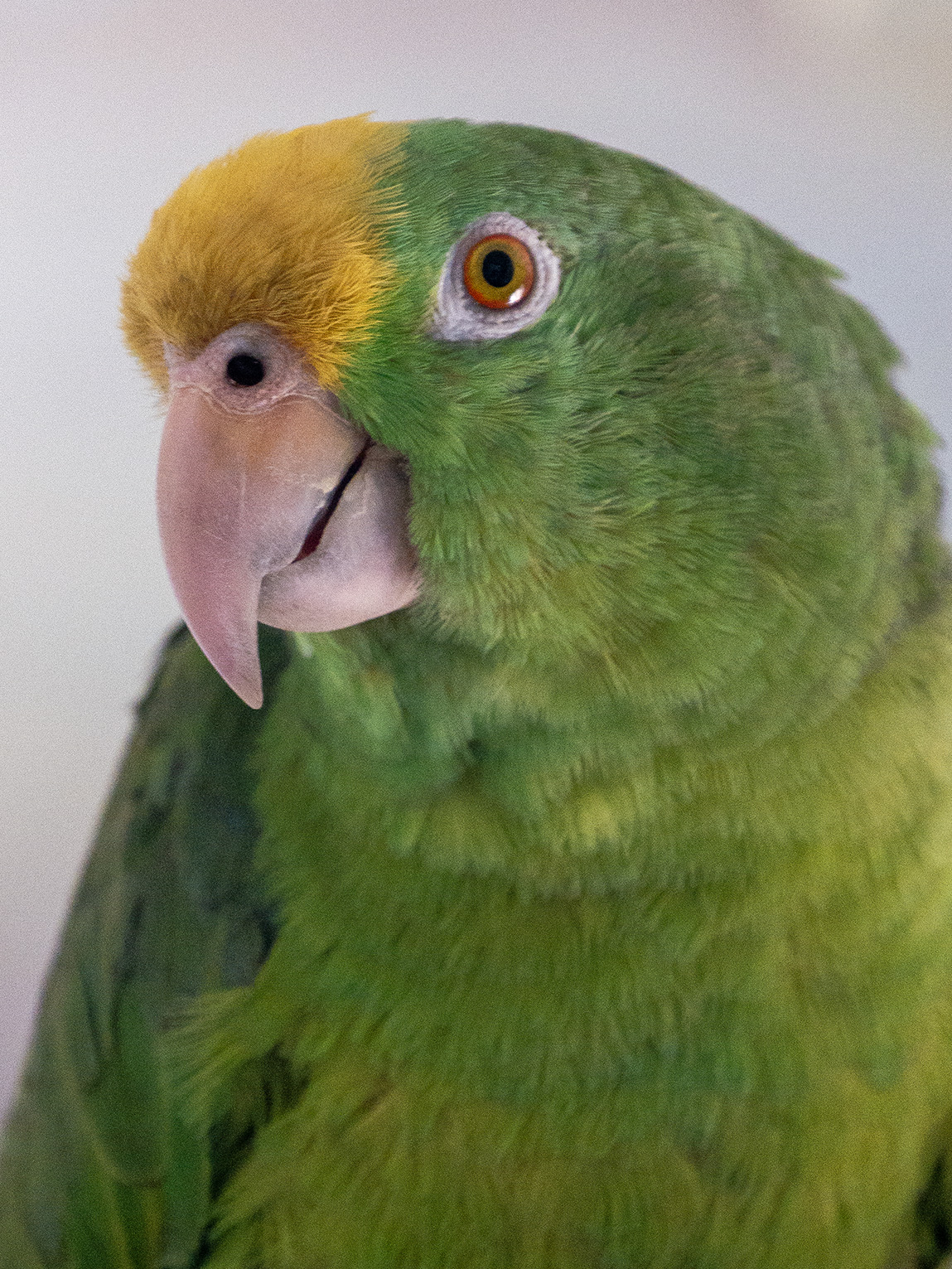
And then there was one rather unusual member of the team: a little green parrot that roamed freely around the workshop, who regularly stopped by to liven things up a bit between production steps. This kind of detail obviously has nothing to do with filigree, but it contributes to the memories we take away from the experience. After three hours, we left with our two earrings and, above all, with a completely different understanding of this craft. Making part of the jewelry yourself helps you appreciate the number of steps, the time, and the skill required for each piece. And leaving with something that we

Tour Agencies and Guides
In Mompox, hiring a good guide really makes a difference to your visit. Much of what makes the place interesting isn’t immediately obvious: the history of river trade, the role of Simón Bolívar, religious traditions, colonial architecture, and even how the surrounding ciénagas function. For certain excursions, particularly boat tours, going through a local tour operator also simplifies all the logistics.
So here we’ve selected a few local guides and agencies that we recommend, giving priority to those who truly know the area and can go beyond a simple tourist itinerary. Depending on your interests, you can choose between a historical tour, a cultural exploration, a nature outing, or a more comprehensive excursion around Mompox.
Recommended Providers
Mompox Retro
A local agency offering tours focused on history, architecture, watermarks, gastronomy, and nature excursions. We especially appreciate the variety of itineraries and the immersive approach, led by professional guides who know the region well.
https://www.mompoxretro.co/ – gerencia@mompoxretro.co – (+57) 312 6699882
Mompox Mágico Travel
An excellent way to learn more about the history of Mompox: Luís Alfredo Domínguez is a professional tour guide, historian, former director of the local archives, and member of the Academia de Historia.
https://mompoxmagico.com – alfredodh@gmail.com – (+57) 310 3513606
Pricing (Our Experience with Mompox Retro)
We recommend Mompox Retro after trying out three of their activities, including the Ruta de la Filigrana. All three experiences went very well, with professional organization, engaging guides, and services that lived up to what was advertised.
Filigree Workshop (Earring Making)
Duration: about 3 hours
Price: 180 ,000 COP per person, which includes the opportunity to help create a piece of jewelry that you can take home at the end of the experience, or 140,000 COP per person for a tour focused solely on learning about the craftsmanship and the various stages of production.

Where to Stay in Mompox?
Mompox now offers a fairly wide range of accommodations, from small, simple places to charming colonial houses and more upscale hotels housed in beautiful buildings in the historic center. Your choice will depend mainly on your budget, but also on the kind of experience you’re looking for: staying in the heart of the colonial streets, enjoying a patio with a pool, or simply finding a comfortable place to stay for a few nights. We’ve therefore selected several interesting accommodations at different price points, so you can easily find the ones that best suit your trip.

$ – Budget-friendly
Hostel
Hostal Casa La Candelaria
An excellent budget option, known for its warm welcome, peaceful atmosphere, and great value for the money. The rooms are simple, with a shared kitchen, a garden, and hammocks for relaxing.

$ – Budget-friendly
Hotel
La Casa del Viajero
A simple, comfortable place to stay, perfect for those on a budget, with air conditioning, functional rooms, and good value for the money—just a few minutes’ walk from the historic center.

$$ – Average budget
Hotel
Casa Isabelita
A cozy and conveniently located spot in the historic center, appreciated for its tranquility, terrace, air-conditioned rooms, and good value—ideal for exploring Mompox on foot.

$$ – Average budget
Hotel
Ana Lorenza Boutique Hotel
An elegant hotel in a historic mansion, featuring a patio, swimming pools, and comfortable rooms. Its riverside location and warm hospitality are particularly appreciated by travelers.

$$$ – High budget
Hotel
San Rafael
An elegant colonial-style house on the banks of the Magdalena River, prized for its exceptional location, swimming pool, lush patio, comfortable rooms, and the attentive service of the on-site staff.

$$$ – High budget
Hotel
Bioma Boutique Hotel
A lovely, charming hotel in the heart of the historic district, featuring a pool, a patio, and spacious rooms. We love its peaceful atmosphere and convenient location.


