In brief


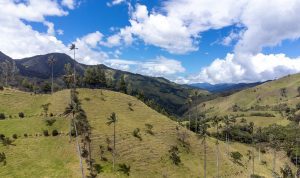
To visit a coffee finca in Salento is to plunge into the very soul of Colombian culture. In the heart of the coffee-growing region, this colorful little village attracts travelers from all over the world every year, curious to discover the secrets of this emblematic beverage. As soon as you leave Salento for the surrounding green hills, a spectacular landscape opens up before you: coffee plantations stretch as far as the eye can see, interspersed with majestic wax palms.
In a finca, the immersion is total. Accompanied by passionate growers, we discover every stage of production, from picking to roasting, each meticulous gesture contributing to the elaboration of a unique coffee. We learn about the subtleties of the terroir, traditional methods and the challenges faced by producers. A tasting session awaits us at the end, where the aromas are finally revealed in a steaming cup, symbolizing the collective effort and know-how handed down from generation to generation.
LEARN MORE
Our verdict: plenty of options for discovering Colombia’s famous coffee! ★★
Perched in the Colombian Andes, the village of Salento, in the heart of theEje Cafetero, attracts travelers in search of verdant landscapes and authenticity. This emblematic location in the coffee region is the ideal place to visit a coffee finca, the farms dedicated to growing, harvesting and processing this precious bean. In Colombia, most fincas are small family farms, where growers cultivate their own coffee trees on high-altitude land, benefiting from the perfect climate and soil for exceptional beans. Following the example of the village of Jericó with the finca de Ariel, around Salento, many fincas have opened their doors to visitors, encouraged by the boom in tourism. These tours offer a rare opportunity to immerse yourself in theworld of coffee, to discover all the stages of production, from picking to roasting, and to better understand this know-how handed down from generation to generation. For an hour or two (or 3!), we let ourselves be guided, listen to the stories, and immerse ourselves in the complexity of this demanding culture, ending with a cup of coffee rich in aroma – a true taste of Colombia.

Visit a coffee finca in Salento
Our experiences: Don Elias and Las Acacias
During our trips to Colombia, we’ve been lucky enough to visit Salento several times, this charming village nestled in the heart of the coffee-growing region. On two occasions, we explored coffee fincas: Las Acacias, in 2019, and Don Elias, in 2023. These experiences, though separated by a few years, followed a fairly similar course, allowing us today to share a typical account of a visit (lasting around an hour to an hour and a half) to a coffee finca.
Arriving at the finca: an adventure in itself
To reach the finca, the journey itself proved to be a memorable experience. After leaving the colorful, bustling streets of Salento, we boarded a Willys, the famous jeeps that are an integral part of the region’s history. Some of these robust machines, still in service, are well over 50 years old! The road winds through the rolling green landscape typical of the Colombian Andes. It winds its way through sometimes chaotic roads, with potholes and steep climbs, but the Jeep always manages, moving along at its own pace.
Along the way, the landscape gradually changes, revealing small fincas dotted here and there, surrounded by fields of coffee trees. These scenes create a vivid picture of the Colombian countryside that we never tire of admiring.
The welcome at the finca: Colombian warmth and humour
As we entered the finca, a smiling guide greeted us with typical Colombian hospitality. Whether at Las Acacias or Don Elias, we were immediately struck by their sense of humor and contact. Here, whether you speak Spanish or English, conversations are punctuated by jokes and laughter.
Once inside the property, we discovered the famous cafeteria houses with their colorful facades, so emblematic of the region. The fincas we visited are not the vast farms you might imagine. Nothing to do with the large European farms with their hundreds of hectares: here, the properties generally cover a few dozen hectares at most, often managed on an artisanal, family-run basis. This creates an intimate, friendly atmosphere that makes the experience all the more enjoyable.
Immerse yourself in the heart of the plantations: the guided tour
The tour began with a stroll through the plantations, where coffee trees grow in terraces on the steep mountain slopes. Some of the paths are steep and winding, adding a touch of adventure to the experience. As we wandered among the plants, the guide told us about the history of coffee in Colombia: how the first plants were introduced, the varieties grown today, and why this region of the Andes is so renowned for its high-quality coffee.
The path we took meandered through coffee trees at different stages of maturity, from fragile seedlings to mature trees laden with red or yellow cherries ready for harvest. The guide was careful to explain how climatic conditions, altitude and year-round care directly influence the quality of the final product.
We also learned about the importance of maintaining a diverse ecosystem within plantations. Banana trees, for example, play a key role in providing shade for coffee trees, which are sensitive to direct sunlight, while retaining water in the soil thanks to their large leaves. Each tree needs several years to reach maturity and produce cherries, which requires immense patience on the part of the growers. Then there’s the day-to-day work of controlling disease, fighting pests, pruning trees and replacing those that have reached the end of their cycle.
The guide then gave us an overview of the coffee transformation process. From the manual harvesting of ripe cherries, through pulping, fermentation, washing and drying, to sorting and storage, each stage requires meticulous attention. Once ready, the beans are packaged for sale: the best coffees, often unroasted, are exported so that they can be roasted in importing countries to preserve their aromas. Lower-quality beans, on the other hand, are reserved for the domestic market, where they are more affordable.
This complex process highlights the hard work put in by cafeteros, the coffee growers whose daily lives are marked by constant effort. Yet the income they earn is often modest, well below the investment of time and energy. The guide also mentioned the importance of cooperatives, which enable producers to pool their resources and improve their bargaining power.
Opening their doors to travelers offers fincas an additional opportunity. It’s not just about discovering a fascinating part of rural Colombia: it’s also a way for producers to diversify their income and aspire to better living conditions. These visits, which are both educational and humane, make people aware of the value of a cup of coffee, far beyond its taste or aroma.
Tasting and ephemeral souvenir
The visit ended on a delicious note: a coffee-tasting session. Under the expert guidance of our guide, coffee was freshly ground in front of us, then prepared according to the rules of Colombian art. This moment was an initiation to the aromatic richness of coffee, where we learned to identify its subtle notes – whether chocolatey, fruity or floral – and to understand the nuances specific to coffees grown at altitude. Although our palate was not that of an expert, this experience enabled us to appreciate the full complexity and refinement of coffee.
The guide also explained that good coffee doesn’t need sugar: it’s all a question of variety, roasting, dosage and preparation. As with wine, coffee requires a nuanced approach and knowledge to reveal its subtleties. This moment made me realize that a well-prepared cup of coffee is much more than just a drink: it’s the fruit of craftsmanship and a meticulous process.
Before leaving, we bought a bag of freshly roasted coffee, bean or ground, to extend this sensory journey when we got home. This visit wasn’t just about discovering the stages of production; it allowed us to appreciate the passion and dedication of local producers, while connecting us to a culture deeply rooted in Colombian identity.
For those visiting the Salento region, we can’t recommend this experience highly enough. It offers a fascinating look at one of the country’s greatest prides, while directly supporting the producers. If we had to do it all over again, we’d opt for a longer tour. A three-hour tour, like the one we took at the finca d’Ariel near Jericó, allows us to take our time, explore each stage in greater depth and even take part in the harvest. This makes for an even more immersive and enriching experience, in keeping with the richness of Colombian coffee.

The best coffee fincas around Salento
Here is a selection of the best coffee fincas to visit around Salento for an enriching experience full of flavour:
- Finca El Ocaso(see their official website)
One of the most popular, it’s about 30 minutes from Salento and offers a picturesque setting. You can explore the plantations, learn about the different stages of production and sample a coffee. Tours are available in English and Spanish, to suit all levels of interest.
- Finca Buenos Aires(see their official website)
This finca focuses on artisanal coffee growing and processing practices. It also integrates a respectful relationship with the local flora and fauna, offering an immersive visit to the region’s natural heritage.
- Finca Entrebosques(check out their official Instagram account)
Located just 2 km from Salento, this finca is easily accessible and offers a tour lasting around 1h30. The focus is on discovering coffee, from cultivation to processing, with tasting at the end of the tour. It is particularly suited to visitors seeking a personalized experience.
- Finca Don Elias(see their official website) / Tested by Caro and me
A small family farm that favors organic and traditional techniques. You’ll discover a more intimate and respectful approach to coffee growing.
- Finca Las Acacias(see their official website) / Tested by Caro and me
A small family-run operation ideal for an authentic immersion in the world of Colombian coffee. Guided tours, offered throughout the day without reservation, last about an hour and offer a complete overview of the coffee production process, from cultivation to roasting.
Of course, there are many other fincas around Salento, some of which could be just as remarkable as the five mentioned above. The suggestions offered here are based both on our own experiences and on the many positive comments from travellers who have explored the region.

Rates & Duration
Prices and duration of visits to coffee fincas in Salento vary according to the size of the farm and the activities on offer. Visits generally take place between 9:00 am and 4:00 pm, offering flexibility to travelers. Here’s an overview of what’s on offer at the five fincas we’ve selected:
| Finca | Several tower ranges | Rates per person (in COP) | Duration | Reservation | Language |
|---|---|---|---|---|---|
| El Ocaso | Yes | 50,000 or 120,000 | 1h30 or 3h00 | For the 3h tour | Spanish or English |
| Buenos Aires | No | 50 000 | 2h | No | Spanish or English |
| Entrebosques | No | 40 000 | 1h30 | No | Spanish or English |
| Don Elias | No | 35 000 | 1h15 | No | Spanish or English |
| Las Acacias | No | 30 000 | 1h | Recommended | Spanish or English |

How do I get to the Finca de Café from Salento?
To get to the coffee fincas from Salento, there are several options, depending on the finca you wish to visit and your sense of adventure:
By Jeep Willys
The traditional old Willys Jeeps, emblematic of the region, are the most common and practical way of reaching the various fincas via the rough roads. They leave from Salento’s central plaza at regular times. Simply ask the driver to drop you off at the finca of your choice. Most of the popular fincas, such as El Ocaso or Don Elias, are well served.
Departure point: central square (the ticket office is a small cabin where all the Jeeps are parked).
Timetable: departures (in theory) every hour between 08:00 and 17:00.
Duration: between 10 and 30 minutes depending on the finca.
Cost: between 10,000 and 15,000 COP round trip (variable according to distance).
The easiest way is to find out the day before, either at the wicket or at the finca of your choice.
On foot
For walking enthusiasts, some fincas can be reached via picturesque footpaths from Salento. For example, the El Ocaso finca is about an hour’s walk away, on a pleasant path through the countryside. It’s an ideal option if you want to enjoy the scenery.
Duration: 1 to 1h30 walk, depending on the finca.

Sleeping in Salento
To visit the coffee fincas, there’s nothing more convenient than staying in Salento. This charming village offers a wide range of accommodation to suit all budgets and preferences. What’s more, the famous Jeeps, which serve the various fincas, leave directly from the central square. This makes Salento an ideal base from which to explore the region and gain easy access to the surrounding plantations, while enjoying the authentic ambience of this must-see place.
LEARN MORE

$ – Economical budgeting
Hostal
Hostal Ciudad de Segorbe
The Hostal Ciudad de Segorbe, in the heart of Salento, a stone’s throw from the main square, is a typical colonial house, offering immersion in regional tradition.

$ – Economical budgeting
Hostal
Elizabetha Hostal
A fairly new hostal in the center of Salento, housed in a colonial building. It feels like a home from home, with a family atmosphere. There’s also a shuttle service.

$$ – Average budget
Hotel
Balcones del Ayer
Balcones del Ayer offers simple, clean rooms, a garden, terrace, restaurant and free parking. A tour desk is also available.

$$ – Average budget
Hotel
Casa Salento
A warm welcome and detailed information on local attractions, services and excursions. Rooms are spotless and comfortable, with a good breakfast.

$$$ – High budget
Hotel
Hotel Terasu Salento
An exclusive 9-room hotel in the heart of Salento. It’s a quiet and comfortable place, where guests will have the opportunity to be very close to the city. The common areas feature whirlpool baths.

$$$ – High budget
Hotel
Hotel Kawa Mountain Retreat
This hotel has all the facilities of a rustic yet elegant architectural space offering an experience of great connection with nature, with luxury service.