

In the craggy recesses of South America’s majestic Andes mountains lies a creature as fascinating as it is mysterious: the spectacled bear (Tremarctos ornatus). Also known as the Andean bear, it is an emblematic species of South American fauna, and is often overlooked by the general public despite its ecological importance. Unfortunately, these bears are now facing serious threats that are jeopardizing their survival in the wild.
In this article, we delve into the captivating world of the spectacled bear, exploring its lifestyle, habitats, conservation challenges and efforts to protect this South American mountain icon.

Appearance and habitat
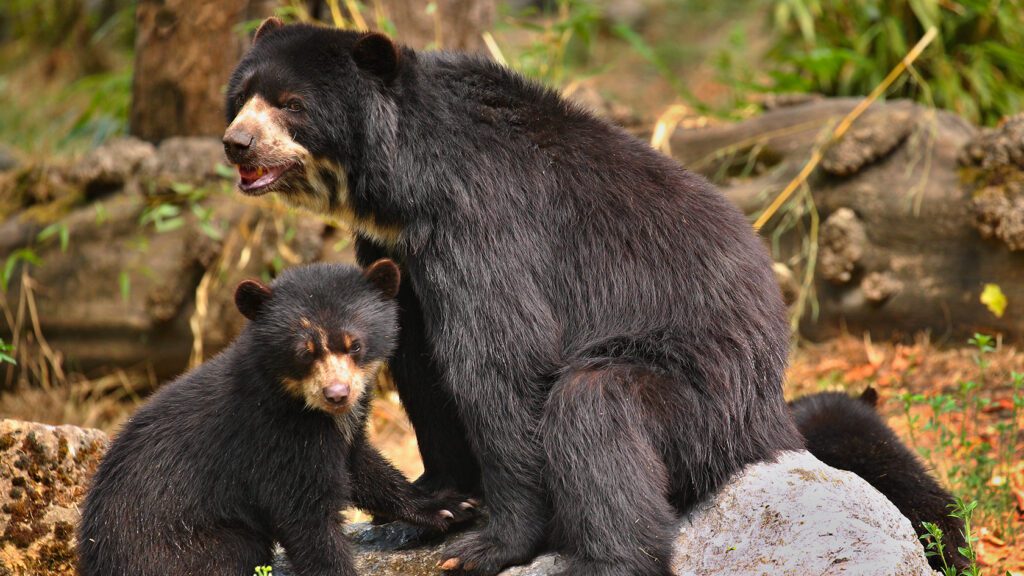
The spectacled bear gets its name from the light-colored markings encircling its eyes, but these spots can also be present on its cheeks, muzzle or throat. The size, coloration and pattern of the white spots often vary from one individual to another, making them useful characteristics for identification. Its coat is generally brown or black, with long hair. Its long, curved claws enable it to climb trees skilfully.
From tith its modest size, it often goes unnoticed. In fact, the spectacled bear is one of the most small bear species; adult males weigh an average of 150kg, while adult females weigh around 80kg. The largest specimens are no more than 2 meters long and 1 meter high, and can reach a maximum speed of 50 mph. Finally, they have a life expectancy of around 25 years in the wild.
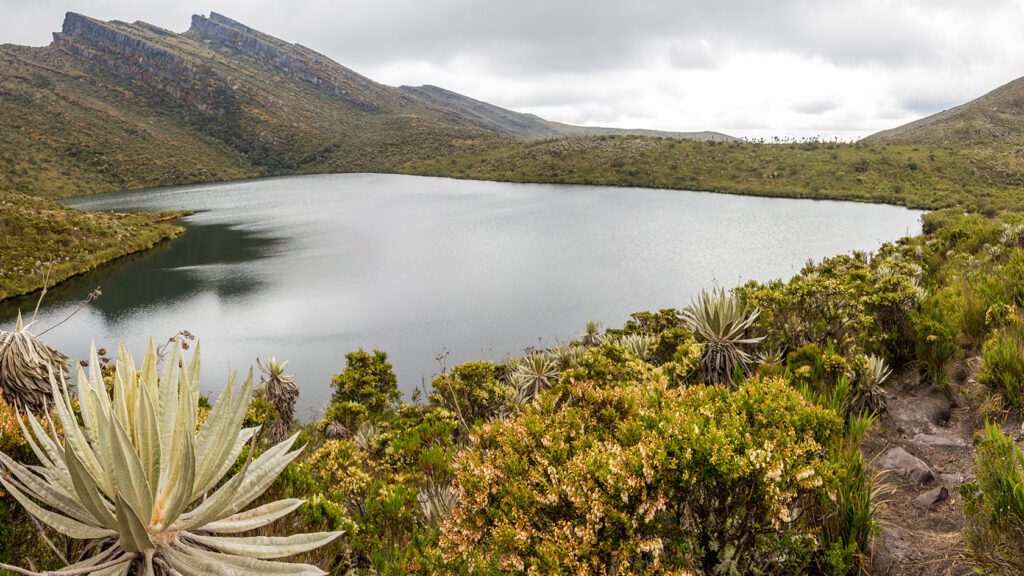
These bears, endemic to the Andes, are found mainly in mountainous regions, the páramos, and high altitude rainforests stretching from Venezuela to Bolivia, via Colombia, Ecuador and Peru.
These animals need vast territories to feed and find mates, covering up to 50 km2. Spectacled bears can live at extreme altitudes of up to 4,750 meters above sea level!
It is the only living member of the Tremarctinae subfamily and the only member of the Ursidae (bear) family to have lived in South America for over 5 million years.
Behavior and diet
Preferring isolated environments of lush cloud forests on the slopes of the Andes. These bears are mainly nocturnal and feed mainly on vegetation, feasting on fruit, berries, cacti and honey. Their agility enables them to perch in trees on rudimentary platforms built from broken branches, where they wait patiently for the fruit to ripen.
They have powerful jaws and large, flat molars adapted to chewing tough plants such as tree bark and orchid bulbs. Although mainly herbivores (in fact, they are the most vegetarian bear after the panda), they sometimes supplement their diet with meat by hunting small rodents, birds, insects and even small mammals, making them the largest carnivores in South America.
Unlike many other bears, they do not hibernate, as their food supply remains available all year round. Spectacled bears play a vital role in the ecosystem and forest regeneration by dispersing tree seeds that are too large to be digested by other animal species. Scientists believe that these bears are responsible for the propagation of three essential types of tree in their habitat. Their presence in a region is often seen as a sign of healthy forest ecosystems and water availability.
Adult spectacled bears are generally solitary animals, usually grouping together only during the breeding season, reaching sexual maturity between 4 and 7 years of age. They are known to mate at any time of the year, although peak breeding activity is recorded between April and June. Females generally give birth to one or two cubs, which start to move around after about a month but remain with their mother for around eight months, often clinging to her back as they travel.

Threats and conservation
Unfortunately, the spectacled bear faces serious threats to its survival in the wild. It is classified as vulnerable on the red list of the International Union for Conservation of Nature (IUCN).
The main threat is habitat loss and fragmentation due to deforestation, agricultural expansion and increasing urbanization. The conversion of forests to farmland deprives these animals of their natural habitat and reduces their access to food resources.
Illegal hunting and poaching represent another significant threat to spectacled bears. Their fur is sometimes hunted for the illegal trade, while conflicts with local populations sometimes arise due to concerns over the safety of herds or crops.
In response to these threats, various conservation initiatives are in place to protect many species, including the spectacled bear. These include the creation of nature reserves,educating local populations about the importance of conservation, and combating the illegal wildlife trade. Theactive involvement of local communities in these conservation programs is crucial to promoting harmonious and sustainable coexistence between bears and human beings.
For example, in 2017, a provincial assembly in the department of Antioquia endorsed the establishment of a new corridor in the southeastern part of Antioquia province. The aim is to restore the spectacled bear ecosystem, while ensuring the protection, surveillance and monitoring of this threatened species and its habitat.
Ecological and cultural importance
Spectacled bears play a crucial role in the South American rainforest ecosystem as seed dispersers. Their presence helps maintain the ecological balance and biological diversity of these precious habitats.
Culturally, spectacled bears are often revered by indigenous communities in South America, who see them as symbols of strength, wisdom and spiritual connection with nature. They are also a major tourist attraction in some regions, drawing nature lovers and contributing to the local economy throughecotourism.
References to the Andean bear(oso in Spanish) can be found in the common names of certain plants, such as “la mano de oso” (Oreopanax bogotensis) and “la hierba del oso” (Xerophyllum tenax). Sites and places named after the Andean bear are commonplace: Alto del Oso (Colombia), Cueva del Oso (Ecuador), Quebrada El Oso (Colombia, Peru, Venezuela), Vereda del Oso (Colombia), and many others. In this way, the Andean bear is rooted in the cultural heritage and worldview of the countries of the Andean region.
And a final wink: the bespectacled bear appears on Venezuelan 50-bolivar banknotes.

Where can you see the spectacled bear in Colombia?
The spectacled bear is not an easy animal to observe in its natural habitat. There are no more than 8,000 spectacled bears (out of a total population of 18,000 in the whole of South America). All the more so as they are most active at dusk and at night.
Don’t forget that it’s essential that these experiences are managed sustainably, to minimize the impact on wildlife. This means hiking with a professional guide, making no noise, and above all, if you’re lucky enough to spot one, not disturbing it. The spectacled bear is not aggressive towards man, except in 2 critical situations: a mother with her cubs, who can be very aggressive because she sees us as a potential threat to her cubs; and if the bear feels cornered, with no other way out than the one blocked by you.
Although they can technically be seen throughout the Andes, certain protected natural areas are more suitable for travellers, as they are more easily accessible, and offer a certain logistical ease (transport, agencies, etc.), as well as guaranteeing better preservation of the area’s flora and fauna. But bear in mind that observing an Andean bear on a day trip is extremely rare.
Chingaza National Nature Park (Bogotá): Chingaza National Nature Park is recognized as one of the best places to see the spectacled bear. Trails through cloud forest and moorland, such as the Laguna de Buitrago trail, the Laguna de Chingaza trail and the Laguna Seca trail, offer unique opportunities for exploration. In addition to their ecological richness, these trails are a convenient option for travelers in terms of logistics, cost and time, given their proximity to Bogotá.
Sumapaz National Nature Park (Bogotá) : Sumapaz National Nature Park boasts unique ecosystems ranging from páramos to cloud forests. As a protected area, Sumapaz offers essential habitats for many animal species, including the spectacled bear.
Pisba National Nature Park (Monguí) : Pisba National Nature Park is another example of a park with páramo, sub-páramo and high Andean forest ecosystems. It is recommended to concentrate visits in areas containing lagoons, as the spectacled bear is constantly on the lookout for food, including plants, fruit and insects which abound around these bodies of water.
Los Nevados National Nature Park (Manizales, Pereira, Salento): Los Nevados National Nature Park is one of Colombia’s star attractions. During your visit, you’ll find must-see sites such as Lake Otún and the Páramo de Frontino to explore for your chance to spot the spectacled bear or identify its tracks. However, this requires a great deal of patience!
El Cocuy National Nature Park (El Cocuy): El Cocuy National Park is one of Colombia’s most vital reserves, home to the country’s largest expanse of ice and snow. If you’re lucky, you might spot a spectacled bear in the páramos and Andean forests, exploring areas such as La Esperanza, Laguna Grande and Pulpito del Diablo.
Farallones National Natural Park (Cali): Cali’s Farallones National Natural Park is the largest protected ecological area in the Valle del Cauca region. To increase your chances of spotting the spectacled bear, we recommend hiking in the Páramo de San Antonio or in the areas around the Pance peak, where this mammal has been spotted on numerous occasions.
Puracé National Nature Park (Popayán, San Agustín): Puracé National Nature Park is the birthplace of Colombia’s main rivers, notably the Magdalena, Cauca and Caquetá, and its landscape is characterized by the presence of 11 volcanoes. To observe the spectacled bear, it is advisable to go to areas close to the Laguna de San Rafael or the Páramo de Puracé, which are ideal places for their observation.


