

In brief


Santa Fe de Antioquia, Antioquia’s heritage village, seduces with its unique colonial charm and timeless atmosphere. Its whitewashed houses, carved wooden balconies and cobbled streets immediately transport visitors back in time. Every street corner tells a story, from lively squares to historic churches and small local shops, offering an authentic, cultural experience.
Listed as one of Colombia’s heritage towns (along with Jardín and Jericó, other villages in the same department), Santa Fe de Antioquia is an architectural and cultural treasure trove. The village invites you to stroll through its flower-filled patios, explore its museums and galleries, its 7 churches and numerous small squares, and enjoy the warm, relaxed atmosphere.
Just 57 km from Medellín, the village is easily accessible for day trips or longer stays. It’s a must-see destination for those wishing to immerse themselves in history and colonial heritage, while savoring the gentle, authentic pace of antioqueña life.
Santa Fe de Antioquia
- Department : Antioquia (Andes)
- Founded: 1541
- Altitude: 570 m
- Climate: tropical dry forest (warm)
- Population: 28,246
- Safety: very safe
- Length of stay: 2 nights
- Direct access: Medellín
Our verdict: A colonial village vibrating with warmth and perfect for slowing down the pace ★★★
We had a wonderful stay in Santa Fe de Antioquia! As soon as we arrived, we were seduced by the charm of the cobbled streets, the whitewashed colonial houses and the relaxed atmosphere of the village, which is very different from Jardín and Jericó. Every street corner was an invitation to stroll, take photos and discover lively little squares, local cafés and passionate artisans. We particularly appreciated the cleanliness of the historic center and the warm welcome of the locals, always ready to share anecdotes about the village’s history. It was perfect for a romantic and cultural getaway: a mix of relaxation, discovery and simple but memorable moments. We highly recommend Santa Fe de Antioquia to anyone looking to immerse themselves in Colombia’s colonial heritage while enjoying a quiet, welcoming atmosphere.
When to visit Santa Fe de Antioquia? You can visit Santa Fe de Antioquia all year round, but certain periods are more pleasant depending on the climate and tourist numbers.
Tourist traffic in Santa Fe de Antioquia: Santa Fe de Antioquia is a very popular heritage village, especially for visitors from nearby Medellín, who come for weekend getaways. Visitor numbers are very high at weekends, as well as during school vacations (such as Christmas, Semana Santa and December-January) and public holidays, such as the Feria de las Flores or the village’s religious and cultural celebrations, when the streets fill up with visitors and accommodation is often fully booked. Conversely, on weekdays and outside of festive periods, crowds are much lower, offering a quieter experience for discovering cobbled streets, colonial houses and historic squares. To enjoy the village without the crowds, it’s best to opt for these quiet periods, while weekends and local events guarantee a lively, festive atmosphere.
Climate in Santa Fe de Antioquia: Santa Fe de Antioquia enjoys a warm climate all year round, typical of the low tropical regions of Antioquia. Average temperatures range from 25 to 32°C, with little seasonal variation. The city has two main seasons: the dry season, from December to March and July to August, ideal for visits, strolls around the historic center and nearby excursions; and the rainy season, from April to June and September to November, characterized by frequent showers, sometimes intense, which can make some paved streets slippery and complicate outdoor activities.
Main festivals and events in Santa Fa de Antioquia
– Semana Santa (Holy Week) in March-April: major religious celebration, with solemn processions and traditional ceremonies.
– Fiesta de los Diablitos (Festival of the Diablitos) end of December: popular festival inherited from African slave traditions, featuring masks and amusing pranks.
– Festival del Tamarindo (Tamarind Festival) mid-August: a cultural event centered on the tamarind (a fruit), with exhibitions, dance performances and activities linked to local culture.
– Festival de Cine y Video (Film and Video Festival) December: open-air celebration of the seventh art, with free screenings and film-related discussions.
Legend: Blue: transport terminal – Yellow: activities & visits – Green: accommodation – Orange: restaurants
History of the village of Santa Fe de Antioquia
A colonial village frozen in the warmth of the Cauca Valley, Santa Fe de Antioquia is fascinating for the continuity of its urban landscape and the density of its memory. As a crossroads of powers, cultures and beliefs, it offers a unique opportunity to observe, on a local scale, the major social, political and economic dynamics of Colombian history.
Foundation and colonial era
Santa Fe de Antioquia, in Colombia’s Antioquia department, is one of the country’s oldest Spanish foundations, established in 1541 by the conquistador Jorge Robledo. The town, located in the warm valley of the Río Cauca, was originally intended as a base for controlling gold-rich territories and organizing colonization in the western Andean region.
From the very first decades, the young town was organized according to the canons ofHispanic colonial urbanism: a checkerboard plan centered on a plaza mayor, around which the main church, administrative buildings and the homes of the most influential families were distributed. The buildings, in adobe and bahareque, are covered in lime, punctuated by interior patios, tiled roofs and elaborate wooden balconies. This architecture, designed to assert thecolonial order and the role of theCatholic Church, gradually adapted to the tropical climate, with narrow, shady streets that encouraged air circulation and created spaces for sociability.
In economic terms, Santa Fe de Antioquia developed first as a mining town, closely linked to the exploitation of the surroundinggold. Indigenous labor, followed by the growing use of African slaves, fueled mining and construction work, while the colonial authorities organized the collection of the quinto real, the share of precious metal reserved for the Crown. A complementary economy quickly developed around this mining base: food crops, livestock and small-scale trade served to supply the urban population and the mining camps scattered throughout the region.
As the XVIIᵉ century progressed, the rise of Santa Fe de Antioquia was accompanied by the formation of a Creole elite, made up of descendants of conquistadors, mine owners and owners of large rural estates. These families consolidated their power through matrimonial alliances,inheritance strategies and control oflocal institutions, enabling them to influence both economic and religious life. Donations, pious foundations and patronage financed the construction ofchurches, convents and manor houses, gradually transforming the town into a religious and administrative center of regional importance.
Finally, the religious dimension took root very early on in the urban and mental landscape of Santa Fe de Antioquia. The parish, then the various temples and convents, structure the collective calendar, punctuating daily life with masses, processions and patronal feasts. These practices promote the spread of Spanish cultural models while blending with indigenous and African traditions, giving rise to an original symbolic universe. By the end of the colonial period, the city was already well consolidated, combining local political power, declining mining wealth, a strong religious identity and a built heritage that heralded Santa Fe de Antioquia’s future role as a historical and cultural reference point for the entire department. Today, the village boasts 7 churches!

Economic transformation and infrastructure boom
After losing its status as departmental capital to Medellín in 1826, Santa Fe de Antioquia underwent a gradual economic transformation. Deprived of its administrative role, the town refocused on local activities, notably agriculture (cocoa, tropical fruits, coffee in surrounding areas), livestock breeding and regional trade. This transition avoids the radical modernization and massive industrialization affecting other towns in Antioquia, preserving the authenticity of its colonial center.
One of the major milestones in this development was the construction of the Puente de Occidente, a 291-meter suspension bridge designed by engineer José María Villa and inaugurated in 1887. This bridge, a true technical feat of its time, efficiently linked Santa Fe de Antioquia to the rest of the country, facilitating the transport of goods and passengers to the Caribbean coast and Medellín. Thanks to this infrastructure, the city experienced a new economic boom, stimulating regional trade and attracting travelers.
At the same time, economic life diversified with the emergence of small craft workshops, agricultural markets and services linked to the passage of travellers. Filigree goldsmithing is becoming one of the most famous local specialties (yes, it’s not just the village of Mompox!): a delicate technique in which fine gold or silver wires are twisted and soldered to create elegant, intricate jewelry. This craft tradition, handed down from generation to generation, is part of the region’s mining history and contributes to the cultural reputation of Santa Fe de Antioquia. Visitors can discover this unique know-how by visiting the workshops or taking part in demonstrations, adding to the town’s tourist appeal.
The absence of large-scale industry maintains a peaceful atmosphere, where daily life remains anchored around squares, churches and traditional festivals. Local authorities and residents are committed to preserving the built heritage and promoting local know-how, gradually transforming Santa Fe de Antioquia into a place of memory and identity for the Antioquia region.

Heritage, tourism and contemporary identity
Santa Fe de Antioquia is recognized today as one of Colombia’s most beautiful colonial villages, declared a national monument in 1960 for the richness and exceptional conservation of its architectural heritage. The historic center, with its whitewashed houses, carved wooden balconies and tropical patios, offers an immersion in the atmosphere of the XVIIᵉ century, where every street and square tells a story. Santa Fe de Antioquia became part of Colombia’s network of Pueblos Patrimonios (heritage villages) in 2010, joining the 17 localities recognized for their major historical and cultural role in the country.
The city is home to several emblematic churches, including the Catedral Basílica Metropolitana de la Inmaculada Concepción, built between 1797 and 1837, which dominates the Plaza Mayor Simón Bolívar with its immaculate Baroque façade. Other religious buildings, such as theIglesia de Santa Bárbara (the oldest church in the region) and theIglesia de Nuestra Señora de Chiquinquirá, bear witness to the city’s spiritual and artistic depth. Museums, including the Museo Juan del Corral and the Museo de Arte Religioso Francisco Cristóbal Toro, offer insights into local history, colonial sacred art and goldsmithing traditions, including filigree.
The Puente de Occidente, an emblematic suspension bridge inaugurated in 1887, is a work of engineering listed as a national heritage site, linking the city to the rest of the department and offering spectacular views over the Río Cauca. This site, like the other monuments, attracts both national and international tourists, who come to stroll through the narrow streets, admire the architecture, take part in religious festivals and discover local craftsmanship.
Cultural tourism has become a mainstay of the local economy, with guided tours, goldsmith workshops, events such as Holy Week and the Diablito Festival, and heritage restoration initiatives. Santa Fe de Antioquia thus embodies a balance between preservation of the past and sustainable development, where Paisa identity, indigenous and Afro-descendant heritage, and colonial charm combine to offer an authentic, immersive experience.




What to see and do in Santa Fe de Antioquia?
In Santa Fe de Antioquia
The historic center of Santa Fe de Antioquia is the heart of the village, where cobbled streets, colonial houses and emblematic squares immerse you in its history. Here, discover the must-sees and activities to fully immerse yourself in the charm and authentic culture of this colonial village.
Parque principal
Santa Fe de Antioquia’s main square is the vibrant heart of the colonial village. Lined with white houses, traditional cafés and historic buildings, it offers a peaceful atmosphere where locals and visitors alike gather in the shade of the trees. Dominated by the imposing Catedral Basílica Metropolitana, it’s an ideal place to observe local life, stroll in the late afternoon or enjoy a coffee. With its authentic charm and lively atmosphere, it’s a must when visiting the village.
Catedral Basílica de la Inmaculada Concepción
Built between 1797 and 1837 by the architect Domingo de Petrés, the Catedral Basílica de la Inmaculada Concepción is a remarkable example of Neoclassicism in Colombia, with some popular Baroque influences. Its Latin cross plan, three naves supported by Tuscan columns and 47-metre tower give it an imposing presence in the heart of the village. Designated a National Monument in 1959, it is today one of the major religious and historical symbols of Santa Fe de Antioquia.
Parroquia Santa Bárbara
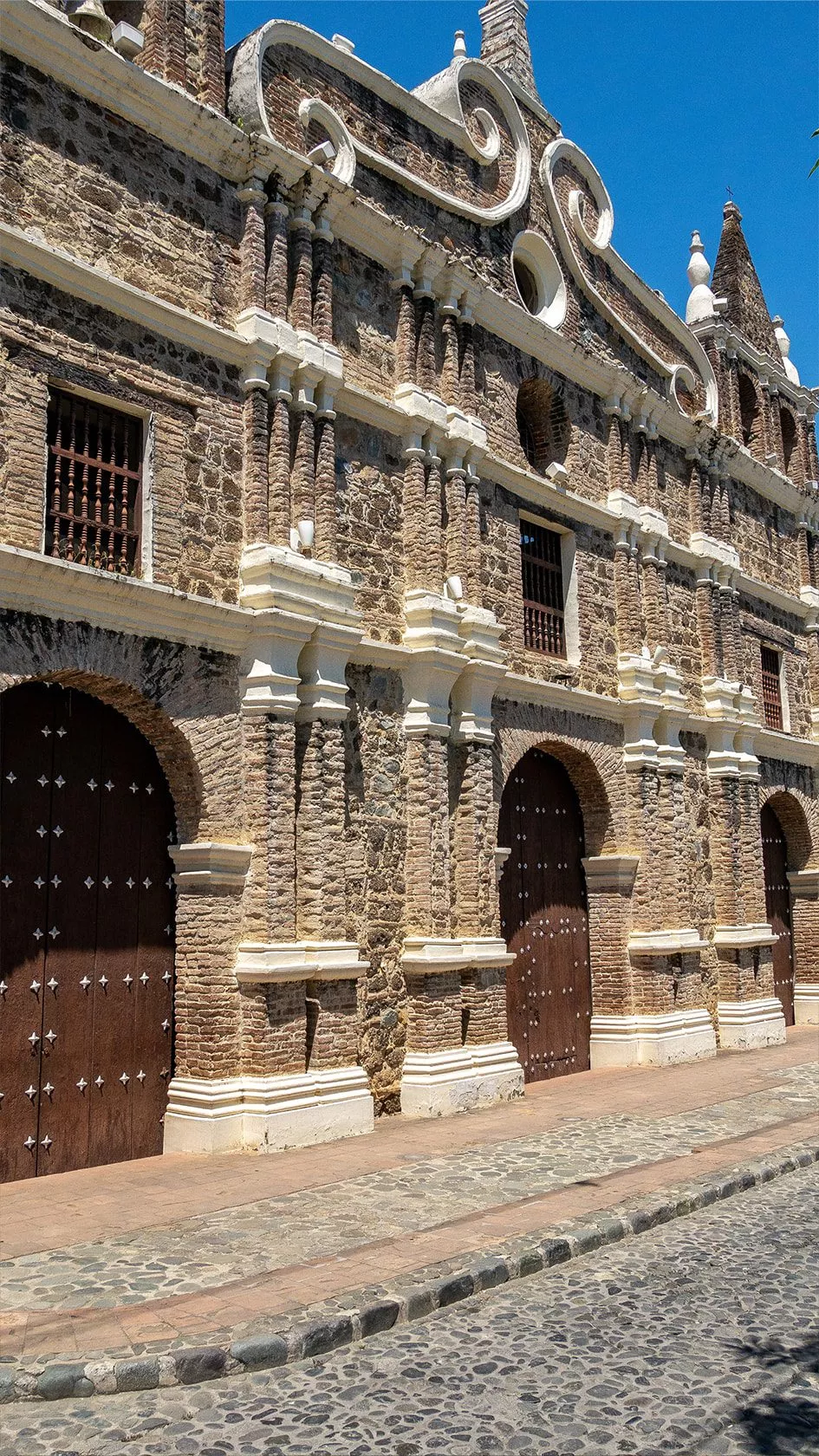
The Parroquia Santa Bárbara is one of the village’s most representative colonial churches. Built in the XVIIIᵉ century, it combines architectural sobriety and Baroque details, with a bright white facade and carved wooden decorative elements inside. Its colorful altars and frescoes bear witness to the region’s rich religious heritage. Still in operation, it welcomes local residents for ceremonies and celebrations. A true spiritual and historical symbol, it allows visitors to immerse themselves in the tradition and soul of Santa Fe de Antioquia.
Plazuela Santa Bárbara
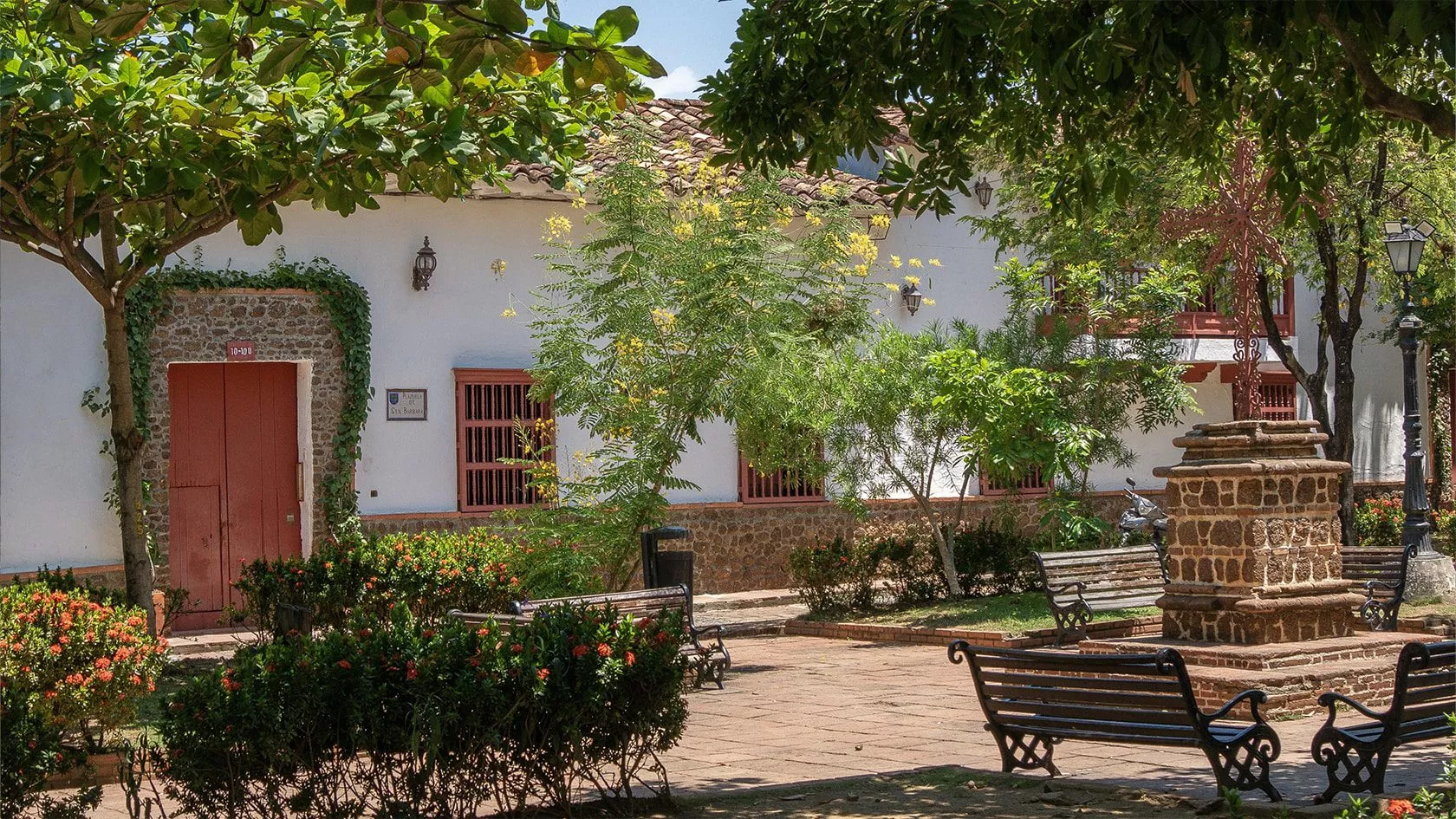
The Plazuela Santa Bárbara, located next to the Parroquia Santa Bárbara, is a charming little public park in the heart of Santa Fe de Antioquia. Surrounded by colonial buildings with white facades and wooden balconies, it offers a peaceful, typically Antiquarian atmosphere. Ideal for relaxing, observing local life or enjoying the nearby cafés and boutiques, this small square is a popular meeting point for locals and visitors alike. Its picturesque setting makes it an ideal place to immerse yourself in the authenticity and historic charm of the village.
Plazuela de Jesús Nazareno
The Plazuela de Jesús Nazareno is a small, intimate colonial square organized around the Jesús Nazareno church, dating from the XVIIIᵉ century. Surrounded by white houses with carved wooden balconies, it features traditional cobblestones and trees that provide shade and coolness. It serves as a gathering place for locals and a vantage point for visitors wishing to admire the village’s colonial architecture, carved details and authentic atmosphere, typical of historic Antioquia.
Plazuela de la Chinca
The Plazuela de la Chinca is a small square with colonial charm, intimately linked to the history of the village. Surrounded by white houses with carved wooden balconies, it retains its original cobblestones and features a century-old tree as a gathering point. Traditionally used for local festivals and religious processions, it also houses a small craft market where you can buy souvenirs, hats and typical objects, offering an authentic glimpse of Antiquarian culture and craftsmanship.
Museo Juan Del Corral
The Museo Juan del Corral is a museum dedicated to the region’s colonial history and cultural heritage. Housed in a restored colonial house, it features exhibitions of period objects, documents and furniture, retracing daily life, architecture and Antiquarian traditions. The museum also pays tribute to local historical figure Juan del Corral. It’s a must-see for visitors wishing to gain an in-depth understanding of the history and culture of this heritage village.
Price: free – Guided tour with a volunteer (free donation).
Opening hours: Mon., Tue., Thu., Fri. 09h to 12h and 14h to 17h. Sat. and Sun. 10am to 5pm. Closed on Wednesday.
Museo de Arte Religioso Francisco Cristóbal Toro
The Museo de Arte Religioso Francisco Cristóbal Toro is dedicated to the region’s religious art. Housed in a colonial building, it exhibits paintings, sculptures and liturgical objects dating from the XVIᵉ to XIXᵉ centuries, illustrating local devotion and religious traditions. The museum pays homage to collector Francisco Cristóbal Toro and allows visitors to discover Antioquia’s artistic and spiritual heritage, while offering an in-depth insight into the village’s religious culture.
Price: free of charge
Opening hours: Mon, Wed, Thu, Fri from 2pm to 5.30pm. Sat. and Sun. 10am to 5pm. Closed on Tues.
Carolina Vélez Filigrana
Carolina Vélez is a historian who has become a master of the art of filigree, the meticulous jewelry made with very fine silver or gold threads. Based in Santa Fe de Antioquia for over ten years, she learned from local craftsmen and has established herself as one of the region’s leading references. Although there are several filigree workshops in the village, Carolina’s is now one of the most renowned, appreciated for the finesse of its pieces and the preservation of traditional know-how.
Her Instagram account: carolinavelezfiligrana
Bridge in guadua (local bamboo)
The guadua bridge in Santa Fe de Antioquia is a handcrafted structure built from local bamboo ( guadua), a symbol of traditional peasant engineering techniques. Lightweight yet sturdy, it can be used to cross small streams or link country lanes, while blending harmoniously into the green landscape. This type of bridge illustrates local know-how and the sustainable use of natural resources, offering an authentic glimpse of the region’s rural architecture.


Around Santa Fe de Antioquia
Around Santa Fe de Antioquia, nature and landscapes take over from colonial charm. Between miradors and historic bridges, you can admire this beautiful region. This section introduces you to the must-sees and activities to do outside the village, to enjoy the panoramic views, adventure and natural and historical wealth of the surrounding area.
Puente Colgante De Occidente (read more)
The Puente Colgante de Occidente, in Santa Fe de Antioquia, is around 291 metres long and was built in the XIXᵉ century. It is an emblematic suspension bridge, one of the longest in Colombia and Latin America at the time. Its steel structure and impressive cables bear witness to advanced engineering for its time. Listed as a national monument, it is recognized worldwide as a major historical example of suspended architecture, attracting tourists and history and heritage enthusiasts alike.
Price: 35,000 COP for a round trip in a Tuktuk with explanations (15-minute trip and 30 minutes on site).
Opening hours: always open
Mirador de Filadelfia (more information)
Mirador de Filadelfia, located 3 km from Santa Fe de Antioquia, is a panoramic viewpoint offering spectacular views of the Río Cauca valley and surrounding hills. Ideal for admiring sunsets or taking photos, it also allows you to discover the region’s typical landscape, between plantations and colonial villages. Accessible by car or on foot, this viewpoint is a must for visitors wishing to combine nature, tranquillity and immersion in the historic charm of Santa Fe de Antioquia.
Price: 40,000 COP for a round trip by Tuktuk (15-minute journey and 30 minutes on site).
Opening hours: between 09:00 and 22:00
Casa dos Palmas
Casa de las Dos Palmas is a former hacienda located in the countryside a few kilometers from the village center, renowned for its remarkable colonial architecture. It gained national renown as the main setting for the telenovela La casa de las dos palmas (1990), adapted from the novel by famous local writer Manuel Mejía Vallejo. A visit to this house immerses you in the rural paisa atmosphere of yesteryear – a living testimony to Antioquia’s cultural and historical heritage.
Agencies and Guides
Santa Fe de Antioquia is easy to visit on your own. However, if you want to learn more about its history and discover the village in depth, hiring a local guide is an excellent option: he’ll provide you with details and anecdotes you won’t find on your own.
From Santa Fe de Antioquia
Maria Irley Perez Rodriguez is a professional guide offering guided tours of the historic center of Santa Fe de Antioquia.
– Email : mairpetours@yahoo.es
– Whatsapp: +57 3105153938
A guide is not required for either the Puente Colgante de Occidente or the viewpoint. A simple tuktuk (motorcycle cab) is all you need: the drivers know the area inside out and can provide plenty of explanations – in Spanish, of course.
From Medellín: opt for a day trip
For those short on time, it’s quite possible to visit Santa Fe de Antioquia and the famous Puente Colgante de Occidente in a single day, leaving Medellín in the morning and returning the same evening.


How do I get to Santa Fe de Antioquia?
Santa Fe de Antioquia is directly accessible by public transport from Medellín. There are no direct routes from cities such as Armenia, Bogotá, Cartagena, Cali or Santa Marta. Nor from other villages like Salento or Guatapé.
The nearest airports to Jericó are :
– Medellín’s Enrique Olaya Herrera airport (in the city) 58 km away.
– Medellín Jose Maria Cordova International Airport (outside the city, near Rionegro) 81 km away.
Getting to Santa Fe de Antioquia from Medellín by bus
| Companies | Sotrauraba, Transportes Gómez Hernández, Cootransuroccidente |
| Departure | Terminal del Norte, Medellín |
| Departure times | Every 30 minutes on average from 06:00 to 19:00 |
| Arrival | Santa Fe de Antioquia terminal |
| Duration | Approx. 1h30 |
| Route type | Direct |
| Price (one-way) | 16,000 – 22,000 COP / person |
To return to Medellín, simply return to the same Santa Fe de Antioquia terminal (calle 13B). There are no scheduled buses, but colectivos – small vans with around ten seats – which leave as soon as they are full. The journey is often faster than by traditional bus. In fact, it only took us an hour to get to Medellín’s Terminal del Norte!


Where to stay in Santa Fe de Antioquia?
Santa Fe de Antioquia, although a very touristy village – mainly frequented by Colombian travelers – offers a wide choice of accommodation. However, we found that the really economical options remain quite limited, especially when compared with other heritage villages in the country such as Jardín or Barichara. Most establishments focus more on comfort or colonial charm, which can drive up prices. As a result, it’s a little more difficult to find a low-budget stay, but we’ve still found some great places to suit all budgets.

$ – Economical budgeting
Hotel
Hotel Guali Santa Fe
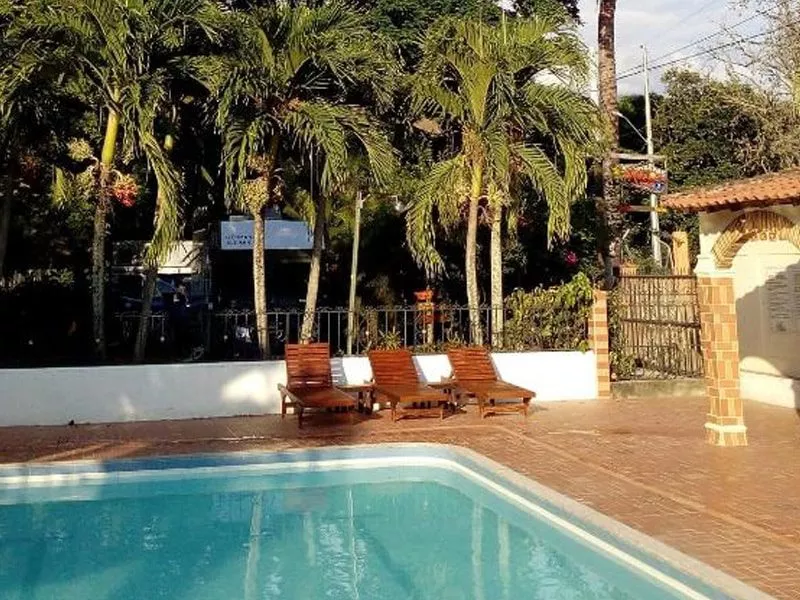
Finca Hotel Guali Santafe offers clean, comfortable rooms, warm, attentive staff and a lovely pool – perfect for relaxing after a hot day in Santa Fe. The location remains convenient for exploring the city center. However, a few travelers report a sometimes lively atmosphere in the evenings – which can get in the way of a good night’s rest.
$ – Economical budgeting
Hotel
Las Cabañas de Pino
Las Cabañas de Pino offers clean rooms, a peaceful garden, a beautiful pool and a warm welcome. The atmosphere is relaxing and the staff (especially Victor and Diana) very attentive, making for a very pleasant stay. On the other hand, the establishment is a little out of the center – plan a tuktuk or walk.

$$ – Average budget
Hotel
Selva María Hotel Boutique
This is a charming establishment: comfortable, well-decorated rooms, attentive, welcoming staff and a generous, delicious breakfast. The hotel is conveniently located, just a few minutes from the center, making it easy to reach restaurants and attractions. The only downside: the air conditioning can be a little noisy at night.

$$ – Average budget
Hotel
Hotel Santa Bárbara Colonial
The Hotel Santa Bárbara Colonial boasts colonial charm, an excellent location, friendly staff, clean rooms and a good breakfast. However, some rooms lack storage space, or suffer from poor lighting; music near the pool can also interfere with rest.

$$$ – High budget
Hotel
Hotel Mariscal Robledo
Hotel Mariscal Robledo boasts a charming colonial setting, spacious, comfortable rooms and friendly staff. The swimming pool, varied breakfast and central location make it an ideal choice for discovering Santa Fe. The only drawback is that parking is not available on site – an outdoor option is available.
$$$ – High budget
Hotel
Casa Bixa Hotel Boutique
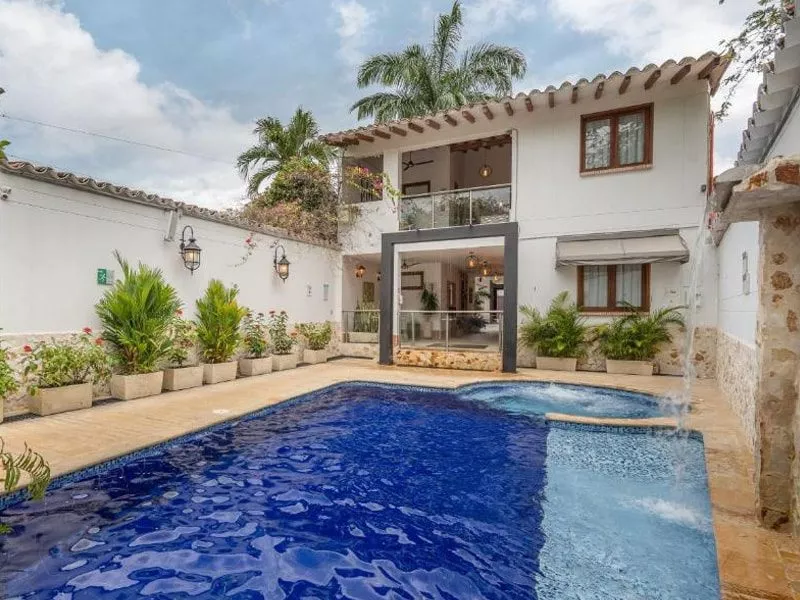
Casa Bixa offers a warm welcome, impeccable, comfortable rooms and a quiet, charming setting – ideal for relaxing. Its location in the heart of the historic center makes it easy to visit. Restaurant, swimming pool and breakfasts are regularly available for hire. The whole package offers excellent value for money.
Where to eat in Santa Fe de Antioquia?
There are many restaurants in Santa Fe de Antioquia, and it’s quite possible to enjoy good, well-prepared food – something that’s not always guaranteed in the villages. On the other hand, vegetarians may find the offer limited: apart from Italian restaurants, the options are rather limited and can leave you a little hungry.
In Santa Fe de Antioquia, tamarindo (fruit) juice is a must, especially to cool down in the heat of the village. It’s mainly found in local beverages such as tamarindo juice, tangy and sweet, or the lightertamarindo water, widely served in traditional restaurants. You can also enjoy it in the form of raspado, a tamarind-flavored crushed ice, or in dulces de tamarindo, sweet and slightly acid confections appreciated by locals and visitors alike.
Here’s a selection of the good addresses we picked up during our stay.
Please note that, overall, we found prices in Santa Fe de Antioquia to be higher than in other tourist villages such as Jardín, Salento and so on.


