

In brief


Perched high in the verdant hills of the Caldas department, Salamina, also known as the “City of Light of Caldas”, is one of those Colombian villages that captivate without making a fuss. Classified as a heritage village, it is an integral part of the Paisaje Cultural Cafetero, a UNESCO World Heritage Site, and a perfect embodiment of the soul of anti-Ooqueña colonization. Here, colorful facades, intricately carved balconies and solid wood doors create a harmonious setting that’s both elegant and deeply authentic.
But there’s more to Salamina than its remarkable architecture. It’s also a destination where the intimate bond between man, mountain and coffee is fully felt. Surrounded by steep hills, misty valleys and spectacular scenery, the village is an ideal gateway to unspoilt rural Colombia. Life is organized around the central square, with lively conversations, shared cafés and traditions that are naturally passed down from generation to generation.
Travelling to Salamina means slowing down, observing and soaking up a timeless atmosphere. In this article, find out why this unassuming village is considered one of Colombia’s heritage gems, and how to make it part of your itinerary through the coffee region.
Salamina
- County: Caldas (Andes)
- Founded: 1825
- Altitude: 1,822 m
- Climate: Temperate mountain climate
- Population: 20,172
- Safety: very safe
- Length of stay: 3 nights
- Direct access: Medellín, Manizales
Our opinion: The forgotten heritage village in the heart of the coffee region★★★
Salamina is a Colombian village as charming as it is intriguing. Still not very popular with tourists, it is nevertheless one of the country’s 17 heritage villages, and boasts many assets. Its antioqueño architecture is emblematic: white houses with colorful accents, finely crafted wooden balconies and details that tell the story of the local history. In our opinion, to truly understand the soul of Salamina and part of the region’s history, a guided tour is a must. The wealth of explanations and access to places we wouldn’t have thought of on our own made the experience particularly rewarding. The climate is pleasant, the atmosphere peaceful, and when we visited, we even had the impression of being the only foreign travelers. But Salamina isn’t just about the village: it’s also about its beautiful surroundings. Between coffee fincas, valleys dominated by wax palms and spectacular mountain panoramas, the region offers a fine alternative to Salento. The roads leading to the village reveal breathtaking scenery. For our part, we simply loved it.
When to visit Salamina Salamina can be visited all year round, but the climate makes December to March and July to August the most favorable months.
Visitors to Salamina: Salamina is still a relatively untouristy village, making it an ideal destination for those seeking authenticity and peace and quiet. Even in high season (December to March or July-August), visitors are few and far between, and it’s not surprising to find yourself almost alone in the cobbled streets or central square. Attendance rises slightly during the Colombian vacations (December-January), public holidays and weekends, but remains relatively moderate compared to other villages.
Climate in Salamina: The climate in Salamina is typically temperate mountain climate, thanks to its altitude of around 1,800 meters. Temperatures remain pleasant all year round, generally fluctuating between 18 and 24°C, making the days perfect for strolling around the village and exploring the surrounding area. The region has two seasons: the dry season, ideal for sightseeing, runs from December to March and July to August, while the rainy season, from April to May and October to November, brings frequent showers, often brief but intense. These rains make the landscapes even more verdant and picturesque, with misty valleys and mountains covered in lush vegetation. To make the most of Salamina, we advise you to pack light clothes for the day, a jacket for cooler evenings and a raincoat (even in the dry season, it can rain).
Legend: Blue: transport terminal – Yellow: activities & visits – Green: accommodation – Orange: restaurants
History of the village of Salamina
In the heart of the Caldas department, Salamina is much more than just a Colombian village: it’s a true testament to the history and culture of the Antioqueña people. From its colonial foundation to its current role in the coffee-growing region, it has preserved its architectural heritage, traditions and unique identity. In this article, you’ll discover the history, economic transformations and living heritage of Salamina, to understand why this village remains an authentic jewel of the Eje Cafetero.
Foundation and colonial era
Salamina was officially founded on June 8, 1825, perched at an altitude of 1,780-1,800 meters in the Caldas mountains. Although this date places its creation after the independence struggle, the village is in line with settlement patterns inherited from the colonial era and, above all, from antioquia colonization: families from Antioquia moved southwest to clear the mountains, establish hamlets and structure a new network of villages. This movement largely explains the urban organization and architecture we still see today.
From its very beginnings, Salamina played an important regional role: a relay point between valleys and plateaus, a focus for education and religious practices, the village quickly acquired schools, churches and public spaces that turned the central square into a place of sociability and local power. This centrality sometimes earned it honorary nicknames – it was locally considered a “cultural hotbed” for the surrounding communes.
Architecturally, Salamina has preserved a heritage typical of the anti-Ooqueña colonial period, blending Hispanic influences with local know-how. White houses with sloping roofs often feature carved wooden balconies, and many are built using the bahareque technique, a traditional process using a mixture of earth, clay and bamboo or light wood stalks. This method, adapted to mountain climates, results in buildings that are both solid and breathable, and perfectly integrated into the landscape. Bahareque lends a warm, rustic charm to the facades, while testifying to the ancestral know-how of the local people. It’s thanks to this type of architecture that Salamina has been able to retain its colonial authenticity and become a true heritage jewel of the Paisaje Cultural Cafetero.
Economic transformation and infrastructure boom
Over the course of the XIXᵉ and XXᵉ centuries, Salamina underwent major economic transformations, gradually shaping its role in the coffee region. Originally, the economy was based mainly onsubsistence farming, with corn, beans and potatoes, as well as family livestock. With the expansion of coffee growing in the early XXᵉ century, the village became part of the Eje Cafetero economic circuit, becoming a coffee production and trading center renowned for the quality of its beans. This development has enabled residents to diversify their activities, while strengthening local prosperity and fostering the emergence of small craft businesses and traditional markets.
At the same time, theinfrastructure boom has accompanied this economic dynamic. Roads and trails have been improved to link Salamina with neighboring villages and urban centers such as Manizales, facilitating the transport of coffee and the arrival of visitors. The installation of public buildings, schools and cultural facilities has also strengthened its role as a regional center, while preserving the authenticity of the historic center. These advances have helped make Salamina a village capable of combining economic development with heritage conservation, offering today a pleasant living environment while remaining true to its historic identity.

Salamina’s heritage, tourism and identity
Nestled in the mountains of northern Caldas department, Salamina stands out today as a living symbol of Colombian heritage, where history, culture and tourism combine to reinforce an identity deeply rooted in the Cafetero Cultural Landscape.
The village was declared a National Monument in 1982 and, more recently, integrated as a Pueblo Patrimonio de Colombiaand a UNESCO World Heritage Site as part of the coffee cultural landscape. This double recognition – national and international – underlines Salamina’s importance not only as a historical relic, but also as a living place where local traditions, know-how and lifestyles are perpetuated.
A preserved architectural heritage
One of the most visible signs of Salamina’s identity is its colonial architecture: its cobbled streets, white-fronted houses with terracotta-tiled roofs and finely carved wooden balconies decorated with flowers evoke the splendor of antioqueña colonization and the rural life of yesteryear. The Basilica of the Immaculate Conception, with its imposing tower and European-inspired stained glass windows, dominates the main square and embodies both community faith and local heritage aesthetics.
Over the years, Salamina has managed to preserve its historic center while adapting some of its streets to modern needs, creating a balance between conservation and contemporary life: every balcony, patio or century-old house tells a story that continues in the daily lives of its residents.
Cultural tourism and authentic experiences
In terms of tourism, Salamina now attracts a national and international public in search of authenticity. Its reputation is based on immersion in the coffee culture, notably through visits to haciendas and coffee plantations where the traditional growing and roasting processes are explained and experienced.
In addition to coffee, tourism in Salamina includes the discovery of nature trails, wax palm forests such as those of Samaria – a refuge for spectacular biodiversity – and climbs to miradores offering breathtaking panoramas of the surrounding Andean valleys. This blend of architectural heritage, rural landscape and sensory experience (the smell of coffee, birdsong, morning mist) has become a pillar of the village’s identity in visitors’ imaginations.
Local identity and traditional festivals
Community life in Salamina is also expressed through its festivals, traditions and social practices. The celebration of the Noche del Fuego every December 7, when locals light up the city with lanterns and fireworks in honor of the Virgin of the Immaculate Conception, is one of the most significant events, combining faith, culture and social cohesion.
Apart from the festivities, daily life – from markets to public squares to craftsmen’s workshops – reaffirms an identity deeply linked to rural values, hospitality and a collective memory focused on sharing and tradition.


What to see and do in Salamina
In Salamina
In the village of Salamina, every colorful street tells a story. A stroll through the historic center is an opportunity to admire the colonial architecture, visit centuries-old churches and discover the local gastronomy. With its blend of culture, gastronomy and authentic atmosphere, Salamina can be enjoyed on foot, offering travelers an intimate and rich experience in the heart of Colombia’s heritage.
We highly recommend taking a guided tour, as there are so many details and stories to discover. On your own, you’d miss out on all the essential information.
Murals: Salamina’s murals take the form of bas-reliefs created by different artists, offering a wealth of styles and techniques. They can be found both inside buildings, often hotel patios, and in the streets of the historic center, on the facades of houses and other public buildings. These works recount local history, celebrate emblematic characters and highlight the village’s cultural and literary traditions. Exploring Salamina means stumbling across these surprising creations on every street corner or in unexpected places. It’s up to you to find them!
Parque Bolívar and La Pila fountain
In the heart of Salamina, Parque Bolívar is home to a fountain with a unique charm and fascinating history. Designed in Paris, La Pila was shipped to Colombia in 1899, then transported by mule for seven months to reach the village. A true symbol of local heritage, it now stands at the center of the park, surrounded by gardens and colorful benches, offering visitors a peaceful place to relax, admire the colonial architecture and feel the historic soul of Salamina.
Basílica Menor de la Inmaculada Concepción
The Basílica Menor de la Inmaculada Concepción, begun in 1865 by the priest Francisco Antonio Isaza, is a Romanesque masterpiece with Greek and Renaissance influences. Its elegant, sober façade ends in a tower inspired by Solomon’s temple. Inside, three spacious naves reveal carved woodwork, magnificent stained glass windows and a tubular organ. Completed at the end of the XIXᵉ century by architect William Martín, it remains a major historical and religious symbol of Salamina.
Casa de la Cultura “Rodrigo Jiménez Mejía
The Casa de la Cultura de Salamina is a real treasure trove for history and art lovers. Housed in a beautifully preserved colonial building on Calle Real, it features archaeological finds, photos from the XXᵉ century, as well as handicrafts and archives recounting village life. It’s also a lively venue for workshops, concerts and cultural events. A visit to the Casa de la Cultura means plunging into the soul of Salamina and discovering its rich heritage.
Price: free of charge
Calle real
Calle Real de Salamina is the lively historic heart of this charming Colombian village. Lined with colonial houses with colorful facades and carved wooden balconies, it’s an inviting place to stroll while discovering numerous stores, souvenir boutiques and local markets. Every corner breathes the history and culture of the Paisaje Cultural Cafetero. Cozy cafés, handicrafts and local life all come together, making Calle Real a must for curious travelers in search of authenticity and discovery.
Capilla Nuestra Señora de la Merced
The Nuestra Señora de la Merced chapel, a little out of the center of Salamina, offers a peaceful setting. Surrounded by a few low-rise houses and sloping streets, it appears as a discreet, almost intimate refuge. Opposite, a college of fine architecture, with its neat lines and slightly solemn appearance, creates a surprising contrast with the simplicity of the chapel. Together, they give the district a unique atmosphere, combining spirituality, youth and colonial charm.
Price: free of charge
Café El Polo
Café El Polo is a landmark of local gastronomy, perfect for sampling unique specialties you won’t find anywhere else. This historic café is home to the famous huevos al vapor – steamed eggs with butter and sometimes ham – and macana, a sweet hot preparation made from milk, soda cakes, sugar, butter and cinnamon, both steamed in the traditional espresso machine. A must for discovering truly original flavours.
Salamina Cemetery
Nuestra Señora de la Valvanera Cemetery is a cemetery steeped in history and poetry, founded in the XIXᵉ century. Situated on the outskirts of the village, it offers beautiful views of the surrounding mountains, adding to the serene atmosphere. Its architecture elegantly blends neoclassical and Gothic influences, with a monumental doorway that greets visitors in contemplative silence. Surrounded by cypress trees and white sculptures, this place dominates the landscape and is home to the memory of Salamineña families, the discreet guardians of local traditions.


Around Salamina
Around the charming village of Salamina, nature and culture can be discovered at every turn. Hiking through the mountains and coffee plantations, horseback riding and immersion in local traditions are all part of the experience. An ideal destination to combine adventure, discovery and relaxation in the heart of the Paisaje Cultural Cafetero.
Nestled in the heart of the Caldas department, the Samaria Valley is one of Colombia’s unspoilt natural gems. Known for its majestic wax palms, the tallest in the world, it offers spectacular scenery of verdant mountains, morning mist and crystal-clear rivers. Hiking, birdwatching and nature immersion punctuate the visit. A peaceful, authentic place, ideal for travellers in search of silence, freshness and wide-open spaces.
A tour lasting around 7 hours, including transport, a guide, lunch and a hot drink in the morning, costs around 500,000 COP for two people.
Perched high in the Caldas department, San Félix is a small Colombian village renowned for its milk and cheese production, open countryside and peaceful atmosphere. As the gateway to the Samaria Valley, it’s a magnet for nature lovers, hikers and misty panoramas. Here, time seems to slow down, between colorful houses, authentic rural life and fresh mountain air. An ideal stopover to discover a discreet Colombia, far from the usual tourist circuits.
San Félix is part of the Samaria Valley circuit, as it is located nearby. The tour usually makes a stop here on the way out.
Finca Entre Montañas
Just a 25-minute drive from Salamina, Finca Entre Montañas is the perfect destination for adventure and nature lovers. Here you can enjoy guided hikes, horseback rides and discover the Colombian coffee process, while admiring spectacular mountain panoramas. Between outdoor activities and immersion in rural life, the finca offers an authentic and relaxing experience, ideal for exploring the region in an original way.
Website: https://cafeentremontanas.com/
Finca La Silencia
Just 10 minutes by car from Salamina, Finca La Silencia is a true paradise for coffee lovers. Nestled in the heart of plantations, it offers immersive guided tours of the entire grain transformation process, from harvesting to roasting. Travelers can take part in workshops, admire the surrounding mountains and stroll among the coffee trees. The finca offers a pleasant introduction to authentic Colombian coffee.
Whatsapp: +57 313 38 00 603


Agencies and Guides
Salamina is easy to discover on your own, but to really immerse yourself in its history and explore the village in depth, hiring a local guide is a great idea: he’ll share anecdotes and details you wouldn’t notice on your own.
From Salamina
The Qmanday agency, run by Alejandro and two associates, all natives of the region, offers three types of tour: a guided tour of the village, an excursion to the Samaria Valley and a visit to a coffee finca. We tested the first two and came away fully satisfied. Prices vary according to the number of participants and the tours chosen – we actually received a small discount for combining two excursions. The easiest way is to contact them directly for a personalized quote. Tours can also be organized in English or French.
Contact
- Official website: https: //turismoqmanday.com
- Emails: agenciaqmanday@gmail.com – info@turismoqmanday.com
- Whatsapp: 320 821 8164
Our experience (2 people), private tours in Spanish with Alejandro as guide:
- Samaria Valley excursion – 7 h – 520,000 COP total
Includes: transport, drinks on arrival in San Felix and lunch at the Mirador de la Valle, visit to San Felix and hike in the Samaria Valley. - Guided tour of Salamina – 3 h – 150,000 COP in total
Includes: drinks, visit to a traditional house with patio and Casa de la Cultura
From Manizales: opt for a day trip
If you’re short of time, it’s quite possible to discover Salamina and the famous Samaria Valley in a single day, leaving Manizales in the morning and returning in the evening.

Salamina guided tour: our experience
Arriving in a colonial village like Salamina is like taking a break from time. An invaluable opportunity to delve into the region’s history, understand the traditional life of its inhabitants and observe at close quarters the architecture emblematic of antioqueña colonization. And to fully appreciate the richness of the site, a guided tour is an almost natural choice. So it was that on a Saturday morning in early October – with the luck of a generous sun – we met Alejandro, a local enthusiast, happy to share the soul of his village and region with passing travelers.
9h00. Alejandro is waiting for us at the reception desk of Hotel La Leyenda 1860, a charming, affordable address ideally located opposite the main square. We’re off for about three hours of discovery, through the streets of Salamina… and beyond. The aim here is not to draw up a precise inventory of the places visited, nor to transcribe all the explanations provided – some of which are mentioned elsewhere – but rather to share our feelings and experience of this guided tour.
It all starts naturally in the central square, with its statues and fountain, before a must-see visit to the Basílica Menor de la Inmaculada Concepción and its astonishing flat wooden ceiling. Then comes the pleasure of strolling through the streets, where Alejandro stops at precise points to draw our attention to details we would probably never have noticed on our own: these white houses, with colored wooden doors, windows and balconies, so characteristic of the colonization that came from the neighboring department of Antioquia in the XIXᵉ century.
Being accompanied by a guide changes everything. Not only do our eyes become more attentive, but some doors literally open. Alejandro takes us inside a traditional house that is still inhabited, a rare and precious experience. In exchange, of course, the family receives a commission – perfectly legitimate and included in the visit. We discover the importance of the central patio, around which the house is organized, the layout of the rooms and the intimacy of the bedrooms. A simple yet deeply enriching moment.
Back in the main square, we recommend a coffee break, also included in the tour. After all, Salamina is part of Colombia’s Coffee Cultural Landscape, a UNESCO World Heritage Site since June 25, 2011. And here, coffee isn’t just a drink: it’s a culture, an identity, an art of living. The surrounding area is full of coffee fincas, testimony to this living heritage.
The walk then continues to the cemetery on the outskirts of the village, punctuated by further stops and anecdotes. Here you’ll find the Capilla de la Valvanera, surprisingly imposing for a village of this size, and a superb viewpoint over the Andes that invites contemplation.
Last stop: Calle Real, a lively thoroughfare packed with stores and boutiques. This is where you’ll find the famous El Polo café, ideal for sampling local specialties, as well as the Casa de la Cultura. A discreet yet fascinating place – and free of charge. The patio, with its wooden staircases and lush plants, immediately sets the tone. Inside, the site is full of surprises: cultural activities for children, pre-Columbian archaeological objects, relics from the colonial period and photographs from the XXᵉ century, precious witnesses to the Salamina of yesteryear.
It’s on this enthusiastic note that we end our guided tour with Alejandro, dynamic, passionate and incredibly erudite. We can only recommend this way of discovering Salamina. Without a guide, we would have missed many details… and above all, we wouldn’t have understood what we were looking at. Salamina is an unassuming but profoundly rich village that deserves our time – and our attention.


How to get to Salamina
Salamina is directly accessible by public transport from Manizales and Medellín. There are no direct routes from cities such as Armenia, Bogotá, Cartagena, Cali or Santa Marta. Nor from other villages like Salento or Guatapé.
The nearest airport to Salamina is La Nubia airport in Manizales, 74km away. The airport is served by Clicair and Avianca.
Please note: cabs are very rare in Salamina, which can make it difficult to get to your accommodation, especially if it’s raining, as the bus stations are located outside the center. If necessary, you can contact Humberto Rendón Delgado on +57 312 757 6725, who offers a VTC service. He knows Salamina like the back of his hand, is very friendly and drives around in his charming old blue car. Between 8,000 and 10,000 COP to reach the main park and adjacent streets.
Getting to Salamina from Manizales by bus
| Companies | Expreso Sideral, Autolegal |
| Departure | Terminal de Transportes de Manizales |
| Departure times | Every hour on average from 05:00 to 17:30 |
| Arrival | Junction of calle 10 and carrera 6, Salamina |
| Duration | Approx. 2 hours |
| Route type | Direct |
| Price (one-way) | 25,000 COP / person |
Getting to Salamina from Manizales by bus
| Companies | Expreso Sideral |
| Departure | Terminal del Sur, Medellín |
| Departure times | 04h00, 09h30 |
| Arrival | Junction of calle 10 and carrera 6, Salamina |
| Duration | Approx. 6 hours |
| Route type | Direct |
| Price (one-way) | 66,000 COP / person |
There are few direct buses per day between Medellín and Salamina, only in the morning. However, it is possible to travel later by combining two routes: take the first bus to Manizales, which passes through the village of Filadelfia, and then, at the Estadero Varsovia junction, change buses for the final journey to Salamina. Less practical, but still useful For certain situations. We tested it ourselves. If in doubt, don’t hesitate to ask for information directly from the terminal.


Where to stay in Salamina?
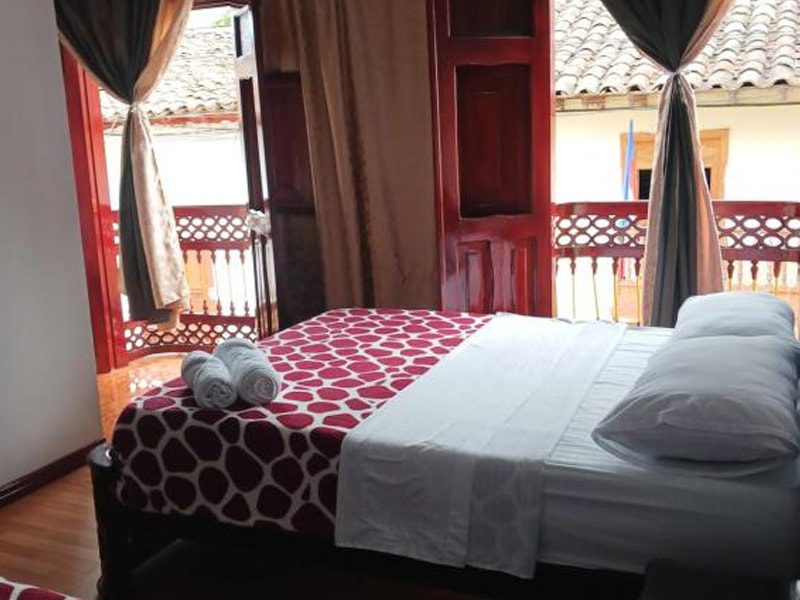
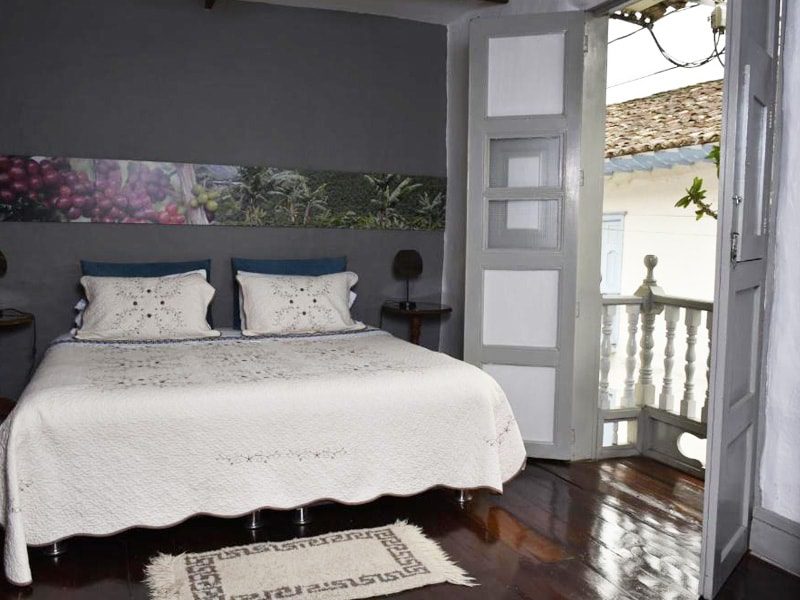
Although Salamina is one of Colombia’s heritage villages, the accommodation on offer is more limited than in other destinations such as Barichara, Villa de Leyva, Jardín or Mompox. On the other hand, the few hotels available have the privilege of being housed in buildings typical of the region, offering total immersion. Despite this, we have selected some very good addresses to suit all budgets.
$ – Economical budgeting
Hotel
Bonsai Casa Hotel
Bonsai Casa Hotel is a charming, well-located establishment, just a stone’s throw from Salamina’s main square. Travelers particularly appreciate the warm welcome, cleanliness and peaceful atmosphere of this colonial-style home. The rooms are comfortable but simple; some facilities are still basic. Great value for money for exploring the village.

$ – Economical budgeting
Hotel
Hotel Boutique La Leyenda 1860
Hotel Boutique La Leyenda 1860 is conveniently located in Salamina’s main square and appreciated for its restored historic building, excellent breakfast and friendly staff. Rooms are clean and comfortable, with occasional city views. However, the noise of the square or the bells at night can be a nuisance for light sleepers.

$$ – Average budget
Hotel
Hotel Casa Real
Hotel Casa Real is a comfortable place to stay, just a stone’s throw from the central park, appreciated for its excellent location, the cleanliness of its rooms and the warm welcome of its staff. Travelers mention a good breakfast included and a quiet atmosphere, ideal for exploring the village. Some of the rooms are simple, but overall they offer very good value for money.
$$ – Average budget
Hotel
La Estancia Boutique Hotel
La Estancia Boutique Hotel in Salamina is often praised for its ideal location near the main square, its attentive service and its restored colonial charm. Rooms are clean, comfortable and tastefully decorated, and breakfast is regularly enjoyed. A few visitors note a possible noise from the street or compact bathrooms, but the overall welcome remains exceptional.

$$$ – High budget
Hotel
Casa Lola Hotel Boutique
The colonial-style Casa Lola Hotel Boutique is conveniently located just a stone’s throw from the main square. Travelers praise the cleanliness, comfortable rooms and attentive staff. Breakfast is often considered copious and tasty. A few details, such as the lighting in the rooms and the insulation, could be improved upon, but overall, this is a highly recommended address.

$$$ – High budget
Hotel
Las Marías Family Home
Las Marías Family Home is a very well-located accommodation, just a few steps from Salamina’s main square, appreciated for its impeccable cleanliness, meticulous comfort and warm welcome from the staff. Guests regularly comment on the excellent location and decent breakfast. A few stays have noted a little noise from the street, but overall it’s a reliable address.
Where to eat in Salamina
Although Salamina is one of Colombia’s heritage villages, the more moderate tourist numbers mean that the restaurant offer is more limited than in villages such as Villa de Leyva, Barichara or Santa Fe de Antioquia. Here you’ll find mostly small, traditional establishments, perfect for discovering and savoring the local gastronomy. On the other hand, international cuisine options are virtually non-existent.
In Salamina, you can taste unique preparations, and the best place to discover them is at Café El Polo.
Macanas: One of the house specialties is the macana, a drink served in a small bowl, heated in a bain-marie with pieces of crackers (soda cakes), sugar and butter. At the end of the preparation, cinnamon powder is added and it is served piping hot. It is generally consumed at breakfast, mid-morning or in the afternoon.
Steamed eggs (Huevos al vapor): Eggs are served in a small bowl and steamed. They are prepared using the steam nozzle on coffee machines, making them a specialty of restaurants and cafés. Steamed eggs are prepared with salt, butter and, depending on taste, ham or cheese. They cook for about 30 seconds in the machine, and should be both soft and light.
Here’s a selection of the good addresses we picked up during our stay.
Beware, there are very few options for vegetarians. We recommend Pizza Estadio and Calicanto.

$ – Economical budgeting
Colombian
El Sótano


* La Lar Cocina Oculta: by reservation only. It’s not a classic restaurant.
** Oscar Pérez: we recommend contacting the restaurant in advance.


